


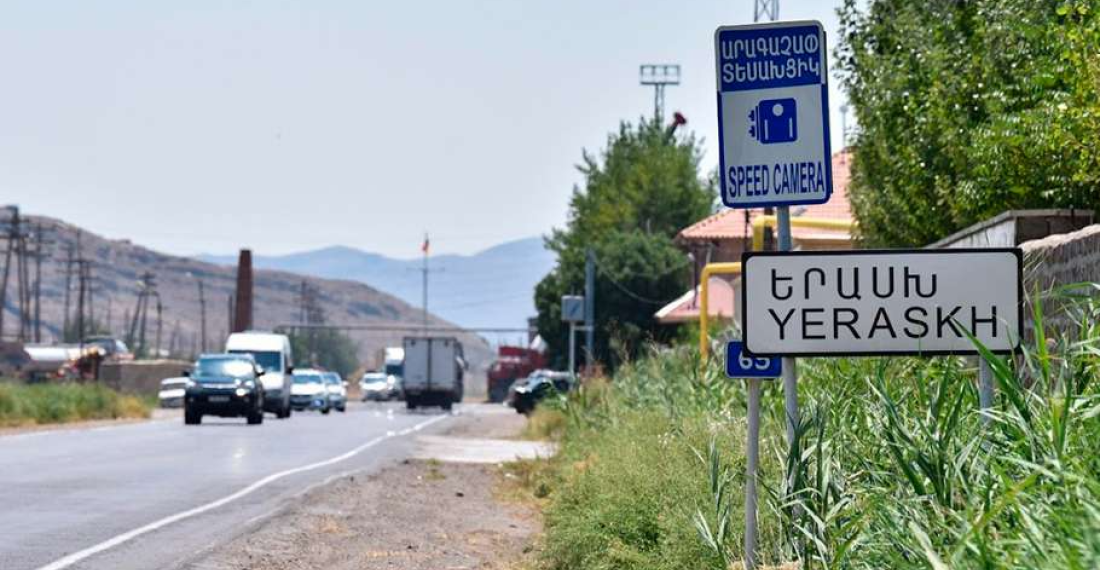
“Disputes like the one surrounding the Yeraskh metallurgical plant pose a genuine risk to the realisation of a durable peace between Armenia and Azerbaijan. Indeed, as the Espoo Convention notes, environmental issues do not respect borders and specific cases should be discussed on an international level when multiple state-parties are concerned,” writes Patrick Norén for commonspace.eu. “But in order for Armenia and Azerbaijan to move forward together in an era of peace, there must also be an understanding that one country’s domestic development can also be to the benefit of the other country. Zero-sum calculations of such issues are unhelpful and distract from the fact that Armenia and Azerbaijan can all be winners if they do cooperate, whether it be on the environment, on trade, or on any other sector.”
On 3 June, the Armenian Minister of Economy Vahan Kerobyan posted a video on his Facebook page announcing the construction of a new metallurgical plant in the Armenian town of Yeraskh, located less than a kilometre north of the Armenian border with Azerbaijan’s Nakhchivan province.
The plant would be built by the American-Armenian company GTB Steel, with an investment of $70 million. Kerobyan added that the plant would be some 30m high, have an area of 16,500 square metres, and would produce up to 180,000 tonnes of steel annually. While 200 people currently work there, the completed steel smelting plant would employ up to 1,000 people.
Azerbaijan fears "serious negative impact" on their ecological environment from Yeraskh plant
This announcement quickly attracted criticism from the Azerbaijani Ministry of Ecology and Natural Resources, who in a statement released on 7 June described the planned metallurgical plant right on their border as a gross violation of international law, especially international environmental law.
Citing the United Nations’ Espoo Convention, under which governments must notify and consult each other on all major projects under consideration that might have an adverse environmental impact across borders, Azerbaijan said that Armenia “should have ensured the participation of Azerbaijan and the public in the affected areas in the transboundary environmental impact assessment procedure before starting the said activity”.
Furthermore, in their statement on the Yeraskh metallurgical plant, the Azerbaijani Ministry of Ecology and Natural Resources accused the Armenian mining industry of having a “serious negative impact on the ecological environment of Azerbaijan”, citing the Kajaran copper-molybdenum plant and the Kapan ore processing plant as having been “intensively polluting” the transboundary Voghji/Okchuchay river.
“We strongly condemn the actions of Armenia, which harm the ecological security of the region and are contrary to the norms of international law, and we call on the international community to pay special attention to this issue,” the Azerbaijani statement concluded.
GTB Steel and Armenian Ministry of the Environment counter Azerbaijan's criticism of the Yeraskh metallurgical plant
The dispute escalated further on 8 June when GTB Steel issued a strong statement countering Azerbaijan’s criticism of the planned smelting plant. GTB Steel said that they had received a positive response in an Environmental Impact Assessment from Armenia’s Ministry of the Environment, adding that “all modern technologies for the exclusion of negative impact on the environment will be implemented and all equivalent measures will be carried out”.
GTB Steel said they would continue their activities in Yeraskh because it would be of benefit to border communities and Armenia as a whole, suggesting that precisely this fact might explain “the reaction of the neighbouring state”.
The Armenian Ministry of the Environment doubled down on GTB Steel’s criticism of Azerbaijan in a statement released on 9 June, insisting that the plant would be “constructed in accordance with the environmental standards and requirements, within the framework of domestic legal regulations”, while also accusing Azerbaijan of deliberately using “environmental false alarms” to try to hinder Armenia’s economic development.
The war of words did not stop there. On Tuesday (13 June), Azerbaijani diaspora organisations issued their own statement expressing their “profound concern” over the planned metallurgical plant in Yeraskh, citing many similar concerns raised in the statement from the Azerbaijani Ministry of Ecology and Natural Resources.
After a week of low-level fighting between Armenia and Azerbaijan, two workers are injured at the plant on Wednesday
As all of this to-and-fro over the Yeraskh metallurgical plant was going on, low-level fighting between Armenia and Azerbaijan continued for days with both sides accusing the other of staging provocations and disseminating disinformation.
Then, at 11.30am on Wednesday (14 June), the Azerbaijani Ministry of Defense issued a statement accusing Armenian armed forces stationed in the direction of Yeraskh of opening fire on Azerbaijani positions stationed in the direction of Heydarabad, in Azerbaijan's Nakhchivan region. The statement added that the Azerbaijani Army took “retaliatory measures”.
The Armenian Defence Ministry, however, released a statement just after midday calling Azerbaijan’s accusation “disinformation”, before accusing Azerbaijan of having opened fire on the Yeraskh metallurgical plant at 11.45am, wounding two people. Armenian authorities have named the wounded as Muhammad Asif and Mirhasan Sahajan, Indian citizens working on the construction of the plant.
Shortly after the shooting, the Armenian Deputy Foreign Minister Vahan Kostanyan announced on Twitter that members of the European Union civilian mission in Armenia visited the construction zone of the metallurgical plant in Yeraskh. Toivo Klaar, the EU Special Representative for the South Caucasus and the Crisis in Georgia, released a separate statement on Twitter, saying that the EU is “closely following developments in the region”.
“The shooting in all areas needs to stop,” he said. “It is essential to keep up the positive momentum of successive meetings and achieve results at the negotiating table that will benefit Armenia, Azerbaijan, and the entire region.”
The spokesperson for the U.S State Department also published his own statement on Twitter. “We are deeply concerned that two civilian employees of a U.S.-affiliated company in Armenia sustained injuries from gunfire from the direction of Azerbaijan,” he said. “We reiterate our call for restraint along the borders as the parties work toward a durable and balanced peace,” the statement concluded.
Speaking on Wednesday evening after the shooting, Armenian Foreign Minister Ararat Mirzoyan announced that “representatives of the international diplomatic corps accredited in Armenia” would visit the site on Thursday (15 June), adding that the Armenian government would keep the issue “in the centre of their attention”.
Armenia and Azerbaijan can all be winners if they do cooperate, whether it be on the environment, on trade, or on any other sector
Disputes like the one surrounding the Yeraskh metallurgical plant pose a genuine risk to the realisation of a durable peace between Armenia and Azerbaijan. Indeed, as the Espoo Convention notes, environmental issues do not respect borders and specific cases should be discussed on an international level when multiple state-parties are concerned. Both Armenia and Azerbaijan will undoubtedly benefit from a wider region where environmental protections are properly adhered to.
In fact, cooperation on the environment is already the subject of discussions at a track II level. On Monday 6 March, Armenian and Azerbaijani experts gathered in Tbilisi to discuss transboundary water cooperation, with one participant commenting that “we all will be losers if we don’t cooperate.” Such initiatives should continue and can be a critical vector of regional confidence building processes.
But in order for Armenia and Azerbaijan to move forward together in an era of peace, there must also be an understanding that one country’s domestic development can also be to the benefit of the other country. Zero-sum calculations of such issues are unhelpful and distract from the fact that Armenia and Azerbaijan can all be winners if they do cooperate, whether it be on the environment, on trade, or on any other sector.
source: Patrick Norén is the Deputy Editor of commonspace.eu.
photo: Radar Armenia
The views expressed in opinion pieces and commentaries do not necessarily reflect the position of commonspace.eu or its partners.



