


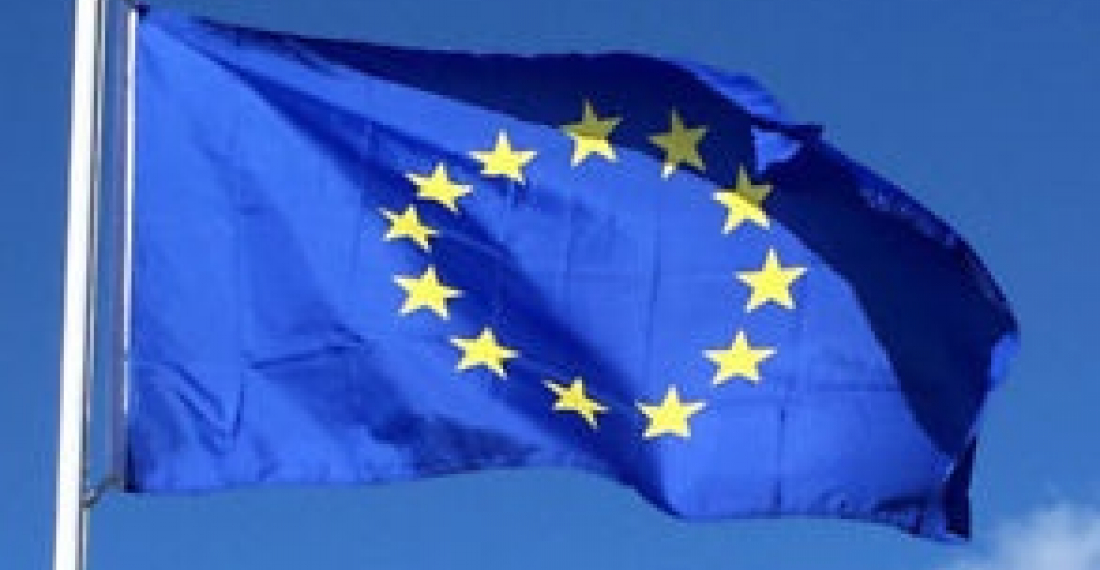
Opinion: The world needs Europe

European Commission President Jean Claude Junker reflects on 2018, and the challenges ahead in this op-ed, first published on Project Syndicate.

As we usher in a new year, the future direction of the EU has never been more important, both for Europe and for the rest of the world. In these increasingly tumultuous times, the EU can provide the stability and hope that the world so desperately needs.

For decades, Europe has been the poster child for integration and cooperation in a fractured world. Since the end of the Second World War, the continent has been living proof that multilateralism works. Europe's troubled past has given way to a peace spanning seven decades, and to a union of 500 million citizens living in freedom and prosperity. By any metric, Europe is now the most tolerant, free, and equal place to live anywhere in the world.

But the EU is not a given. Peace is not inevitable, and war is not implausible. The year 2018 marked the centenary of the end of the First World War, the lessons of which must still be heeded. The Europeans of 1913 thought that war was impossible, that they were too interlinked to turn on one another. We Europeans have a rich tradition of ignoring premonitions of ruin at our own peril.

Given this history, today's re-emergence of a dangerous brand of nationalism should be sounding alarm bells across our continent. I believe we owe it to generations past, present and future to fight unchecked nationalism with all our might.

That means getting our own house in order, particularly on the economic front, by boosting investment through new forms of public and private partnerships. Moreover, to reduce risk across the EU, we need to fix our banking sector. That means shoring up a strong and stable eurozone, and deepening the Economic and Monetary Union. It also means not waiting for the next crisis to hit, but rather working proactively to make the EU more united and democratic than ever before.

Moreover, fighting nationalism at home means taking our destiny into our own hands. And yet, in a globalized world, Europe cannot secure its interests and values by itself. From migration and security to new technologies and ecological pressures, the collective challenges we face are multiplying by the day. As the divisions within societies and between countries deepen, the imperative to work together grows stronger.

By cooperating with friends from around the world, Europe's member states can become more resilient, both individually and collectively. Now is the time to offer responsible global leadership. Now is the time to renew and redefine the ties that bind countries around the world, much as we are doing within our union. Our brand of leadership is not about putting "Europe first." Rather, it is about being the first to answer the call for leadership when it matters.

Europe continues to set a global example as a region upholding the value of global solidarity. In 2016, Europe offered asylum to three times as many refugees as the US, Canada and Australia combined. And, for years, Europe has provided more than half of the world's development and humanitarian aid.

For Europe, responsible global leadership also means setting fair standards. Only by putting people and their rights at the heart of the brave new digital world can we ensure that technological progress serves our people, as well as our planet. Whether it be brokering the Paris climate agreement, negotiating a deal with Iran to suspend its nuclear program, ridding our oceans of harmful plastic, or setting data protection standards, the EU is leading the charge on addressing the world's most pressing problems.

Cooperation, after all, is in our DNA. Individual European countries simply do not have the clout to shape global affairs on their own, and that is not going to change. By 2060, no single European country will have more than 1 percent of the world's population. Europeans must, therefore, continue to pool and share their national sovereignty, with the goal of establishing a stronger common sovereignty for all. As members of the world's largest single market - one that accounts for one-fifth of the global economy - each EU country is better placed to defend its national interests and to shape global events than it would be alone.

Looking ahead, our task is to strengthen this European sovereignty even further. That means speaking with one voice, sticking to our values, and delivering for our citizens ahead of the European Parliament election in May 2019.

History does not repeat itself, but it often rhymes. The world has been fractured before, and we have seen how this can lead to poverty, discord and war. Europeans know - or should know - this pattern all too well. So we must fight the populists of this world, those who peddle the false hope of new dawns, and those who replace fact with fiction and conjure "enemies" old and new.

Europe must provide the counterweight to these tendencies by demonstrating that we can still champion compromise and consensus over the politics of strongmen. What the world needs now is fairness and progress. The world needs Europe.

Jean-Claude Juncker is President of the European Commission. © Project Syndicate, 2018. www.project-syndicate.org

source: Commonspace.eu with Project Syndicate

Related articles

Editor's choice
News
Germany accuses Russia of cyberattacks and disinformation campaign

Germany accuses Russia of cyberattacks and disinformation campaign

The German government holds Russia responsible for a cyberattack on German air traffic control, and for targeted disinformation campaigns before the last federal election. According to the German Foreign Office in Berlin, the incidents could be clearly attributed to the Russian military intelligence service, the GRU. In response, the Russian ambassador to Berlin was summoned to the Foreign Ministry. "We have been observing a massive increase in threatening hybrid activities by Russia for some time now," a spokesperson for the Foreign Ministry stated. These range from disinformation campaigns and espionage to cyberattacks and sabotage attempts. The aim is to divide society, sow distrust, and undermine confidence in democratic institutions. The spokesperson added that with these actions, Russia is "very concretely threatening our security, not only through its war of aggression against Ukraine, but also here in Germany."  The Foreign Ministry spokesperson explained that the cyberattack on air traffic control in August 2024 was clearly attributed to the hacker collective "APT28," known as "Fancy Bear," and to the responsibility of the Russian military intelligence service, the GRU. Furthermore, it could now be "conclusively stated" that Russia had attempted "to influence and destabilize both the last Federal election and the ongoing internal affairs of the Federal Republic of Germany." There was "absolutely irrefutable evidence" for this". The so-called "Storm 1516" campaign, which has been running since 2024, is allegedly backed by "reliable information" that the Moscow-based think tank "Center for Geopolitical Expertise" is behind it. The Center is also said to be supported by Russian military intelligence. Its primary aim is to influence democratic elections in the West. (Click the image to read more).
Editor's choice
News
NATO Chief says war is on Europe's doorstep, and warns against complacency

NATO Chief says war is on Europe's doorstep, and warns against complacency

Russia could attack a NATO country within the next five years, the Secretary General of NATO, Mark Rutte, said in a stark new warning. "NATO's own defences can hold for now," Rutte warned in Berlin, but conflict was "next door" to Europe, and he feared "too many are quietly complacent, and too many don't feel the urgency, too many believe that time is on our side. "Russia is already escalating its covert campaign against our societies," Rutte said in a speech in Germany. "We must be prepared for the scale of war our grandparents or great-grandparents endured." Earlier this month, Russia's President Vladimir Putin said his country was not planning to go to war with Europe, but it was ready "right now" if Europe wanted to - or started a war. But similar reassurances were given by Moscow in 2022, just before 200,000 Russian troops crossed the border and invaded Ukraine. Putin has accused European countries of hindering US efforts to bring peace in Ukraine - a reference to the role Ukraine's European allies have recently played in trying to change a US peace plan to end the war, whose initial draft was seen as favouring Russia. But Putin was not sincere, Nato's secretary-general said in the German capital, Berlin. Supporting Ukraine, he added, was a guarantee for European security. "Just imagine if Putin got his way; Ukraine under the boot of Russian occupation, his forces pressing against a longer border with Nato, and the significantly increased risk of an armed attack against us." Russia's economy has been on a war footing for more than three years now - its factories churn out ever more supplies of drones, missiles and artillery shells. According to a recent report by the Kiel Institute for the World Economy, Russia has been producing each month around 150 tanks, 550 infantry fighting vehicles, 120 Lancet drones and more than 50 artillery pieces. The UK, and most of its Western allies, are simply not anywhere near this point. Analysts say it would take years for Western Europe's factories to come close to matching Russia's mass-production of weapons. "Allied defence spending and production must rise rapidly, our armed forces must have what they need to keep us safe," the Nato chief said.

Popular

Editor's choice
News
Germany accuses Russia of cyberattacks and disinformation campaign

Germany accuses Russia of cyberattacks and disinformation campaign

The German government holds Russia responsible for a cyberattack on German air traffic control, and for targeted disinformation campaigns before the last federal election. According to the German Foreign Office in Berlin, the incidents could be clearly attributed to the Russian military intelligence service, the GRU. In response, the Russian ambassador to Berlin was summoned to the Foreign Ministry. "We have been observing a massive increase in threatening hybrid activities by Russia for some time now," a spokesperson for the Foreign Ministry stated. These range from disinformation campaigns and espionage to cyberattacks and sabotage attempts. The aim is to divide society, sow distrust, and undermine confidence in democratic institutions. The spokesperson added that with these actions, Russia is "very concretely threatening our security, not only through its war of aggression against Ukraine, but also here in Germany."  The Foreign Ministry spokesperson explained that the cyberattack on air traffic control in August 2024 was clearly attributed to the hacker collective "APT28," known as "Fancy Bear," and to the responsibility of the Russian military intelligence service, the GRU. Furthermore, it could now be "conclusively stated" that Russia had attempted "to influence and destabilize both the last Federal election and the ongoing internal affairs of the Federal Republic of Germany." There was "absolutely irrefutable evidence" for this". The so-called "Storm 1516" campaign, which has been running since 2024, is allegedly backed by "reliable information" that the Moscow-based think tank "Center for Geopolitical Expertise" is behind it. The Center is also said to be supported by Russian military intelligence. Its primary aim is to influence democratic elections in the West. (Click the image to read more).


