


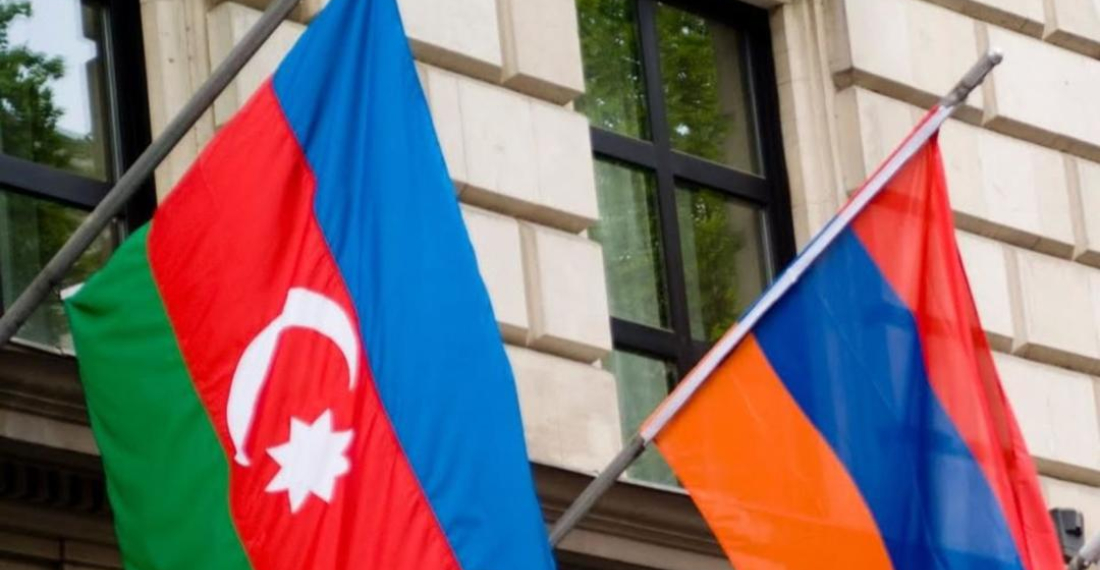
Opinion: Uncertain times for Azerbaijan and Armenia relations

The recent BRICS summit held on 22-24 October in the Russian city of Kazan, featured the first talks in the last few months between the Azerbaijani and Armenian leadership. The countries were represented by President Aliyev and Prime Minister Pashinyan as well as the foreign ministers, Bayramov and Mirzoyan. Pashinyan declared that at the moment “all the matters of principles have been addressed and resolved” by the draft treaty, although Armenia’s chief diplomat Mirzoyan toned his statement a bit down, claiming that the document “is at least 80-90% agreed upon”.

Another interesting detail featured in the official communique released after the bilateral Aliyev-Pashinyan meeting which stated that the leaders “instructed their foreign ministers to continue bilateral negotiations on the Peace agreement and the establishment of interstate relations with the purpose of finalising it as soon as possible”, indicating at least to the presence of a significant momentum. A day after the summit, Armenian and Azerbaijani presidents confirmed the document delineating the rules for demarcation and delimitation of the state border, signed on 30 August.

Then it was reported that the parties discussed the release of the remaining Armenian prisoners of war by Baku and Yerevan’s participation in COP 29. Also, Azerbaijani media leaked a conversation between the leaders whereby Aliyev asked Pashinyan about the lack of Armenian involvement in the campaign for releasing Armenian-Russian oligarch Ruben Vardanyan from his Azerbaijani imprisonment. Usually, such leakages occur when certain positive breakthroughs in the negotiations are expected.

However, this news arrived after a period of intense pessimism which settled with the failure of the planned high-level meeting in the UK in July this year. The parties were accusing each other of undermining negotiations and leading an arms race. While Azerbaijani media intensified the rhetoric of Armenian revanchism, their Armenian counterparts were telling stories about Baku’s preparations for a new war in the hope of occupying the region of Zangezur.

Many experts were predicting a new escalation to break out soon after the COP29. Against this background, a meeting between Parliamentary chairmen, Alen Simonyan and Sahiba Qafarova, was cancelled by the Azerbaijani side due to the “non-constructive position of Yerevan”. So, the news from Kazan came quite as a surprise- but then how should we explain them?

The September-October period was driven by negativity, most opinions were that the peace process has stalled, there may be an escalation after COP, talks about arms race, and media in both countries were putting fuel on the fire. Speakers’ meeting cancelled. Azerbaijan accused Armenia that it refused a peace treaty

What does it mean? Az-Arm negotiations are like an iceberg, often the times of visible gloom are those when important progress is being prepared (it was likely the case in March-April, then in August before the agreement on borders). This is especially true as foreign pressure Is mounting. Also, it may be important now not to use a Western platform so the parties planned these announcements for BRICS.

But it’s premature to call triumph. Baku is irritated with the EU mission, and Armenia’s arms purchases are significant. Azerbaijan is probably seeking guarantees that Yerevan won’t demand international guarantees (mission etc.) for the return of Armenians to Karabakh. International influence remains crucial.


 

source: Murad Muradov is the co-founder and deputy director of the Topchubashov Center in Baku, Azerbaijan. He graduated with a Bachelor of Arts degree in International Relations from the Academy of Public Administration of the Republic of Azerbaijan (2011), a Master of Arts in Diplomacy and International Affairs from the Azerbaijan Diplomatic Academy (2013) and a Master of Science in Comparative Politics from the London School of Economics (2015). He participated in a number of training programs, summer schools and fellowships both in Azerbaijan and abroad, including the John Smith Trust Fellowship for Wider Europe (2017). His areas of expertise cover British politics, security and geopolitics of post-Soviet countries and international political economy.
 
The views expressed in opinion pieces and commentaries do not necessarily reflect the position of commonspace.eu or its partners

Related articles

Editor's choice
News
Borrell tells the European Parliament that the situation in Afghanistan was critical, but the EU will remain engaged

Borrell tells the European Parliament that the situation in Afghanistan was critical, but the EU will remain engaged

Borrell underlined that the European Union will make every effort to support the peace process and to remain a committed partner to the Afghan people. "Of course, we will have to take into account the evolving situation, but disengagement is not an option.  We are clear on that: there is no alternative to a negotiated political settlement, through inclusive peace talks.
Editor's choice
News
NATO Chief says war is on Europe's doorstep, and warns against complacency

NATO Chief says war is on Europe's doorstep, and warns against complacency

Russia could attack a Nato country within the next five years, the Secretary General of NATO, Mark Rutte, said in a stark new warning. "Nato's own defences can hold for now," Rutte warned in Berlin, but conflict was "next door" to Europe and he feared "too many are quietly complacent, and too many don't feel the urgency, too many believe that time is on our side. "Russia is already escalating its covert campaign against our societies," Rutte said in a speech in Germany. "We must be prepared for the scale of war our grandparents or great-grandparents endured." Earlier this month, Russia's President Vladimir Putin said his country was not planning to go to war with Europe, but it was ready "right now" if Europe wanted to - or started a war. But similar reassurances were given by Moscow in 2022, just before 200,000 Russian troops crossed the border and invaded Ukraine. Putin has accused European countries of hindering US efforts to bring peace in Ukraine - a reference to the role Ukraine's European allies have recently played in trying to change a US peace plan to end the war, whose initial draft was seen as favouring Russia. But Putin was not sincere, Nato's secretary-general said in the German capital, Berlin. Supporting Ukraine, he added, was a guarantee for European security. "Just imagine if Putin got his way; Ukraine under the boot of Russian occupation, his forces pressing against a longer border with Nato, and the significantly increased risk of an armed attack against us." Russia's economy has been on a war footing for more than three years now - its factories churn out ever more supplies of drones, missiles and artillery shells. According to a recent report by the Kiel Institute for the World Economy, Russia has been producing each month around 150 tanks, 550 infantry fighting vehicles, 120 Lancet drones and more than 50 artillery pieces. The UK, and most of its Western allies, are simply not anywhere near this point. Analysts say it would take years for Western Europe's factories to come close to matching Russia's mass-production of weapons. "Allied defence spending and production must rise rapidly, our armed forces must have what they need to keep us safe," the Nato chief said.

Popular

Editor's choice
News
NATO Chief says war is on Europe's doorstep, and warns against complacency

NATO Chief says war is on Europe's doorstep, and warns against complacency

Russia could attack a Nato country within the next five years, the Secretary General of NATO, Mark Rutte, said in a stark new warning. "Nato's own defences can hold for now," Rutte warned in Berlin, but conflict was "next door" to Europe and he feared "too many are quietly complacent, and too many don't feel the urgency, too many believe that time is on our side. "Russia is already escalating its covert campaign against our societies," Rutte said in a speech in Germany. "We must be prepared for the scale of war our grandparents or great-grandparents endured." Earlier this month, Russia's President Vladimir Putin said his country was not planning to go to war with Europe, but it was ready "right now" if Europe wanted to - or started a war. But similar reassurances were given by Moscow in 2022, just before 200,000 Russian troops crossed the border and invaded Ukraine. Putin has accused European countries of hindering US efforts to bring peace in Ukraine - a reference to the role Ukraine's European allies have recently played in trying to change a US peace plan to end the war, whose initial draft was seen as favouring Russia. But Putin was not sincere, Nato's secretary-general said in the German capital, Berlin. Supporting Ukraine, he added, was a guarantee for European security. "Just imagine if Putin got his way; Ukraine under the boot of Russian occupation, his forces pressing against a longer border with Nato, and the significantly increased risk of an armed attack against us." Russia's economy has been on a war footing for more than three years now - its factories churn out ever more supplies of drones, missiles and artillery shells. According to a recent report by the Kiel Institute for the World Economy, Russia has been producing each month around 150 tanks, 550 infantry fighting vehicles, 120 Lancet drones and more than 50 artillery pieces. The UK, and most of its Western allies, are simply not anywhere near this point. Analysts say it would take years for Western Europe's factories to come close to matching Russia's mass-production of weapons. "Allied defence spending and production must rise rapidly, our armed forces must have what they need to keep us safe," the Nato chief said.

