A "eurasianist" ideology is helping to consolidate a Russia - Turkey strategic alliance, as a viable tool to achieve long term strategic interests in the Middle East and beyond, says Benyamin Poghosyan in this op-ed
The security architecture of the Middle East is in the midst of a tremendous transformation. Since the end of the First World War the region has been under western domination of some form or other. In 1920s and 1930s it was wrapped within the mandate system imposed by the League of Nation, and since the end of the Second World War the US has been the regional kingmaker. The Soviet Union had some footholds such as Egypt during Nasser's rule, as well as Syria and parts of Yemen. However, it was never in a position to contain the US. The US influence peaked after the end of the Cold War, and probably the most vivid example of the US decisive role was the 2003 American incursion into Iraq. However, the regional turmoil caused by the Arab Spring, the withdrawal of the bulk of American forces from the Iraq, the growing influence of Iran, as well as Russia's military intervention in the Syrian conflict have effectively ended US hegemony in the Middle East.
One of the key factors shaping the geopolitical developments in the region is the growing Russia - Turkish partnership in parallel with the unraveling of Ankara - Washington relations. Since joining NATO Turkey has been one of the key US allies in the region, and the regional bulwark against the Soviet Union. However, the collapse of the Soviet Union eliminated the key rationale behind the US - Turkey strategic alliance. Both sides were on an urgent quest to find a new basis for the relations - Turkey as a channel for the US influence in the newly independent Muslim republics of Central Asia, and more recently Turkey as a model of moderate Islamic power successfully combining Islam and Democracy. However, none of these concepts have fully materialized. The divergent interests in the Syrian conflict, especially on the Kurdish role, as well as Turkish suspicions on the US position regarding the 2016 July failed military coup, have brought the bilateral relationship to the brink of collapse.
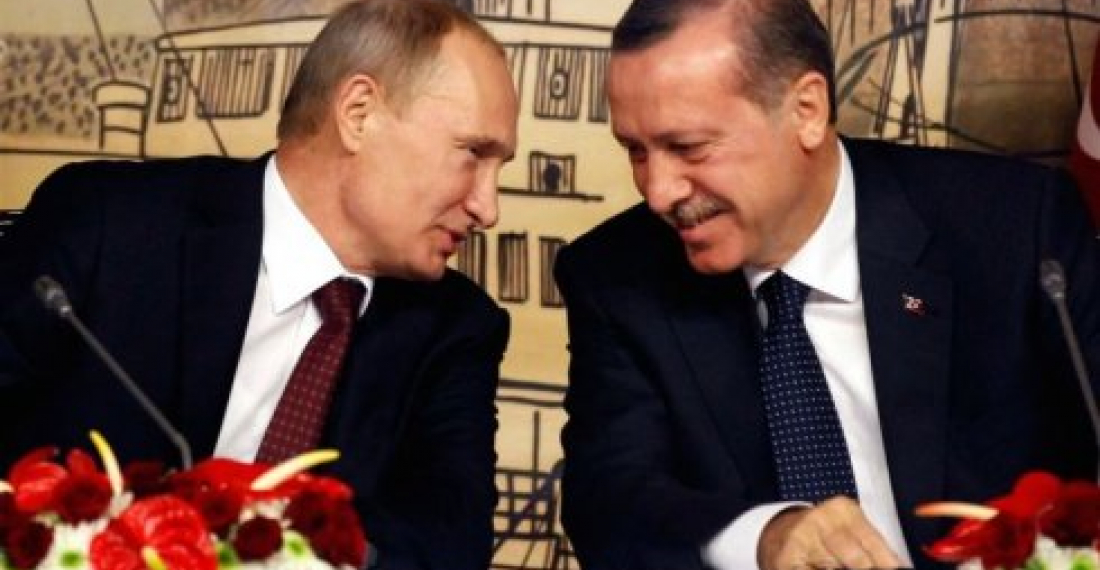
Russia - Turkish relations hit the bottom in November 2015 after the downing of a Russian military jet. However, both sides were able to renew bilateral cooperation just eight month after the crisis. Since the pivotal meeting of the two presidents in Saint Petersburg in August 2016 the relations have warmed up significantly. The start of the Turkish stream pipeline construction, finalization of negotiations on the Akkuyu nuclear power plant, the agreement to purchase Russian S - 400 air defense systems, the launch of the Astana process and the establishment of de-escalation zones in Syria in close cooperation with Iran, the convening of the Syrian National Dialogue Congress in Sochi, are all vivid examples of growing bilateral partnership.
The tacit Russian consent for the Turkish military operation currently underway in Syrian Afrin, as well as the unprecedented frequency of high level contacts including, almost monthly phone talks between President Putin and Erdogan, point to the high level of confidence between the two partners. The March 13-14 visit of Turkish Minister of Foreign Affairs Mevlut Chavushoglu to Moscow, as well as the decision regarding President Putin's upcoming visit to Turkey in early April, are also indicators of growing cooperation.
The emerging Russia - Turkish partnership also has a solid ideological background. It relies on the idea of Eurasianism, fiercely promoted in Russia by the leader of the "International Eurasian Movement" Professor Aleksandr Dugin. The author of several books on Geopolitics, Dugin puts forward the idea to establish Russian - Turkish alliance to counter the United States. According to Dugin, Turkey is one of the key actors in "Rimland", and both Russia as a "Heartland" and the US as a "Sea Power" are struggling to pull Turkey into their orbit to secure their dominance over the Eurasia. Dugin's theory emphasizes the significance of trilateral Russia - Turkey - Iran geostrategic cooperation, which may unite Turkey as a leader of Sunnis, Iran as a leader of Shias and Russia as a leader of Orthodox Christians in their struggle against the West. Thus, the growing Russia - Turkey - Iran cooperation in Syria is fully in line with Dugin's concepts.
Dugin has established close ties with different Turkish intellectual and political circles including the chairman of the "Patriotic" party Doghu Perincheq, which itself is pro eurasianist and one of the close supporters of President Erdogan. In 2016 - 2017 Dugin visited Turkey many times and had some high profile meetings including discussions with Turkish Prime Minister Binali Yildirim. Despite the fact that Dugin was forced out from Moscow State University in 2014 due to his radical stance during the Ukraine crisis, he is widely believed to yield some influence on President Putin's inner circle, and his monographs on geopolitics are among mandatory readings in the military academies of the Russian General Staff.
Given the growing gap between the US and Turkey, many in the Turkish political and military elites perceive Eurasian ideology, and the establishment of a Russia - Turkey strategic alliance, as a viable tool to secure Turkey's long term strategic interests in the Middle East and beyond. If it materializes, this scenario may fundamentally alter the balance of power in the Middle East putting the US on the defensive, and effectively ending almost a century of western domination in the region.
Dr. Benyamin Poghosyan is the Executive Director of the Political Science Association of Armenia. He contributed this op-ed to commonspace.eu