


Opinion: A resumption of the Iran nuclear deal is also good for Armenia

Reports from Vienna suggest that Iran and the world powers are close to agreeing on restoring the Iran Nuclear Deal. For a moment it appeared that the negotiations were going to get entangled in the current Ukraine crisis, but it appears that Iran has dissuaded Russia from doing so. In this op-ed for commonspace.eu Benyamin Poghosyan says a deal would be good for neighbouring countries like Armenia who are keen to exploit trade opportunities with Iran.

When President Trump pulled the US out of the Iran nuclear deal in May 2018, and launched his “maximum pressure campaign” against Tehran, the other signatories of the nuclear deal did not join the US and took steps to save the deal. The EU even launched a special trade mechanism – INSTEX - to facilitate non-USD and non-SWIFT transactions with Iran, while China continued to buy Iranian oil. The re-imposed US sanctions have significantly worsened the economic situation in Iran but have failed to reach the main goal – to force Tehran to change its regional policy and give up on its ballistic missile program.

During the 2020 Presidential campaign, the future of the Iran nuclear deal was one of the points of contention. Trump argued for the continuation of its maximum pressure campaign, while Biden promised to take steps to restore the deal. After taking office in January 2021, the US started negotiations in Vienna to restore the nuclear deal. Many experts hoped that negotiations would finish by the Summer 2021 Presidential elections in Iran. However, this did not happen, and the newly elected President Raisi asked for a pause. Negotiations were resumed in November 2021, and sides were close to striking the deal.

The launch of the Russian “special military operation” in Ukraine on February 24, 2022, and the heavy sanctions imposed by the US, UK, EU, and their partners on Russia have negatively impacted the negotiation process. The almost complete rupture of relations between Russia and the West complicated the possibility of a combined effort by Russia and Western countries to reach a deal on Iran. Immediately after the start of the war, Iranian officials blamed NATO for the crisis, simultaneously calling for an immediate ceasefire and a “political and democratic solution." However, despite Iran’s positive attitude towards Russia, in early March 2022, Russia demanded "written guarantees" from the United States that wide-ranging Western sanctions targeting Moscow would not affect its economic and military cooperation with Iran. The US has promptly rejected Russia's demand, with Secretary of State Antony Blinken saying that such demands are irrelevant and that sanctions on Russia have nothing to do with the Iran nuclear deal. Iranian reaction was more cautious, as Iran said it was seeking clarification from the Russian side on their demands. However, Tehran was concerned that the nuclear deal might become a hostage to the Russia – West confrontation. Meanwhile, Western powers warned Moscow against wrecking the almost completed deal on bringing the United States and Iran back into compliance with the accord.

"The window of opportunity is closing. We call on all sides to make the decisions necessary to close this deal now and on Russia not to add extraneous conditions to its conclusion," Britain, France, and Germany said in a joint statement to the UN nuclear watchdog's 35-nation board of governors.

Later, Russia provided more details on its position, arguing that while speaking about a waiver to Western sanctions in its relations with Iran, it meant only a narrow circle of nuclear-related activities, such as the transportation to Russia of a volume of enriched uranium. However, there is a lack of clarity as to what Russia wants, and whether Russia is seeking to use a nuclear deal as a bargaining chip in its overall relations with the West. Russian foreign minister Lavrov met with his Iranian counterpart in Moscow on March 15, 2022. He stated that Russia valued Iran’s constructive approach to the situation in Ukraine and emphasized that Russia fully supported the restoration of the Iran nuclear deal. Meanwhile, he added that from the Russian perspective, the OPEC+ is the best mechanism to prevent fluctuations in the oil prices as Iranian oil would enter the world market after the restoration of the deal. Russian and Iranian foreign ministers met again on March 30, 2022, in China while attending the summit of Afghanistan's neighboring countries. Both ministers emphasized their readiness to expand economic cooperation despite the “illegal sanctions” imposed by “unfriendly nations” and discussed the situation in Ukraine and Afghanistan in-depth. Moscow wants to alleviate Iran’s concerns and send a clear message that it will not “sabotage” the deal to reach its narrow interests. Meanwhile, some experts argue that the nuclear deal may be restored even without Russia, which will be a tough diplomatic blow to Moscow.

Meanwhile, it should be emphasized that the new Russian demands are not the only obstacles to restoring the Iran nuclear deal. Another significant point of contention is Iran’s demand to remove IRGC from the US State Department foreign terrorist organization list and cancel sanctions imposed on some individuals.

The ups and downs in the negotiations to restore the Iran nuclear deal are closely watched by Iran’s neighboring countries, including Armenia. Yerevan welcomed the deal in 2015, hoping that it would allow Armenia to attract foreign companies, which will produce in Armenia and export to Iran. Armenia opened a free economic zone in Meghri close to the Armenia – Iran border in December 2017, hoping to foster its economic cooperation with Iran. The US withdrawal from the deal dashed Armenia’s hopes. However, the signature of the interim free trade deal between Iran and the Eurasian Economic Union, and negotiations towards establishing the permanent free trade deal, reignited Yerevan's hopes that after the nuclear deal's restoration, the Meghri free economic zone may finally start to function. As the war in Ukraine wrought havoc on Russia – West relations and Armenia braced itself for the challenging economic consequences, the restoration of Iran’s nuclear deal might present Armenia with some new opportunities.

source: Benyamin Poghosyan is the founder and Chairman of the Centre for Political and Economic Strategic Studies in Yerevan.
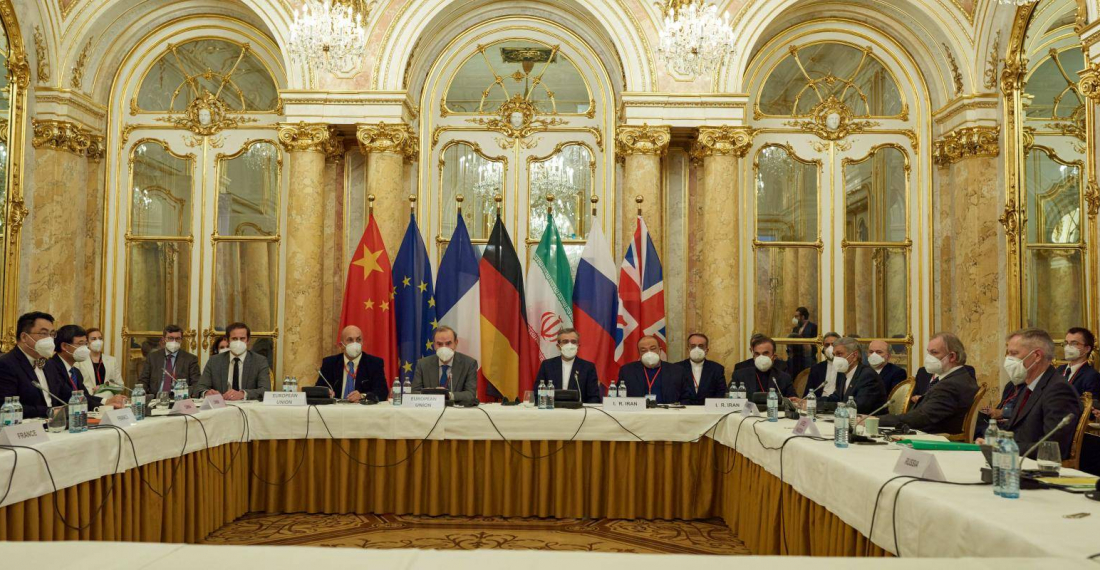
photo: A session of the Iran nuclear talks in Vienna (archive picture)
The views expressed in opinion pieces and commentaries do not necessarily reflect the position of commonspace.eu or its partners

Related articles

Editor's choice
News
Council of Europe launches new International Claims Commission for Ukraine

Council of Europe launches new International Claims Commission for Ukraine

Thirty-four countries and the European Union have signed a new convention establishing an International Claims Commission for Ukraine at a diplomatic conference co-hosted by the 46-nation Council of Europe and the Netherlands in the Hague. The diplomatic conference was attended by leaders and high-level representatives from over 50 states, including the President of Ukraine, Volodymyr Zelenskyy, the President of the Republic of Moldova, Maia Sandu, and the Prime Minister of the Netherlands, Dick Schoof.  “Today marks a major step forward in ensuring accountability for Ukraine. The International Claims Commission represents justice and hope for tens of thousands of victims—our determination that those who have suffered will not be forgotten. I call for quick ratifications so we can get the commission rapidly up and running for the people of Ukraine,” said Council of Europe Secretary General Alain Berset. Ukrainian President Volodymyr Zelenskyy said: “We expect that every mechanism for compensation from the Register of Damage and Claims Commission to the actual payments – will start working and receive strong and sufficient international support, so that people can truly feel that any kind of damage caused by the war can be compensated. This war, and Russia’s responsibility for it, MUST become a clear example – so that others learn not to choose aggression.” “Accountability is about creating the conditions for peace that endures. And therefore, accountability is a condition of security – today and for the future. But accountability is not only about Ukraine. And it is not only about one aggressor and one victim. Accountability is about Europe. About every country in Europe. It is about whether Europe, as a whole, is willing to defend its peace,” said Maia Sandu, President of the Republic of Moldova, which currently holds the Presidency of the Council of Europe’s Committee of Ministers. The Prime Minister of the Netherlands, Dick Schoof, said: “Every day Russia is deliberately bombarding homes, destroying businesses and damaging infrastructure in Ukraine. Russia must compensate Ukraine for the damage caused. That is why we have launched the International Claims Commission for Ukraine and we are honoured to host it.” The International Claims Commission will be the second part of a comprehensive compensation mechanism related to Russia’s war of aggression, building on the existing Register of Damage for Ukraine. The claims commission will be established within the framework of the Council of Europe and will also be open to other countries. The Register of Damage for Ukraine, created in 2023, collects and records compensation claims submitted by individuals, organisations and public bodies in Ukraine. Forty-four states and the European Union have so far joined the Register, which has already received 86,000 claims. The International Claims Commission will review, assess and decide upon claims submitted to the Register of Damage for Ukraine and determine the amount of compensation, if any, which is due in each case. The convention establishing the commission will enter into force once it has been ratified by 25 signatories, as long as sufficient funds have been secured to support its initial work.

Popular

Editor's choice
News
Council of Europe launches new International Claims Commission for Ukraine

Council of Europe launches new International Claims Commission for Ukraine

Thirty-four countries and the European Union have signed a new convention establishing an International Claims Commission for Ukraine at a diplomatic conference co-hosted by the 46-nation Council of Europe and the Netherlands in the Hague. The diplomatic conference was attended by leaders and high-level representatives from over 50 states, including the President of Ukraine, Volodymyr Zelenskyy, the President of the Republic of Moldova, Maia Sandu, and the Prime Minister of the Netherlands, Dick Schoof.  “Today marks a major step forward in ensuring accountability for Ukraine. The International Claims Commission represents justice and hope for tens of thousands of victims—our determination that those who have suffered will not be forgotten. I call for quick ratifications so we can get the commission rapidly up and running for the people of Ukraine,” said Council of Europe Secretary General Alain Berset. Ukrainian President Volodymyr Zelenskyy said: “We expect that every mechanism for compensation from the Register of Damage and Claims Commission to the actual payments – will start working and receive strong and sufficient international support, so that people can truly feel that any kind of damage caused by the war can be compensated. This war, and Russia’s responsibility for it, MUST become a clear example – so that others learn not to choose aggression.” “Accountability is about creating the conditions for peace that endures. And therefore, accountability is a condition of security – today and for the future. But accountability is not only about Ukraine. And it is not only about one aggressor and one victim. Accountability is about Europe. About every country in Europe. It is about whether Europe, as a whole, is willing to defend its peace,” said Maia Sandu, President of the Republic of Moldova, which currently holds the Presidency of the Council of Europe’s Committee of Ministers. The Prime Minister of the Netherlands, Dick Schoof, said: “Every day Russia is deliberately bombarding homes, destroying businesses and damaging infrastructure in Ukraine. Russia must compensate Ukraine for the damage caused. That is why we have launched the International Claims Commission for Ukraine and we are honoured to host it.” The International Claims Commission will be the second part of a comprehensive compensation mechanism related to Russia’s war of aggression, building on the existing Register of Damage for Ukraine. The claims commission will be established within the framework of the Council of Europe and will also be open to other countries. The Register of Damage for Ukraine, created in 2023, collects and records compensation claims submitted by individuals, organisations and public bodies in Ukraine. Forty-four states and the European Union have so far joined the Register, which has already received 86,000 claims. The International Claims Commission will review, assess and decide upon claims submitted to the Register of Damage for Ukraine and determine the amount of compensation, if any, which is due in each case. The convention establishing the commission will enter into force once it has been ratified by 25 signatories, as long as sufficient funds have been secured to support its initial work.

