Dr Benyamin Poghosyan argues in this op-ed that the international community should pay much more attention to confidence and security building measures as the only viable way to prevent the resumption of large scale hostilities in the short and medium term.
The Karabakh conflict settlement process continues to interest regional security dynamics pundits. Yet, despite the growing optimism immediately after the "Velvet revolution" in Armenia, in recent months the prevailing mood has been more pessimistic. The two meetings between the leaders of Armenia and Azerbaijan at the beginning of 2019, and negotiations on the level of the foreign ministers, did not result in any breakthrough. The significant decrease in the number of incidents along the line of contact and on the Armenia-Azerbaijan international border since October 2018 is a positive step, though here also one can see recent increases in clashes resulting in casualties on both sides.
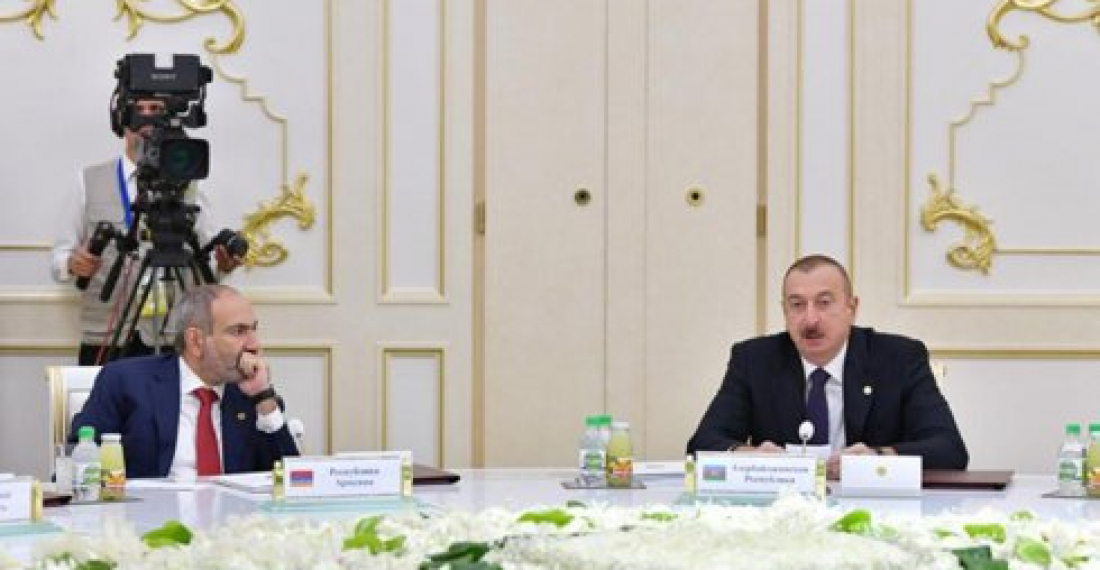
One of the indicators of the growing tensions was the stark difference between what happened in two recent CIS summits. Talks on the margins of the September 2018 Dushanbe meeting resulted in an agreement to decrease tensions and establish a direct communication line between the two leaders. Returning back to Yerevan, the Armenian Prime Minister was quite positive speaking about his Azerbaijani counterpart describing him as an educated and intelligent person. A year later, at the Ashgabat CIS summit on October 11, 2019 the Azerbaijani President publicly accused Armenia of glorifying fascists and received a tough response from his Armenian counterpart. According to official sources the two leaders discussed the Karabakh issue during the dinner in Ashgabat, but no information is available regarding the content and results.
It seems that the lack of progress in the negotiations is the result of apparent incompatibility in the approaches of the sides. Both Armenia and Karabakh have clear vision that no return to the past - either in status or on territories - is possible. This position was once more reiterated by the Nagorno Karabakh Republic President Bako Sahakyan on October 11 in Stepanakert. Meanwhile, Azerbaijan also has a clear position; the conflict can be solved only within the territorial integrity of Azerbaijan, which according to Baku means the return of all territories currently controlled by Karabakh back to Azerbaijan. President Aliyev reiterated this position during his speech at the Valdai conference in Sochi.
The key issue here is that these opinions are not shared only by elites but also by the vast majority of population. Thus, even if the leaders of Armenia, Azerbaijan or Karabakh are ready to soften their positions they will face strong resistance within their respective societies. Given the high degree of sensitivity on the Karabakh issue in both Armenia and Azerbaijan, any significant change in the position of the government most probably will bring about domestic unrest and may even result in a change of Government. Thus, neither the leadership nor the societies have any incentive to make significant changes in their positions, and this makes any breakthrough in the negotiations highly unlikely.
Given the current deadlock, the international community and especially the Minsk group co-chairs, should make choices. The one option is the continuation of the negotiation process, but with a clear understanding that they will not bring any substantial results. Of course, even fruitless negotiations are better than a total absence of contacts. However, it should be noted that the current situation is resulting in growing frustration, especially on the Azerbaijani side, which may result in a deliberate or accidental outbreak of large scale hostilities. Given the growing instability in the conflict neighborhood - Iran - Saudi Arabia tensions and Turkey's incursion into the Northeastern Syria - any large scale hostilities in Karabakh may have a spillover effect, with possible catastrophic results for regional security.
Fruitless negotiations are not the best way to prevent such developments. They appear to offer almost zero chance of bringing about quick results. Thus, the only viable way to decrease the risk of a resumption of large scale hostilities is the re-launch of discussions on confidence and security building measures as a key topic of negotiations. The International mediators did put a lot of effort on this immediately after the April 2016 four day war, pushing for an increase in the number of staff on the OSCE monitoring mission and the launch of a ceasefire violation mechanisms. The so called Vienna and Saint Petersburg agreements reached in May and June 2016 should be revitalized, even if with some necessary modifications. These measures may play a key role in thwarting an outbreak of hostilities which may put the entire region into the risk.
Simultaneously, confidence building measures should be activated and here again international organizations may play a vital role. The continuation of programs, such as the EU's EPNK initiative, could be a sound base for moving things forward. The existing platforms for dialogue should be modernized and new platforms can be established. Meanwhile, it's significant to have not only bilateral Armenia - Azerbaijan, but trilateral Armenia - Azerbaijan - Karabakh dialogue. In this context, the Partnership for Peace Consortium's 'Regional Stability in the South Caucasus" Study Group work could be a good example for such platforms.
Given the absolute incompatibility of societies' perception regarding the possible ways of resolving the Karabakh conflict, the international community should pay much more attention to confidence and security building measures as the only viable way to prevent the resumption of large scale hostilities in the short and medium term.
Source: This op-ed was prepared for commonspace.eu by Dr. Benyamin Poghosyan is the Chairman and Founder, Center for Political and Economic Strategic Studies in Yerevan.
photo: President Aliyev of Azerbaijan and prime minister Pashinyan of Armenia had a conversation on Karabakh at the CIS summit in Ashgabat on 11 October 2019.
The views expressed in opinion pieces and commentaries do not necessarily reflect the position of commonspace.eu or its partners