


Opinion: Armenia Close To The Brink

Bagrat Galstanyan, the hardline cleric who led street protests against the start of border demarcation between Armenia and Azerbaijan and called for the resignation or impeachment of Prime Minister Nikol Pashinyan, has been placed in pre-trial detention for two months. More than a dozen others have also been detained, with that number expected to rise. They are accused of plotting a coup ahead of next year's parliamentary elections, following the publication by pro-Pashinyan media of an alleged seven-page document detailing the plan.

Audio recordings, allegedly featuring Bagrat Galstanyan, describe actions ranging from civil disobedience to acts of terrorism. While MPs from the ruling Civil Contract party claim Galstanyan has admitted the voice is his, the controversial cleric denies any such confirmation. The National Security Service (NSS) has also released photographs of alleged weapons caches. However, opposition figures have noted that many of the seized items are legally registered hunting rifles, and the ammunition shown includes spent shotgun shells.

Additional doubts and questions have also surfaced. In the document published online by a pro-Pashinyan outlet, the opening sentence was crudely redacted using a simple strip of white paper. However, photographs released by the National Security Service (NSS) reveal that the concealed text dates the alleged coup between late June and late September of last year. This contradicts earlier claims by government officials and pro-government media, who had presented the plot as being planned for this year.

It remains unclear whether the coup plan is genuine, but it has not been uncommon for such plots during previous elections. In 2022, some alleged that the opposition planned to seize government buildings but could not reach a consensus in order to do so. It is also possible that the plot was intended to be carried out last year when Galstanyan, and the head of the opposition ARF-Dashnaktsutyun, Ishkhan Saghatelyan, attempted to rush the Armenian National Assembly in early June last year, but their supporters were dispersed instead.

But despite the allegations, no coup attempt ever took place. Nonetheless, the government this week controversially compared the alleged plot to the 27 October 1999 terrorist attack on parliament, which left eight people dead, including the prime minister and speaker. Yet, there have so far been no reports of increased security measures at potential targets in the capital. This has led some critics to suggest that the coup narrative is being used by Prime Minister Pashinyan to detain and silence political opponents ahead of next years elections.

The arrests come just a week after Russian-Armenian businessman Samvel Karapetyan was also detained on suspicion of planning a coup, itself part of an ever-escalating clash between Pashinyan and Catholicos Karekin II. It is anyway likely that Karapetyan would have played a role in the opposition’s latest attempt to remove Pashinyan from power. In the mid-2010s, he was among three Russian Armenian businessmen named as likely instrumental in removing former president Serge Sargsyan from power on behalf of his predecessor, Robert Kocharyan, and by Moscow. The other two businessmen were Ara Abramyan and Ruben Vardanyan, the latter now on trial in Baku.

Karapetyans arrest also proved convenient, given his control over the Electricity Network of Armenia, which he acquired in 2015 by purchasing the majority stake from Russias Inter RAO. Armenias reliance on Moscow for energy remains one of Prime Minister Pashinyans key vulnerabilities particularly during the winter months before heading into the upcoming election. Some critics argue that the arrest is less about justice and more about sending a strong signal to other wealthy businessmen who might consider backing the opposition.

Pashinyan has also sets his sights on the country’s first post-independence leader, Levon Ter-Petrosyan. In another post made on Facebook this week, he described the man hitherto often referred to as his “mentor” as a “liar, a gossip, [and] a narcissist.”  In response, Ter-Petrosyan’s right-hand man in the Armenian National Congress (ANC), Levon Zurabyan, labelled Pashinyan and his wife, Anna Hakobyan, an “ignorant and blind, arrogant and greedy, couple.”

That is not to say that the fear of clashes or a coup attempt are unfounded. Media this week reminded audiences of numerous such foiled plots since Pashinyan came to power in 2018. But it is also just as possible that Pashinyan is attempting to neutralise his political opposition before next year’s elections. Some civil society actors increasingly warn of democratic backsliding in the country and increased pressure on critical media. Others simply charge that the country is becoming more authoritarian.

As has been clear for some time, the 2026 elections are likely to be existential in nature. At stake is not just the future of all those involved but also the country’s geopolitical orientation and relationship with its neighbours, particularly Azerbaijan and Turkiye. It is likely that more arrests will follow while the political temperature rises closer to boiling point. What little social cohesion remains in the country will be tested to the limit. And with neither the government nor the opposition commanding large support, many will be left in-between.

It is imperative that the sides avoid violent confrontation on the streets at all costs. That, however, currently seems unlikely.


 

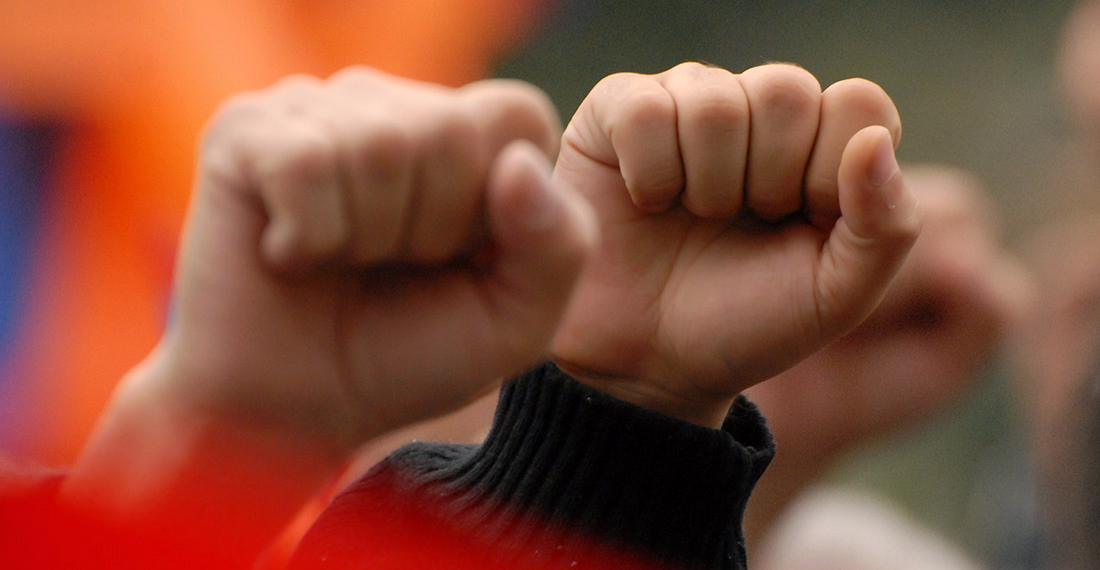
source: Onnik James Krikorian is a journalist, photojournalist, and consultant from the U.K. who has covered the Armenia-Azerbaijan conflict since 1994. Photo: Opposition Protest, Liberty Square, Yerevan, Armenia © Onnik James Krikorian 2007 

The views expressed in opinion pieces and commentaries do not necessarily reflect the position of commonspace.eu or its partners.
 

Related articles

Editor's choice
News
Germany accuses Russia of cyberattacks and disinformation campaign

Germany accuses Russia of cyberattacks and disinformation campaign

The German government holds Russia responsible for a cyberattack on German air traffic control, and for targeted disinformation campaigns before the last federal election. According to the German Foreign Office in Berlin, the incidents could be clearly attributed to the Russian military intelligence service, the GRU. In response, the Russian ambassador to Berlin was summoned to the Foreign Ministry. "We have been observing a massive increase in threatening hybrid activities by Russia for some time now," a spokesperson for the Foreign Ministry stated. These range from disinformation campaigns and espionage to cyberattacks and sabotage attempts. The aim is to divide society, sow distrust, and undermine confidence in democratic institutions. The spokesperson added that with these actions, Russia is "very concretely threatening our security, not only through its war of aggression against Ukraine, but also here in Germany."  The Foreign Ministry spokesperson explained that the cyberattack on air traffic control in August 2024 was clearly attributed to the hacker collective "APT28," known as "Fancy Bear," and to the responsibility of the Russian military intelligence service, the GRU. Furthermore, it could now be "conclusively stated" that Russia had attempted "to influence and destabilize both the last Federal election and the ongoing internal affairs of the Federal Republic of Germany." There was "absolutely irrefutable evidence" for this". The so-called "Storm 1516" campaign, which has been running since 2024, is allegedly backed by "reliable information" that the Moscow-based think tank "Center for Geopolitical Expertise" is behind it. The Center is also said to be supported by Russian military intelligence. Its primary aim is to influence democratic elections in the West. (Click the image to read more).
Editor's choice
News
NATO Chief says war is on Europe's doorstep, and warns against complacency

NATO Chief says war is on Europe's doorstep, and warns against complacency

Russia could attack a NATO country within the next five years, the Secretary General of NATO, Mark Rutte, said in a stark new warning. "NATO's own defences can hold for now," Rutte warned in Berlin, but conflict was "next door" to Europe, and he feared "too many are quietly complacent, and too many don't feel the urgency, too many believe that time is on our side. "Russia is already escalating its covert campaign against our societies," Rutte said in a speech in Germany. "We must be prepared for the scale of war our grandparents or great-grandparents endured." Earlier this month, Russia's President Vladimir Putin said his country was not planning to go to war with Europe, but it was ready "right now" if Europe wanted to - or started a war. But similar reassurances were given by Moscow in 2022, just before 200,000 Russian troops crossed the border and invaded Ukraine. Putin has accused European countries of hindering US efforts to bring peace in Ukraine - a reference to the role Ukraine's European allies have recently played in trying to change a US peace plan to end the war, whose initial draft was seen as favouring Russia. But Putin was not sincere, Nato's secretary-general said in the German capital, Berlin. Supporting Ukraine, he added, was a guarantee for European security. "Just imagine if Putin got his way; Ukraine under the boot of Russian occupation, his forces pressing against a longer border with Nato, and the significantly increased risk of an armed attack against us." Russia's economy has been on a war footing for more than three years now - its factories churn out ever more supplies of drones, missiles and artillery shells. According to a recent report by the Kiel Institute for the World Economy, Russia has been producing each month around 150 tanks, 550 infantry fighting vehicles, 120 Lancet drones and more than 50 artillery pieces. The UK, and most of its Western allies, are simply not anywhere near this point. Analysts say it would take years for Western Europe's factories to come close to matching Russia's mass-production of weapons. "Allied defence spending and production must rise rapidly, our armed forces must have what they need to keep us safe," the Nato chief said.

Popular

Editor's choice
News
Germany accuses Russia of cyberattacks and disinformation campaign

Germany accuses Russia of cyberattacks and disinformation campaign

The German government holds Russia responsible for a cyberattack on German air traffic control, and for targeted disinformation campaigns before the last federal election. According to the German Foreign Office in Berlin, the incidents could be clearly attributed to the Russian military intelligence service, the GRU. In response, the Russian ambassador to Berlin was summoned to the Foreign Ministry. "We have been observing a massive increase in threatening hybrid activities by Russia for some time now," a spokesperson for the Foreign Ministry stated. These range from disinformation campaigns and espionage to cyberattacks and sabotage attempts. The aim is to divide society, sow distrust, and undermine confidence in democratic institutions. The spokesperson added that with these actions, Russia is "very concretely threatening our security, not only through its war of aggression against Ukraine, but also here in Germany."  The Foreign Ministry spokesperson explained that the cyberattack on air traffic control in August 2024 was clearly attributed to the hacker collective "APT28," known as "Fancy Bear," and to the responsibility of the Russian military intelligence service, the GRU. Furthermore, it could now be "conclusively stated" that Russia had attempted "to influence and destabilize both the last Federal election and the ongoing internal affairs of the Federal Republic of Germany." There was "absolutely irrefutable evidence" for this". The so-called "Storm 1516" campaign, which has been running since 2024, is allegedly backed by "reliable information" that the Moscow-based think tank "Center for Geopolitical Expertise" is behind it. The Center is also said to be supported by Russian military intelligence. Its primary aim is to influence democratic elections in the West. (Click the image to read more).

