Georgi Vanyan’s Tekali Dream and Vanished Hopes for Grassroots Peace

Yesterday marked the fourth anniversary of the untimely passing of Armenian theatrical director turned peace activist Georgi Vanyan. He was 58.

I last spoke to Georgi at the end of September 2021 in an unexpected call when he visited Tbilisi during the pandemic. He planned to return to the ethnic Azerbaijani village of Tekali in Georgia situated on the intersection of the country with Armenia and Azerbaijan. The plan was to travel to Tekali together again. In the early 2010s, it had been the location for perhaps the most genuine grassroots effort to bring together citizens – analysts, journalists, and everyday folk alike – from all three countries to discuss issues of mutual interest.

Two days later, he sent a short text message. He had just tested positive for COVID-19 and so he would have to recover first. He was already in self-isolation. 

As we know, he didn’t recover and passed away on 15 October. To be honest, many of us knew that this would happen as soon as we were told he had been transferred to a ventilator in a Georgian hospital. The shock was not as much as it would have been otherwise. The sadness, however, remained immense. It also cast a dark shadow over any hopes that Georgi’s activities could resume again following the devastating war between Armenia and Azerbaijan a year earlier in 2020.

During that renewed conflict, Vanyan publicly released a letter he sent to Armenian Prime Minister Nikol Pashinyan calling on him to end the war and immediately enter into talks with Baku. His request was ignored, of course, and Georgi was instead visited by police and fined. Pashinyan had already effectively walked away from the now defunct OSCE Minsk Group while gaffe after gaffe by his new revolutionary administration had made the war more inevitable than ever before.

Even in an interview I conducted with Georgi in 2009 he had foreseen that Armenia and Azerbaijan were heading in that direction though few others did. The question was not if but when. For many civil society activists in Armenia, let alone politicians, Georgi was a maverick. In my 2009 interview, he stressed that rather than hold conferences in expensive hotels in faraway destinations usually outside the region, he instead held them in local markets and cultural houses or more humble locations.

He had hoped that often heavily funded NGOs would follow suite and take their activities to where it mattered most – the actual population not just in the capitals but throughout the entire country, both rural and urban. There is currently perhaps only one NGO based in Vanadzor in Armenia that does similarly with the younger generation and others today. This demographic was important to Georgi too. In 2007, he hosted writers from Azerbaijan at an event held at a school in Yerevan.

Nationalist bloggers momentarily disrupted the event. A few years later, his critics threw stones or made death threats. The media discredited him at each and every opportunity. Civil society, including some NGOs still operating in this sphere today, marginalised or ostracised him, perhaps fearful for their incomes or simply because any talk of peace came only with their own political biases and demands attached.

It is perhaps sadly poignant that Georgi died in poverty living a village close to the Armenian border with Azerbaijan. His income was mainly operating a taxi service inside Armenia and Georgia. He called it his “peace taxi.” Even when ferrying passengers, Georgi would engage them in discussion about the need for peace and regional integration. Nonetheless, Tekali was his crowning success. The first event in the small border village was held in March 2011.

The topic was Georgia’s potential role in helping resolve the Armenia-Azerbaijan conflict. Participants came from Baku, Tbilisi, and Yerevan as well as the regions of all three countries, including those from Tavush and Qazakh. It was only 14 years later in 2024 that this part of this border between Armenia and Azerbaijan was demarcated. Even so, with the demise of Tekali in the mid-2010s, and Georgi more recently, there remains no interaction between both sides even on neutral ground.

Sadly, most Armenians did not know Georgi when he was alive and even more so after his death. At his funeral in Yerevan, however, there were some noticeable exceptions such as Yerevan Press Club’s Boris Navarsadyan, Soviet-era dissident Paruyr Hairikyan, and former education minister and political figure turned educator Ashot Bleyan. Armenia’s E-Press, an independent media outlet, was also present just as it was a decade earlier covering the meetings in Tekali. 

Many more Azerbaijanis involved in the conflict-resolution sphere paid their respects online, though there have also been detractors. In 2019, just a year before the war, an Azerbaijani military analyst warned that Georgi’s approach risked humanising the enemy enough to make war more difficult to wage. His interlocutor in that discussion broadcast on Azerbaijani television instead spoke highly of Georgi just as many more do to this day.

Now, at this stage of the Armenian-Azerbaijani reconciliation process, the peacebuilding community needed him more than ever,” Ahmad Alili, an Azerbaijani analyst, also wrote publicly soon after his death. Sincere Person. Genuine Peacebuilder. Great Loss. Rest in Peace, Georgi.

Georgi Vanyan, 1963-2021.

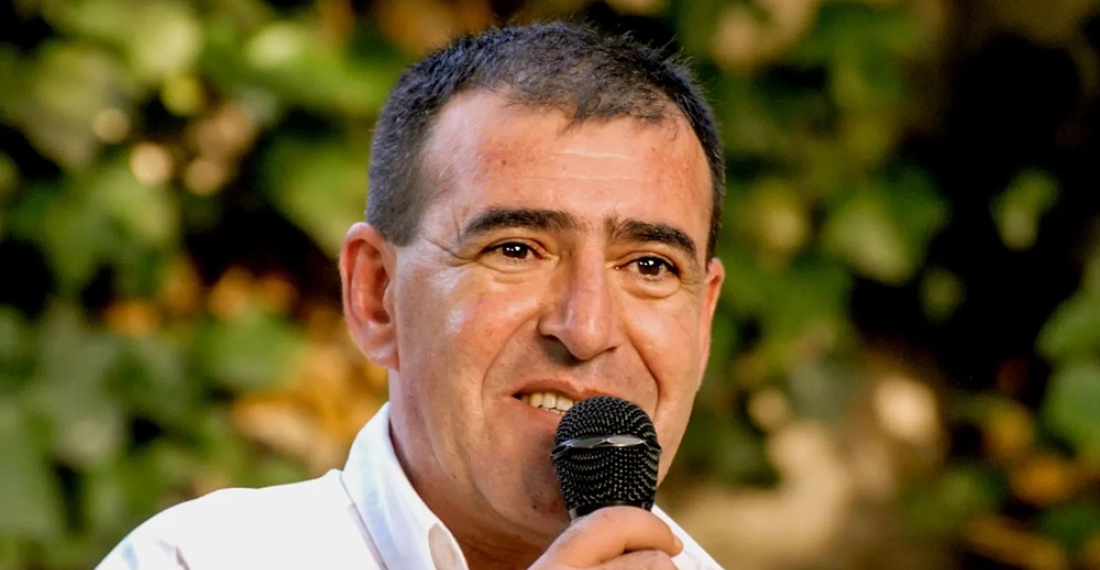
source: Onnik James Krikorian is a journalist, photojournalist, and consultant from the U.K. who has covered the Armenia-Azerbaijan conflict since 1994. Photo: Georgi Vanyan speaking at a cross border event held in the village of Tekali close to the geographical intersection of Armenia, Azerbaijan, and Georgia © Onnik James Krikorian 2012 
The views expressed in opinion pieces and commentaries do not necessarily reflect the position of commonspace.eu or its partners.
 

Related articles

Editor's choice
News
Russia adds pressure on Armenia ahead of key elections; recalls Ambassador in Yerevan for consultations

Russia adds pressure on Armenia ahead of key elections; recalls Ambassador in Yerevan for consultations

Ahead of key parliamentary elections,scheduled to be held in Armenia on Sunday, 7 June, Russia continues to attempt to put pressure on the Armenian Government led by prime minister Nikol Pashinyan. On 30 May, Russia recalled its Ambassador to Yerevan for consultations. A terse statement, published on the website of the Russian Foreign Ministry, said, "The Ambassador of the Russian Federation to the Republic of Armenia , S.P. Kopyrkin, has been summoned to Moscow for consultations in connection with the steps taken by the Armenian leadership to move closer to the European Union, which are detrimental to cooperation within the EAEU." This followed a statement issued the day before, by the leaders of the Eurasian Economic Union (EAEU) that challenges the Armenian trajectory towards approximating to the European Union. Vladimir Putin is undertood to have personally pushed the other four EAEU leaders to issue the statement, which said: "Taking into account the significant risks to the economic security of the member states of the Eurasian Economic Union (hereinafter referred to as the Union) arising in connection with the preparation of the Republic of Armenia for accession to the European Union, as well as the need to prevent the associated damage to the member states of the Union: decided that the members of the Eurasian Intergovernmental Council from the Republic of Belarus, the Republic of Kazakhstan, the Kyrgyz Republic and the Russian Federation will report at the next meeting of the Supreme Eurasian Economic Council in December 2026 on the possible consequences of the suspension of the Treaty on the Eurasian Economic Union with respect to the Republic of Armenia. We share the position on the need to hold a national referendum in the Republic of Armenia as soon as possible on joining the European Union or continuing to be part of the Eurasian Economic Union."
Editor's choice
News
The leaders of the states of the Eurasian Economic Union issued a tough statement warning fellow-member state Armenia of the consequences of its desire to join the European Union.

The leaders of the states of the Eurasian Economic Union issued a tough statement warning fellow-member state Armenia of the consequences of its desire to join the European Union.

The leaders of the states of the Eurasian Economic Union (EEAS) issued a tough statement warning fellow-member state Armenia of the consequences of its desire to join the European Union. The stark, sharply worded,  warning, comes days before crucial parliamentary elections in Armenia, scheduled for 7 June. The full statement said, “We, the Presidents of the Republic of Belarus, the Republic of Kazakhstan, the Kyrgyz Republic and the Russian Federation, Taking into account the actions of the Republic of Armenia aimed at joining the European Union, including the approval in 2025 by the National Assembly of the Republic of Armenia and the signing by the President of the Republic of Armenia of the Law of the Republic of Armenia "On the Start of the Process of Accession of the Republic of Armenia to the European Union", as well as the confirmation by the European Union of the European aspirations of the Government of the Republic of Armenia, expressed in the joint declaration following the first Armenia-European Union summit, adopted on 5 May 2026, Taking into account the significant risks to the economic security of the member states of the Eurasian Economic Union (hereinafter referred to as the Union) arising in connection with the preparation of the Republic of Armenia for accession to the European Union, as well as the need to prevent the associated damage to the member states of the Union: decided that the members of the Eurasian Intergovernmental Council from the Republic of Belarus, the Republic of Kazakhstan, the Kyrgyz Republic and the Russian Federation will report at the next meeting of the Supreme Eurasian Economic Council in December 2026 on the possible consequences of the suspension of the Treaty on the Eurasian Economic Union with respect to the Republic of Armenia. We share the position on the need to hold a national referendum in the Republic of Armenia as soon as possible on joining the European Union or continuing to be part of the Eurasian Economic Union. Astana, May 29, 2026” A meeting of the Supreme Eurasian Economic Council was held in Astana, Kazakhstan, on May 29, 2026. The meeting of the Supreme Eurasian Economic Council in a restricted format was attended by Russian President Vladimir Putin, Belarusian President Alexander Lukashenko , Kazakh President Kassym-Jomart Tokayev , Kyrgyz President Sadyr Japarov , Armenian Deputy Prime Minister Mher Grigoryan, and Chairman of the Board of the Eurasian Economic Commission Bakytzhan Sagintayev. From the Russian side, the meeting was also attended by Deputy Prime Minister and member of the Council of the Eurasian Economic Commission Alexey Overchuk and Presidential Aide Yury Ushakov . The heads of delegations from EAEU observer states, including President of Uzbekistan Shavkat Mirziyoyev , Vice President of Cuba Salvador Valdés Mesa, Minister of Industry, Mines, and Trade of Iran Mohammad Atabak, and CIS Secretary General Sergei Lebedev, joined the expanded meeting . Following the meeting of the Supreme Eurasian Economic Council, a number of documents were signed .

Popular

Editor's choice
Interview
Thursday Interview: Murad Muradov

Thursday Interview: Murad Muradov

Today, commonspace.eu starts a new regular weekly series. THURSDAY INTERVIEW, conducted by Lauri Nikulainen, will host  persons who are thinkers, opinion shapers, and implementors in their countries and spheres. We start the series with an interview with Murad Muradov, a leading person in Azerbaijan's think tank community. He is also the first co-chair of the Action Committee for a new Armenian-Azerbaijani Dialogue. Last September he made history by being the first Azerbaijani civil society activist to visit Armenia after the 44 day war, and the start of the peace process. Speaking about this visit Murad Muradov said: "My experience was largely positive. My negative expectations luckily didn’t play out. The discussions were respectful, the panel format bringing together experts from Armenia, Azerbaijan, and Turkey was particularly valuable during the NATO Rose-Roth Seminar in Yerevan, and media coverage, while varied in tone, remained largely constructive. Some media outlets though attempted to represent me as more of a government mouthpiece than an independent expert, which was totally misleading.  Overall, I see these initiatives as important steps in rebuilding trust and normalising professional engagement. The fact that soon a larger Azerbaijani civil society visits to Armenia followed, reinforces the sense that this process is moving in the right direction." (click the image to read the interview in full)