This Saturday marks the fifth anniversary of the Second Karabakh War. To be honest, and personally speaking, it had always seemed the continuation of the first waged between Armenia and Azerbaijan in the early 1990s. After all, in the three decades between both, the conflict had nearly always been described as ‘frozen’ rather than resolved – at least until it wasn’t.
Whatever it is called, the 44-day-war claimed around 7,000 lives on both sides and was hardly unexpected. Since 2011, with no breakthrough on the horizon, that had been clear for almost a decade. The International Crisis Group had already warned of a war breaking out by accident even if others demonstrated no sense of urgency. For some, however, it was not a case of if but rather of when.
Indeed, five years ago today, I received a message. It was from an Azerbaijani acquaintance asking to interview me on why I had “stopped being a peacemaker.” It was a bizarre projection. I have continually written about the conflict since 1994 and had also long recognised the need for positive images to break down negative perceptions of “the other,” something that I have always done.
Sadly, for most civil society organisations in Armenia and Azerbaijan, this approach was considered “too simplistic.” Even now, when many NGOs use images they nearly always lack impact and aesthetic value. It did, however, remind me why NGOs so often fail with their communications strategy. In almost every sphere otherwise, professional imagery is used, but paradoxically not in this one.
That is concerning. Studies show that the brain processes visual information almost instantly – reportedly up to 60,000 times faster than text. Images are also significantly more effective at stirring emotion and shaping perceptions.
Two days later after that correspondence, the 2020 war broke out. I had rejected the offer to be interviewed, saying instead that war was inevitable and that next time everyone had better work for a peace deal without delay.
On the eve of this year's anniversary, however, a new mood might finally be emerging. In the past two years there has been remarkable progress and it finally seems that the sides are on the verge of an agreement. This is especially the case since August when Armenian Prime Minister Nikol Pashinyan, Azerbaijani President Ilham Aliyev, and U.S. President Donald Trump met in Washington.
There are signs of a more cordial relationship between forming between the leaders and even their spouses. This now extends to other senior officials too, but are these images depicting a new rapport genuine? I would like to think so. Previous optics such as President Serzh Sargsyan, Russian counterpart Dmitry Medvedev, and Azerbaijan’s Ilham Aliyev skiing in Sochi in 2012, felt awkward and contrived.
Such a change is important. Both sides are still more likely to view endless images of politicians, soldiers, and meeting rooms rather than the real lives of real people. A mutual understanding of societies in both countries remains non-existent.
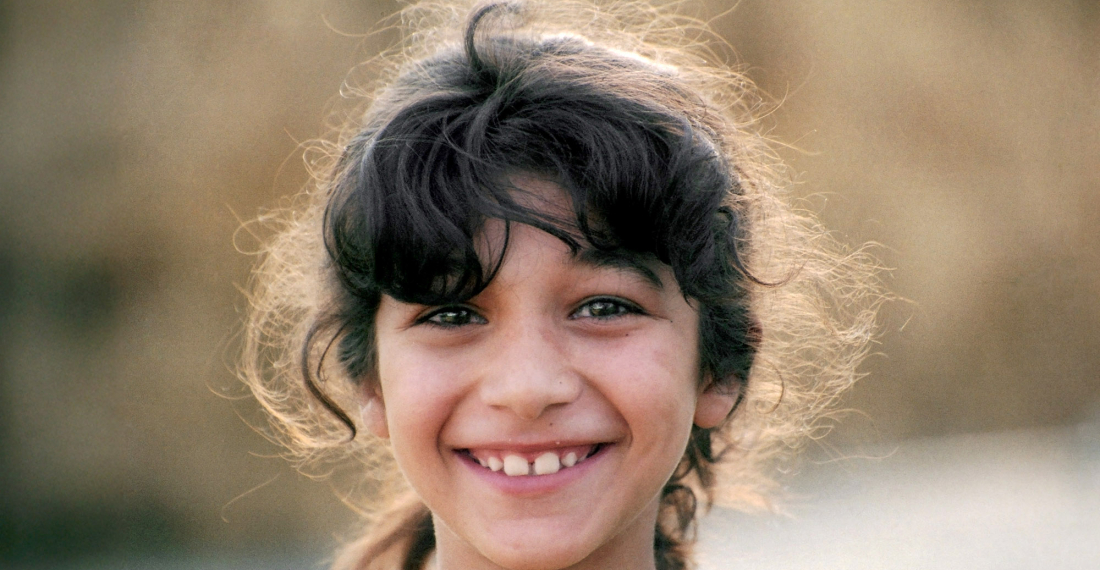
Even in 1994, on my first visit to Karabakh, that especially struck me. That is why I made sure to also photograph general life back then and colourful events today. From Karabakh Armenian children playing in Stepanakert in 1994 to birthday parties in co-inhabited villages in Georgia in 2012 where ethnic Armenian and Azerbaijani children celebrate together.
And after covering general life in Armenia for well over a decade among my reporting on culture, politics, poverty, and conflict, I hope to finally visit Baku for Novruz next year. I have been doing so among the ethnic Azerbaijani community in Georgia for almost 15 years now.
But there have also been important precedents in the past.
When I moved from London to Yerevan in the late 1990s, I remember that others had attempted the same. A television program made jointly by Armenian, Azerbaijani, and Georgian journalists for broadcast in all three countries would often air reports doing just that. It was a wonderful example of how the mainstream media can bridge the gap between peoples.
Incidentally, it was usually impossible to tell the three peoples apart unless a road or shop sign in one of the three distinct scripts each uses was visible in the background. It is also important to note that these were reports filmed by professional cameramen and not enthusiasts or those that had never covered such themes before. They were also not politicised or put together as arthouse films few view.
Perhaps for the next anniversary such projects can exist again, using the same mass media in order to reach the maximum number of people across entire society. It could well prove a much needed opportunity for mutual reflection, setting the scene for the future with images that humanise. A picture is worth a thousand words. In some cases, and more often than not, they can say even more.