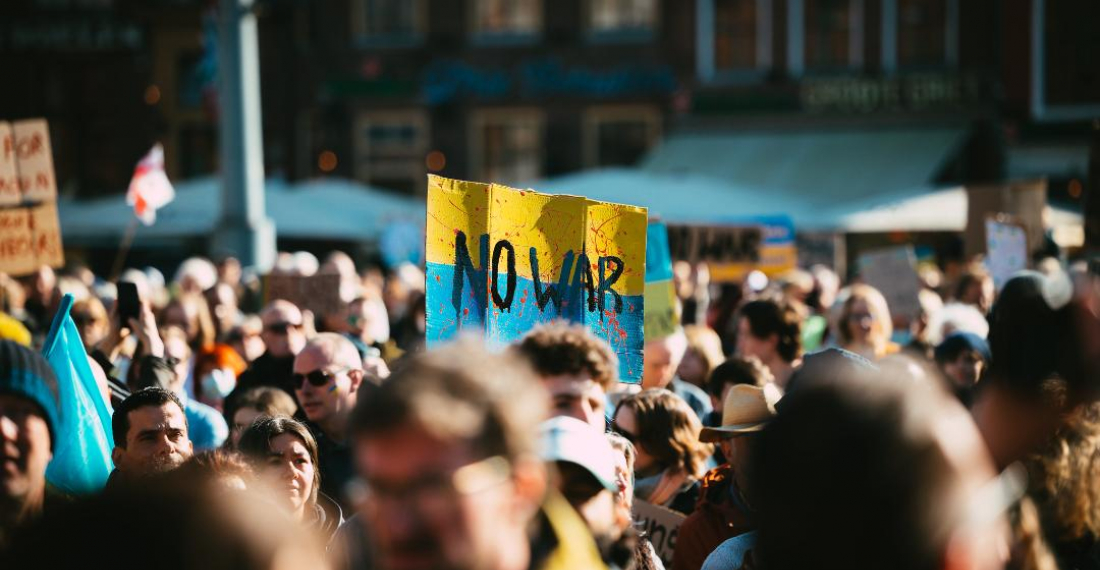
Opinion: The Russian invasion of Ukraine is a life-changing moment for many of us

"Looking at the current situation in Ukraine, there is no room for myself and other young people from the Middle East to think positively anymore about the Russian state and regime", writes Noman Ahmad in this op-ed. "As a young man from the Middle East,  and much as I dislike foreign interventionism, I do not want the Ukrainians to suffer from what many people in the Middle East faced for the past twenty some years, and I also hope that people in the region stop admiring Russia unjustifiably."

Whilst the Russian invasion of Ukraine on 24 February 2022 came as a surprise for those like myself who still believe in multilateralism and diplomacy, it was probably less so for the many Ukrainians who currently have to face consequences at home and abroad. Coming from the Middle and Near East, I never thought there would be such an intense fight right at the heart of Europe, a place I had always perceived as a beacon of stability and order. The Russian invasion will now make us question the very idea of realpolitik and what it should permit. 

From the very first few days of the war, it was clear that this was not a proportionate  response against the perceived threat from NATO. Russia attacked mercilessly affecting the livelihoods of hundreds of thousands, displacing  millions and killing  thousands, while causing trauma and uncertainty for all Ukrainians. The scale of destruction in the first week alone is something that brings back memories of Iraq, Yemen and Syria where several foreign and domestic actors battled for dominance with total disregard for sovereignty, and with the presence of various levels of competing interests. Whatever the reasons for the Russian invasion, there can be no justification for the manner in which Putin attacked. The least this does for an average person is to question the very notion of realpolitik and how far should it go in allowing the use of force by states in the exercise of international relations and the pursuit of their interests. 

That being said, European countries have made their  position clearly and firmly, and I could not be happier seeing European states thus united. The unity, not just among the EU states but also among the European people themselves, is extraordinary and timely. Whilst there is still debate among various political  forces in Europe on how best to address the invasion, all the main European political factions have  made their point clearly and condemned the Russian invasion. The European Union, as an institution, will definitely come out of this crisis stronger and more united. It will also allow the Union to rethink itself and decide whether it wants to stay as primarily an economic bloc or assume a more geopolitical role . However, it is also important for dialogue to  be restored soon, and for security arrangements across the continent  involving Ukrainians and Russians on one hand, and between NATO and Russia on the other hand. 

Looking at the response from across the Middle East and the Arab world, the abstention of several countries at the United Nations in the vote to condemn Russia came as no surprise for those observing Middle Eastern Politics. Several Arab states are itching to reduce their reliance on the US and instead focus on developing a strategic relationship with Russia. Others simply do not subscribe to a certain side but have considerable interests to maintain  good relations with both the so-called west and Russia. It is shameful and it does not represent the views of many Middle Easterners who dislike war and interventions. Russia has not been a positive player in many Arab countries. They have prolonged the conflict in Syria, contributed to division in Libya and could not offer any tangible support for peace in Yemen.

Speaking about myself, I grew up in atmosphere that admired Russia and remembered positively the  defunct Soviet Union as the west waged bloody campaigns across the Middle East.  Looking at the current situation in Ukraine, there is no room for myself and other young people from the Middle East to think positively anymore about the Russian state and regime. As a young man from the Middle East,  and much as I dislike foreign interventionism, I do not want the Ukrainians to suffer from what many people in the Middle East faced for the past twenty some years, and I also hope that people in the region stop admiring Russia unjustifiably.

The Russian invasion will be a life changing moment for all of us. While I cannot speak for Ukrainians, I can notice that the average European is now definitely rethinking  about future security, and their role as a European citizen. Europeans now will be more active on legal and humanitarian grounds. They will understand how rogue Russia can be and thus become more civically engaged to prepare for future confrontations or escalations. For other Middle Easterners, I hope this is a lesson that aggression is not always coming from the west, but any actor can be an aggressor. It also means that no state, no matter how developed, is safe from threats from rogue regimes. I hope the spirit of European solidarity we are currently witnessing in Europe can be replicated across the Middle East, and I hope dialogue always stays on table in the Middle East. 

 Many are asking if the Russian invasion of Ukraine marks the end of a unipolar world. As I was born and raised in third world countries, the end of Cold War paved a path for a life in which western models and ideas prevailed. The western model has been sought after by many developing and underdeveloped states. However, Russia was not on board and the invasion is already proving that history did not quite end yet for the Russian regime contrary to what Fukuyama argued. Whether we see an extension of political history where competition continues, thus bringing us back to a bi- or multipolar system or the actual end of history as Fukuyama describes it, is a question to ask. In any case, aggression needs to be stood against and realpolitik should not  justify mass scale atrocities and destruction.
Source: Noman Ahmed Ashraf is Research Associate focusing on Europe’s Southern Neighbourhood at LINKS Europe.  
The views expressed in opinion pieces and commentaries do not necessarily reflect the position of commonspace.eu or its partners

Related articles

Editor's choice
News
Council of Europe launches new International Claims Commission for Ukraine

Council of Europe launches new International Claims Commission for Ukraine

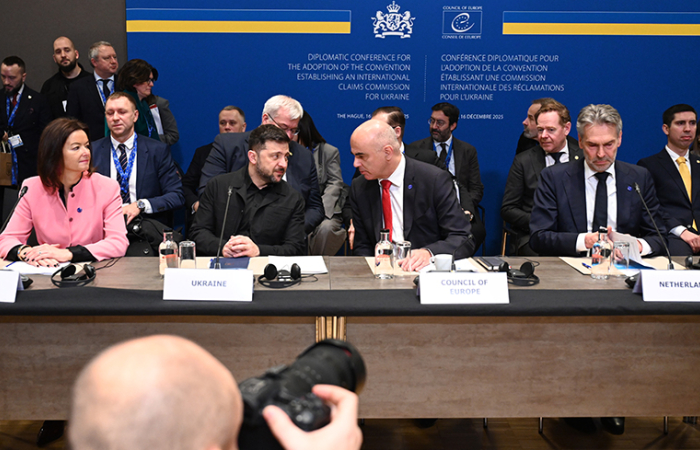
Thirty-four countries and the European Union have signed a new convention establishing an International Claims Commission for Ukraine at a diplomatic conference co-hosted by the 46-nation Council of Europe and the Netherlands in the Hague. The diplomatic conference was attended by leaders and high-level representatives from over 50 states, including the President of Ukraine, Volodymyr Zelenskyy, the President of the Republic of Moldova, Maia Sandu, and the Prime Minister of the Netherlands, Dick Schoof.  “Today marks a major step forward in ensuring accountability for Ukraine. The International Claims Commission represents justice and hope for tens of thousands of victims—our determination that those who have suffered will not be forgotten. I call for quick ratifications so we can get the commission rapidly up and running for the people of Ukraine,” said Council of Europe Secretary General Alain Berset. Ukrainian President Volodymyr Zelenskyy said: “We expect that every mechanism for compensation from the Register of Damage and Claims Commission to the actual payments – will start working and receive strong and sufficient international support, so that people can truly feel that any kind of damage caused by the war can be compensated. This war, and Russia’s responsibility for it, MUST become a clear example – so that others learn not to choose aggression.” “Accountability is about creating the conditions for peace that endures. And therefore, accountability is a condition of security – today and for the future. But accountability is not only about Ukraine. And it is not only about one aggressor and one victim. Accountability is about Europe. About every country in Europe. It is about whether Europe, as a whole, is willing to defend its peace,” said Maia Sandu, President of the Republic of Moldova, which currently holds the Presidency of the Council of Europe’s Committee of Ministers. The Prime Minister of the Netherlands, Dick Schoof, said: “Every day Russia is deliberately bombarding homes, destroying businesses and damaging infrastructure in Ukraine. Russia must compensate Ukraine for the damage caused. That is why we have launched the International Claims Commission for Ukraine and we are honoured to host it.” The International Claims Commission will be the second part of a comprehensive compensation mechanism related to Russia’s war of aggression, building on the existing Register of Damage for Ukraine. The claims commission will be established within the framework of the Council of Europe and will also be open to other countries. The Register of Damage for Ukraine, created in 2023, collects and records compensation claims submitted by individuals, organisations and public bodies in Ukraine. Forty-four states and the European Union have so far joined the Register, which has already received 86,000 claims. The International Claims Commission will review, assess and decide upon claims submitted to the Register of Damage for Ukraine and determine the amount of compensation, if any, which is due in each case. The convention establishing the commission will enter into force once it has been ratified by 25 signatories, as long as sufficient funds have been secured to support its initial work.

Popular

Editor's choice
News
Council of Europe launches new International Claims Commission for Ukraine

Council of Europe launches new International Claims Commission for Ukraine

Thirty-four countries and the European Union have signed a new convention establishing an International Claims Commission for Ukraine at a diplomatic conference co-hosted by the 46-nation Council of Europe and the Netherlands in the Hague. The diplomatic conference was attended by leaders and high-level representatives from over 50 states, including the President of Ukraine, Volodymyr Zelenskyy, the President of the Republic of Moldova, Maia Sandu, and the Prime Minister of the Netherlands, Dick Schoof.  “Today marks a major step forward in ensuring accountability for Ukraine. The International Claims Commission represents justice and hope for tens of thousands of victims—our determination that those who have suffered will not be forgotten. I call for quick ratifications so we can get the commission rapidly up and running for the people of Ukraine,” said Council of Europe Secretary General Alain Berset. Ukrainian President Volodymyr Zelenskyy said: “We expect that every mechanism for compensation from the Register of Damage and Claims Commission to the actual payments – will start working and receive strong and sufficient international support, so that people can truly feel that any kind of damage caused by the war can be compensated. This war, and Russia’s responsibility for it, MUST become a clear example – so that others learn not to choose aggression.” “Accountability is about creating the conditions for peace that endures. And therefore, accountability is a condition of security – today and for the future. But accountability is not only about Ukraine. And it is not only about one aggressor and one victim. Accountability is about Europe. About every country in Europe. It is about whether Europe, as a whole, is willing to defend its peace,” said Maia Sandu, President of the Republic of Moldova, which currently holds the Presidency of the Council of Europe’s Committee of Ministers. The Prime Minister of the Netherlands, Dick Schoof, said: “Every day Russia is deliberately bombarding homes, destroying businesses and damaging infrastructure in Ukraine. Russia must compensate Ukraine for the damage caused. That is why we have launched the International Claims Commission for Ukraine and we are honoured to host it.” The International Claims Commission will be the second part of a comprehensive compensation mechanism related to Russia’s war of aggression, building on the existing Register of Damage for Ukraine. The claims commission will be established within the framework of the Council of Europe and will also be open to other countries. The Register of Damage for Ukraine, created in 2023, collects and records compensation claims submitted by individuals, organisations and public bodies in Ukraine. Forty-four states and the European Union have so far joined the Register, which has already received 86,000 claims. The International Claims Commission will review, assess and decide upon claims submitted to the Register of Damage for Ukraine and determine the amount of compensation, if any, which is due in each case. The convention establishing the commission will enter into force once it has been ratified by 25 signatories, as long as sufficient funds have been secured to support its initial work.