


War and War Games in the Caucasus

During this summer, despite the fact that the coronavirus pandemic continues unabated in parts of the Caucasus region, including Armenia and Azerbaijan, the sounds of war, and those of war games blended together creating a dangerous haze. The region, which is heavily armed, remains tense after a surge in violence on the Armenia-Azerbaijan border starting on 12 July. Over the last days the number of incidents recorded appeared to be less, but the situation remains volatile.

The fighting had hardly stopped when the noise of war was replaced with the noise of war games.

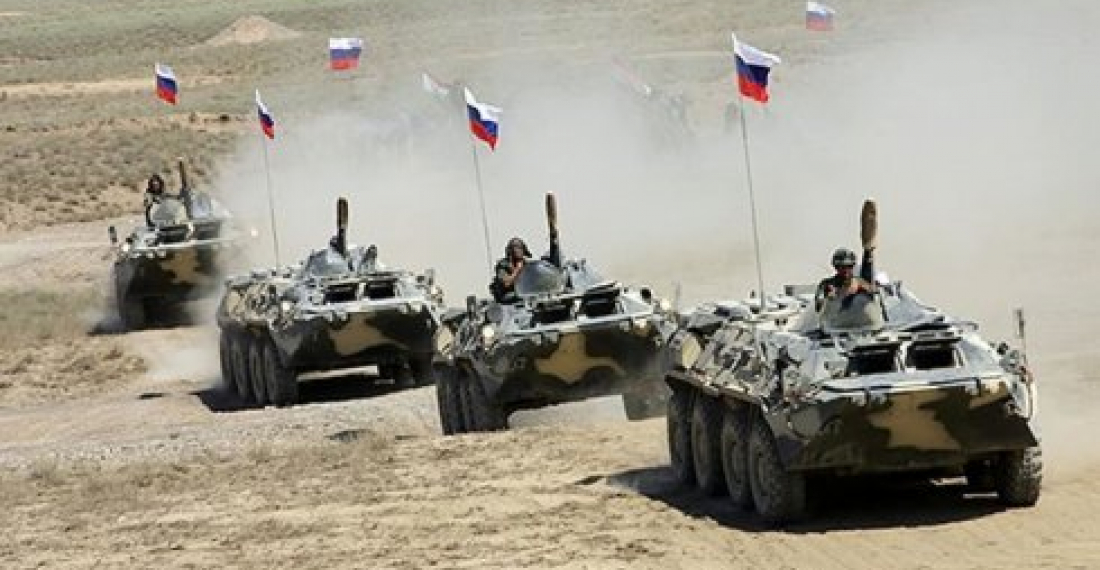
First the Russians.... 

"Over 10,000 personnel of the Southern Military District are participating in force-on-force battalion-level tactical drills simultaneously running in eleven regions in Russia's south and the Trans-Caucasus region," the Russian military said in a statement last week. The motor rifle, armoured and artillery units are accomplishing combat training assignments with a live-fire exercise at all-arms practice grounds of the Astrakhan, Volgograd, Rostov and Stavropol Regions, the Republics of Dagestan, North Ossetia, Adygea and Chechnya, in Crimea and at the Southern Military District's bases in Abkhazia and South Ossetia. The drills also involve engineering, radiological, chemical and biological protection and medical troops, electronic warfare units, air defence, reconnaissance and other forces. Aircraft and helicopters of the Southern Military District's Air Force and Air Defence Army are providing fire support for the troops and promptly delivering the personnel, the statement said.

Whilst the fighting on the Armenian-Azerbaijani border was still on-going, Russian president Vladimir Putin  ordered a snap combat readiness check of the troops of the Southern and Western Military Districts, marine infantry of the Northern and Pacific Fleets, some units of central subordination and the Airborne Force, and this was held 17-21 July. The surprise combat readiness check involved about 150,000 troops, around 400 aircraft, over 26,000 items of armament, military and special hardware and over 100 warships and support vessels.

Russia assured Azerbaijan that both the drills and the combat readiness check had nothing to do with events on the Armenia-Azerbaijan border.

 ......then the Turks

On Monday (27 July) it was announced that "in accordance with the Agreement on Military Cooperation between the Republic of Azerbaijan and the Republic of Turkey" ,  Azerbaijani-Turkish Live Fire Joint Large-Scale Tactical and Flight-Tactical Exercises will be held in Azerbaijan with the participation of the Land Forces and the Air Force of both countries.

The joint exercises involve military personnel, armoured vehicles, artillery mounts, and mortars, as well as military aviation and air defence equipment of the armies of the two countries.

According to the plan, exercises involving the Land Forces will be held from August 1 to 5 in Baku and Nakhchivan, and exercises with the participation of military aviation will be held from July 29 to August 10 - in Baku, Nakhchivan, Ganja, Kurdamir and Yevlakh.

The Azerbaijani Defence Ministry told the Russian newspaper Kommersant that the timeframe and the location of these drills had been chosen last year, denying any link to the recent conflict.On Friday (31 July) Armenia has put its armed forces on a high state of readiness.

An announcement from the Ministry of Defence said that "Under the 2020 plan of spot checks of the combat readiness of the Armed Forces, this morning the Chief of the General Staff brought the first-line units of the Armed Forces, military units and a part of the forces of central subordination to high levels of combat readiness.

"The aim is to test the combat readiness of the troops, the ability to act quickly in a certain situation, to clarify the issues of cooperation between the staff, the given and supporting forces and means, to conduct fire management exercises, acting out operative-tactical episodes."

It is understood that the measure is in response to ongoing large military exercises by Turkish and Azerbaijani troops currently on going in Azerbaijan.

source: commonspace.eu



Related articles

Editor's choice
News
Borrell tells the European Parliament that the situation in Afghanistan was critical, but the EU will remain engaged

Borrell tells the European Parliament that the situation in Afghanistan was critical, but the EU will remain engaged

Borrell underlined that the European Union will make every effort to support the peace process and to remain a committed partner to the Afghan people. "Of course, we will have to take into account the evolving situation, but disengagement is not an option.  We are clear on that: there is no alternative to a negotiated political settlement, through inclusive peace talks.
Editor's choice
News
NATO Chief says war is on Europe's doorstep, and warns against complacency

NATO Chief says war is on Europe's doorstep, and warns against complacency

Russia could attack a Nato country within the next five years, the Secretary General of NATO, Mark Rutte, said in a stark new warning. "Nato's own defences can hold for now," Rutte warned in Berlin, but conflict was "next door" to Europe and he feared "too many are quietly complacent, and too many don't feel the urgency, too many believe that time is on our side. "Russia is already escalating its covert campaign against our societies," Rutte said in a speech in Germany. "We must be prepared for the scale of war our grandparents or great-grandparents endured." Earlier this month, Russia's President Vladimir Putin said his country was not planning to go to war with Europe, but it was ready "right now" if Europe wanted to - or started a war. But similar reassurances were given by Moscow in 2022, just before 200,000 Russian troops crossed the border and invaded Ukraine. Putin has accused European countries of hindering US efforts to bring peace in Ukraine - a reference to the role Ukraine's European allies have recently played in trying to change a US peace plan to end the war, whose initial draft was seen as favouring Russia. But Putin was not sincere, Nato's secretary-general said in the German capital, Berlin. Supporting Ukraine, he added, was a guarantee for European security. "Just imagine if Putin got his way; Ukraine under the boot of Russian occupation, his forces pressing against a longer border with Nato, and the significantly increased risk of an armed attack against us." Russia's economy has been on a war footing for more than three years now - its factories churn out ever more supplies of drones, missiles and artillery shells. According to a recent report by the Kiel Institute for the World Economy, Russia has been producing each month around 150 tanks, 550 infantry fighting vehicles, 120 Lancet drones and more than 50 artillery pieces. The UK, and most of its Western allies, are simply not anywhere near this point. Analysts say it would take years for Western Europe's factories to come close to matching Russia's mass-production of weapons. "Allied defence spending and production must rise rapidly, our armed forces must have what they need to keep us safe," the Nato chief said.

Popular

Editor's choice
News
NATO Chief says war is on Europe's doorstep, and warns against complacency

NATO Chief says war is on Europe's doorstep, and warns against complacency

Russia could attack a Nato country within the next five years, the Secretary General of NATO, Mark Rutte, said in a stark new warning. "Nato's own defences can hold for now," Rutte warned in Berlin, but conflict was "next door" to Europe and he feared "too many are quietly complacent, and too many don't feel the urgency, too many believe that time is on our side. "Russia is already escalating its covert campaign against our societies," Rutte said in a speech in Germany. "We must be prepared for the scale of war our grandparents or great-grandparents endured." Earlier this month, Russia's President Vladimir Putin said his country was not planning to go to war with Europe, but it was ready "right now" if Europe wanted to - or started a war. But similar reassurances were given by Moscow in 2022, just before 200,000 Russian troops crossed the border and invaded Ukraine. Putin has accused European countries of hindering US efforts to bring peace in Ukraine - a reference to the role Ukraine's European allies have recently played in trying to change a US peace plan to end the war, whose initial draft was seen as favouring Russia. But Putin was not sincere, Nato's secretary-general said in the German capital, Berlin. Supporting Ukraine, he added, was a guarantee for European security. "Just imagine if Putin got his way; Ukraine under the boot of Russian occupation, his forces pressing against a longer border with Nato, and the significantly increased risk of an armed attack against us." Russia's economy has been on a war footing for more than three years now - its factories churn out ever more supplies of drones, missiles and artillery shells. According to a recent report by the Kiel Institute for the World Economy, Russia has been producing each month around 150 tanks, 550 infantry fighting vehicles, 120 Lancet drones and more than 50 artillery pieces. The UK, and most of its Western allies, are simply not anywhere near this point. Analysts say it would take years for Western Europe's factories to come close to matching Russia's mass-production of weapons. "Allied defence spending and production must rise rapidly, our armed forces must have what they need to keep us safe," the Nato chief said.


