Vatican briefs about Pope's visit to Georgia and Azerbaijan

At a briefing for journalists at the Holy See press office on Monday, Vatican spokesman Greg Burke gave details of Pope Francis' forthcoming three day visit to the republics of Georgia and Azerbaijan. It'll be his 16th pastoral visit outside Italy and it'll be focused on the themes of peace and brotherhood, following on from the message of peace that he took with him to the neighbouring republic of Armenia last June.

Vatican Radio reported from Rome that the Pope is scheduled to leave the Vatican on Friday morning, headed for the Georgian capital Tbilisi. His first encounter there will be with the president, with government authorities and representatives of civil society gathered at the imposing presidential palace. From there he goes on to meet the country's Orthodox leader Patriarch Elia, who was also on hand for Pope John Paul II's visit to the newly independent nation back in 1999.

The final event on Friday will be a visit to the Syro-Chaldean church of St Simon the Tanner, one of three different rites making up the small Catholic community in the former Soviet nation. The pope will join Syro-Chaldean bishops from around the world there to pray for peace in Syria and Iraq.

Pope Francis begins the following day with Mass at a stadium in Tbilisi named after one of Georgia's most famous footballers. Significantly, a delegation from the Orthodox Patriarchate will also be present at the Mass, a sign of growing friendship despite the many doctrinal difficulties that continue to divide leaders of the two Churches.

In the afternoon, the Pope will meet with priests, religious and seminarians at one of the two Catholic parishes in the capital, before greeting several hundred disabled and vulnerable people being cared for by members of the Camilian order. The Pope's final event in Georgia will be a visit to the patriarchal cathedral in the nearby ancient city of Mtshketa, listed as one of UNESCO's world heritage sites.

On the final day of the trip, Pope Francis flies from Tbilisi to Baku, the capital of Azerbaijan where he'll celebrate Mass for the tiny Catholic community at the only parish church run by the Salesian order. In the afternoon he'll make a courtesy visit to the president and meet the region's Muslim leader, Sheik Allashukur Pashazade, before taking part in an interfaith encounter with representatives of all the other religious communities in the country.

source: commonspace.eu with Vatican Radio

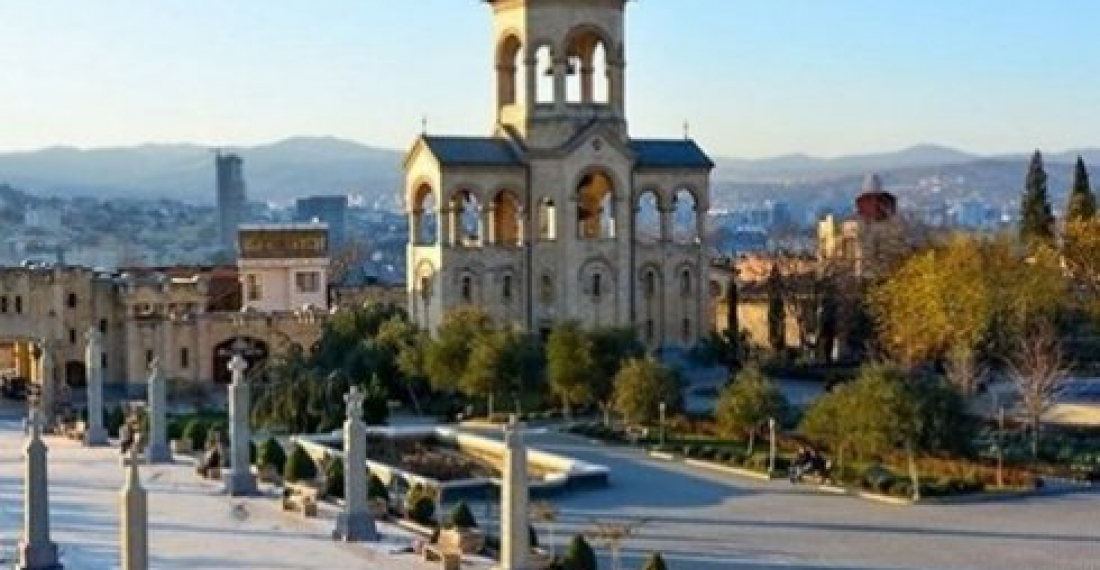
photo: The seat of the Georgian orthodox Church in Tbilisi
 

Related articles

Editor's choice
News
Borrell tells the European Parliament that the situation in Afghanistan was critical, but the EU will remain engaged

Borrell tells the European Parliament that the situation in Afghanistan was critical, but the EU will remain engaged

Borrell underlined that the European Union will make every effort to support the peace process and to remain a committed partner to the Afghan people. "Of course, we will have to take into account the evolving situation, but disengagement is not an option.  We are clear on that: there is no alternative to a negotiated political settlement, through inclusive peace talks.
Editor's choice
News
NATO Chief says war is on Europe's doorstep, and warns against complacency

NATO Chief says war is on Europe's doorstep, and warns against complacency

Russia could attack a Nato country within the next five years, the Secretary General of NATO, Mark Rutte, said in a stark new warning. "Nato's own defences can hold for now," Rutte warned in Berlin, but conflict was "next door" to Europe and he feared "too many are quietly complacent, and too many don't feel the urgency, too many believe that time is on our side. "Russia is already escalating its covert campaign against our societies," Rutte said in a speech in Germany. "We must be prepared for the scale of war our grandparents or great-grandparents endured." Earlier this month, Russia's President Vladimir Putin said his country was not planning to go to war with Europe, but it was ready "right now" if Europe wanted to - or started a war. But similar reassurances were given by Moscow in 2022, just before 200,000 Russian troops crossed the border and invaded Ukraine. Putin has accused European countries of hindering US efforts to bring peace in Ukraine - a reference to the role Ukraine's European allies have recently played in trying to change a US peace plan to end the war, whose initial draft was seen as favouring Russia. But Putin was not sincere, Nato's secretary-general said in the German capital, Berlin. Supporting Ukraine, he added, was a guarantee for European security. "Just imagine if Putin got his way; Ukraine under the boot of Russian occupation, his forces pressing against a longer border with Nato, and the significantly increased risk of an armed attack against us." Russia's economy has been on a war footing for more than three years now - its factories churn out ever more supplies of drones, missiles and artillery shells. According to a recent report by the Kiel Institute for the World Economy, Russia has been producing each month around 150 tanks, 550 infantry fighting vehicles, 120 Lancet drones and more than 50 artillery pieces. The UK, and most of its Western allies, are simply not anywhere near this point. Analysts say it would take years for Western Europe's factories to come close to matching Russia's mass-production of weapons. "Allied defence spending and production must rise rapidly, our armed forces must have what they need to keep us safe," the Nato chief said.

Popular

Editor's choice
News
NATO Chief says war is on Europe's doorstep, and warns against complacency

NATO Chief says war is on Europe's doorstep, and warns against complacency

Russia could attack a Nato country within the next five years, the Secretary General of NATO, Mark Rutte, said in a stark new warning. "Nato's own defences can hold for now," Rutte warned in Berlin, but conflict was "next door" to Europe and he feared "too many are quietly complacent, and too many don't feel the urgency, too many believe that time is on our side. "Russia is already escalating its covert campaign against our societies," Rutte said in a speech in Germany. "We must be prepared for the scale of war our grandparents or great-grandparents endured." Earlier this month, Russia's President Vladimir Putin said his country was not planning to go to war with Europe, but it was ready "right now" if Europe wanted to - or started a war. But similar reassurances were given by Moscow in 2022, just before 200,000 Russian troops crossed the border and invaded Ukraine. Putin has accused European countries of hindering US efforts to bring peace in Ukraine - a reference to the role Ukraine's European allies have recently played in trying to change a US peace plan to end the war, whose initial draft was seen as favouring Russia. But Putin was not sincere, Nato's secretary-general said in the German capital, Berlin. Supporting Ukraine, he added, was a guarantee for European security. "Just imagine if Putin got his way; Ukraine under the boot of Russian occupation, his forces pressing against a longer border with Nato, and the significantly increased risk of an armed attack against us." Russia's economy has been on a war footing for more than three years now - its factories churn out ever more supplies of drones, missiles and artillery shells. According to a recent report by the Kiel Institute for the World Economy, Russia has been producing each month around 150 tanks, 550 infantry fighting vehicles, 120 Lancet drones and more than 50 artillery pieces. The UK, and most of its Western allies, are simply not anywhere near this point. Analysts say it would take years for Western Europe's factories to come close to matching Russia's mass-production of weapons. "Allied defence spending and production must rise rapidly, our armed forces must have what they need to keep us safe," the Nato chief said.