US launches powerful air strikes on Houthi targets in Yemen

The US has launched what it called a decisive and powerful wave of air strikes on Houthi targets on Saturday as part of efforts to stop Houthi attacks on shipping in the Red Sea. Yemen's Houthi rebels say there have been fresh US strikes against them, with the number of dead rising to 53, including five children. Targets in the Al Jaouf and Hudaydah areas were hit early on Monday, according to the rebel group, while the US Central Command said its forces had continued operations throughout the weekend. Washington says some key Houthi figures are among the dead, but the group has not confirmed this.

Houthi leader Abdul Malik al-Houthi said his militants would target US ships in the Red Sea as long as the US continued its attacks on Yemen. Updating an earlier death toll, Houthi health ministry spokesperson Anis al-Asbahi posted on X that 53 people had been killed including "five children and two women", and that 98 people had been wounded.

One father of two, who gave his name as Ahmed, told the AFP news agency: "I've been living in Sanaa for 10 years, hearing shelling throughout the war. By God, I've never experienced anything like this before." US National Security Advisor Michael Waltz told ABC News that Saturday's strikes "targeted multiple Houthi leaders and took them out". He told Fox News: "We just hit them with overwhelming force and put Iran on notice that enough is enough."

US Defence Secretary Pete Hegseth vowed an "unrelenting" missile campaign until the Houthi attacks stop. "I want to be very clear, this campaign is about freedom of navigation and restoring deterrence," Hegseth said in a televised Fox Business interview. The Houthis said it would continue to target Red Sea shipping until Israel lifted its blockade of Gaza, and that its forces would respond to the strikes.

The Iranian-backed rebel group, which considers Israel its enemy, controls Sanaa and the north-west of Yemen, but it is not the country's internationally-recognised government.

The Houthis have said they are acting in support of the Palestinians in the war between Israel and Hamas in Gaza, and have claimed - often falsely - that they are targeting ships only linked to Israel, the US or the UK.

Since November 2023, the Houthis have targeted dozens of merchant vessels with missiles, drones and small boat attacks in the Red Sea and the Gulf of Aden. They have sunk two vessels, seized a third, and killed four crew members.

Announcing Saturday's strikes, Trump said "we will use overwhelming lethal force until we have achieved our objective". "Funded by Iran, the Houthi thugs have fired missiles at US aircraft, and targeted our Troops and Allies," Trump said on social media, adding that their "piracy, violence, and terrorism" had cost "billions" and put lives at risk.

Addressing the Houthis directly, Trump wrote that if they did not stop, "HELL WILL RAIN DOWN UPON YOU LIKE NOTHING YOU HAVE EVER SEEN BEFORE". But the Houthis have been unwavering in their response, saying the aggression would not diminish their support for Palestinians.

Iran's Foreign Minister Abbas Araghchi said the US government had "no authority, or business, dictating Iranian foreign policy". "End support for Israeli genocide and terrorism," he posted on X on Sunday. "Stop killing of Yemeni people."

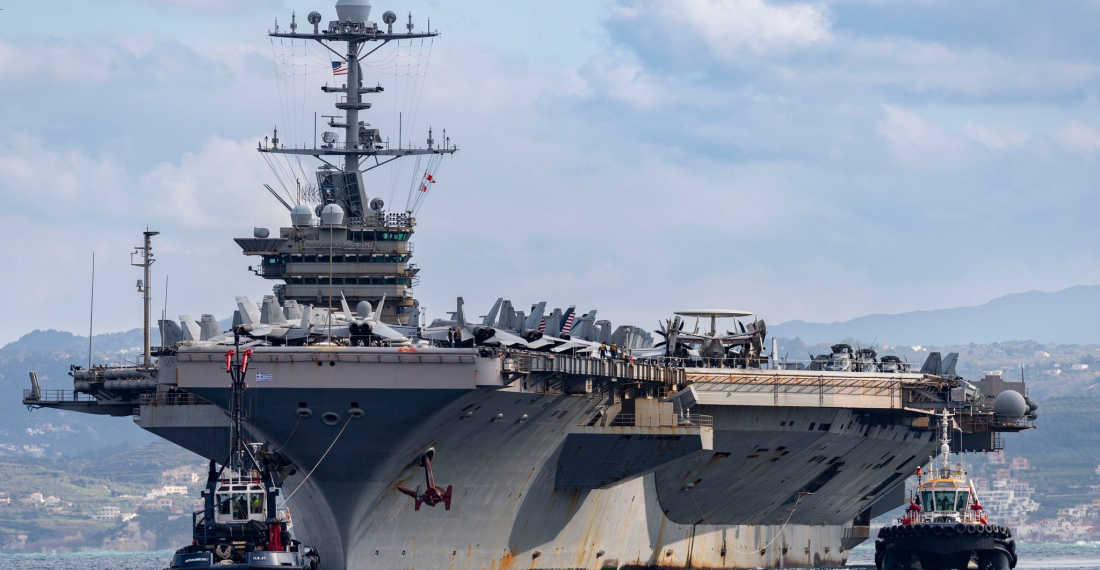
The Houthis have claimed responsibility, without offering evidence, for two attacks on the US aircraft carrier USS Harry S. Truman and several American warships in the Red Sea, calling it retaliation for US strikes. But a US official told Reuters news agency that US warplanes shot down 11 Houthi drones on Sunday, none of which came close to the Truman. The US is yet to respond to the second claim of such a strike.

UN Secretary-General Antonio Guterres on Sunday called for "utmost restraint and a cessation of all military activities" in Yemen.

Source: commonspace.eu with agencies. Photo: US Navy photo showing the USS Harry S Truman in the Red Sea before airstrikes in Sanaa, Yemen.

Related articles

Editor's choice
News
UAE says it will withdraw from Yemen, but division emerges in Yemeni presidential council

UAE says it will withdraw from Yemen, but division emerges in Yemeni presidential council

In a move seen as an attempt to de-escalate a crises with Saudi Arabia, the United Arab Emirates, on Tuesday (30th December) announced that it was heeding a call to withdraw its troops from Southern Yemen. UAE says that its presence included counter-terrorism teams that were crucial in fighting against Islamist groups. UAE sources said that parts of Yemen not controlled by the Houthis have had Al Qaeda in the Arab Peninsula (AQAP) operatives using the territory to launch attacks on Europe, the US and Middle East. UAE teams have co-ordinated with American and British special forces and intelligence. The sources added that Emirati forces and their Yemeni allies also helped reverse Houthi gains in the south. including the liberation of Aden port. The small UAE contingent has remained in place since the UAE withdrew most of its military personnel in 2019. The leading English-language newspaper in Abu Dhabi, The National, said that the main UAE force was based at Riyan Mukalla International Airport, with access to fixed-wing aircraft and helicopters, but also operated smaller contingents in the port town Balhaf and Shabwa. "It is understood it also flew a number of drones from the airbase that were able to track terrorist movements, pass information back to its allies and assisted special forces' missions." Meanwhile a division has emerged in Yemen's presidential council after four members denounced what they called the 'unilateral decisions' by the chairman. Four of Yemen’s eight Presidential Leadership Council members on Tuesday denounced an announcement by the council’s chairman accusing him of breaching the governing agreement. Tension between Yemeni leaders has been rising for weeks, underscoring the fragility of the country's already fractured political landscape and further complicating efforts to confront the Iran-backed Houthi rebels. The latest rift took an unprecedented turn on Tuesday morning, marked by a Saudi-led coalition “limited operation” striking combat vehicles Riyadh linked to the Southern Transitional Council, which has three members in the PLC. The PLC Chairman, Rashad al Alimi, on Tuesday said that he was seeking to cancel the joint defence agreement with the UAE. “What has been issued … constitutes a clear violation of the Declaration of the Transfer of Power [agreement], which explicitly stipulates that the Presidential Leadership Council is a collective body whose decisions are taken by consensus, or by majority when consensus is not possible,” the statement by the four members said. “It does not, under any circumstances, allow for unilateral decision-making on sovereign, military, or major political matters." The statement was signed by STC chief Aidarous Al Zubaidi, Faraj Al Bahsani, Tariq Saleh and Abu Zaraa al Muharrami. (click the picture to read the full article).

Popular

Editor's choice
News
UAE says it will withdraw from Yemen, but division emerges in Yemeni presidential council

UAE says it will withdraw from Yemen, but division emerges in Yemeni presidential council

In a move seen as an attempt to de-escalate a crises with Saudi Arabia, the United Arab Emirates, on Tuesday (30th December) announced that it was heeding a call to withdraw its troops from Southern Yemen. UAE says that its presence included counter-terrorism teams that were crucial in fighting against Islamist groups. UAE sources said that parts of Yemen not controlled by the Houthis have had Al Qaeda in the Arab Peninsula (AQAP) operatives using the territory to launch attacks on Europe, the US and Middle East. UAE teams have co-ordinated with American and British special forces and intelligence. The sources added that Emirati forces and their Yemeni allies also helped reverse Houthi gains in the south. including the liberation of Aden port. The small UAE contingent has remained in place since the UAE withdrew most of its military personnel in 2019. The leading English-language newspaper in Abu Dhabi, The National, said that the main UAE force was based at Riyan Mukalla International Airport, with access to fixed-wing aircraft and helicopters, but also operated smaller contingents in the port town Balhaf and Shabwa. "It is understood it also flew a number of drones from the airbase that were able to track terrorist movements, pass information back to its allies and assisted special forces' missions." Meanwhile a division has emerged in Yemen's presidential council after four members denounced what they called the 'unilateral decisions' by the chairman. Four of Yemen’s eight Presidential Leadership Council members on Tuesday denounced an announcement by the council’s chairman accusing him of breaching the governing agreement. Tension between Yemeni leaders has been rising for weeks, underscoring the fragility of the country's already fractured political landscape and further complicating efforts to confront the Iran-backed Houthi rebels. The latest rift took an unprecedented turn on Tuesday morning, marked by a Saudi-led coalition “limited operation” striking combat vehicles Riyadh linked to the Southern Transitional Council, which has three members in the PLC. The PLC Chairman, Rashad al Alimi, on Tuesday said that he was seeking to cancel the joint defence agreement with the UAE. “What has been issued … constitutes a clear violation of the Declaration of the Transfer of Power [agreement], which explicitly stipulates that the Presidential Leadership Council is a collective body whose decisions are taken by consensus, or by majority when consensus is not possible,” the statement by the four members said. “It does not, under any circumstances, allow for unilateral decision-making on sovereign, military, or major political matters." The statement was signed by STC chief Aidarous Al Zubaidi, Faraj Al Bahsani, Tariq Saleh and Abu Zaraa al Muharrami. (click the picture to read the full article).