UN warns Da'esh remains a serious global terrorist threat

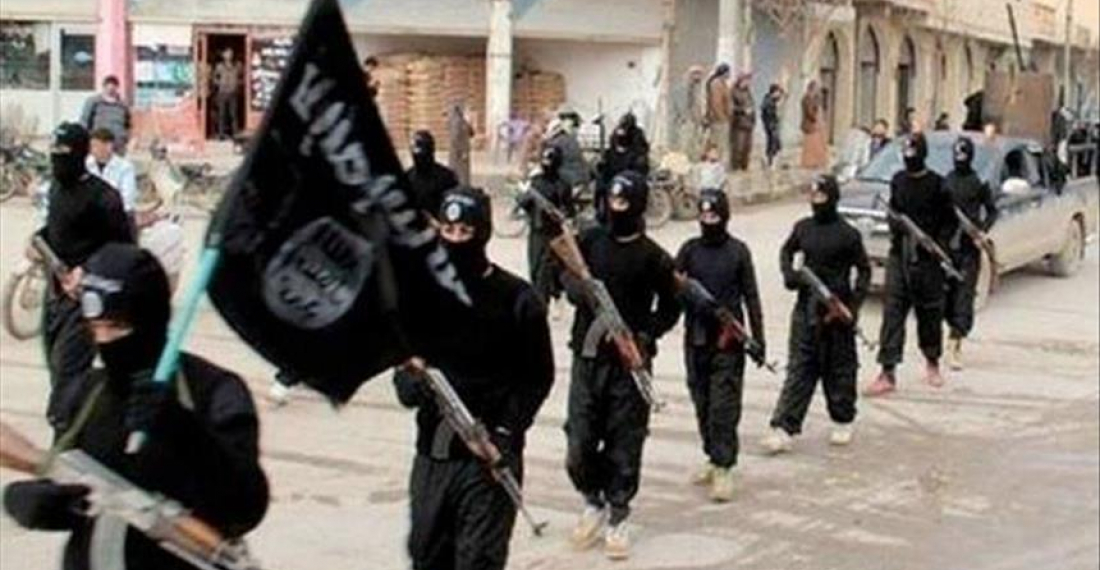
In a joint briefing to the Security Council on Tuesday (9 August), UN counterterrorism officials confirmed that the threat posed by Da’esh terrorist fighters and their affiliates remains “global and evolving”. 

“Da’esh and its affiliates continue to exploit conflict dynamics, governance fragilities and inequality to incite, plan and organize terrorist attacks,” said UN counter-terrorism chief Vladimir Voronkov, presenting the Secretary-General’s fifteenth report.

They also exploit pandemic restrictions, misuse digital spaces to recruit sympathizers and have “significantly” increased the use of unmanned aerial systems, as reported in northern Iraq.

 In charting the of Da’esh expansion across Iraq, Syria and through areas of Africa that until recently had been largely spared from attacks, Mr. Voronkov attributed their success in part to a decentralized structure focused around a “general directorate of provinces” and associated “offices”.

These operate in both Iraq and Syria, as well as outside the core conflict zone – notably in Afghanistan, Somalia and the Lake Chad Basin.

Better understanding and monitoring, including through global and regional cooperation, are vital to counter the threat.

 Providing an overview, Mr. Voronkov said that the border between Iraq and Syria remains highly vulnerable, with an estimated 10,000 fighters operating in the area.

In April, the group launched a global campaign to avenge senior leaders killed in counter-terrorism operations.

While the number of attacks claimed or attributed to the local Da’esh affiliate has decreased in Afghanistan, since the Taliban assumed control last year, its presence has expanded into the north-east and east of the country.

In Europe, Da’esh has called on sympathizers to carry out attacks by exploiting the easing of pandemic restrictions and the conflict in Ukraine.

In Africa, meanwhile, the senior UN official described the expansion of Da’esh across the Central, Southern and Western reaches of the continent.

From Uganda, one affiliate widened its operations into the Democratic Republic of the Congo, while another – after being knocked out by military action in 2021 – intensified small-scale attacks in Mozambique’s Cabo Delgado province.

The expansion has even affected littoral countries in the Gulf of Guinea, which had previously been spared from violence.

In terms of financing, Mr. Voronkov said Da’esh leaders manage between $25 to $50 million in assets, significantly less than estimates three years ago. However, the diversity of both licit and illicit sources underscores the importance of sustained efforts to cut terrorism funding.

While he welcomed recent repatriations by Iraq, Tajikistan and France, he expressed concern that the limited progress achieved so far in repatriating foreign terrorist fighters and their family members is “far overshadowed by the number of individuals still facing a precarious and deteriorating situation”.

Tens of thousands of individuals – including more than 27,000 children – from Iraq and some 60 other countries remain subject to enormous security challenges and humanitarian hardship.

The counter-terrorism chief reiterated the Secretary-General’s call for Member States to further their efforts in facilitating the safe, voluntary and dignified repatriation of all individuals who remain stuck in camps and other facilities. 
commonspace.eu with UN

Related articles

Editor's choice
News
Council of Europe launches new International Claims Commission for Ukraine

Council of Europe launches new International Claims Commission for Ukraine

Thirty-four countries and the European Union have signed a new convention establishing an International Claims Commission for Ukraine at a diplomatic conference co-hosted by the 46-nation Council of Europe and the Netherlands in the Hague. The diplomatic conference was attended by leaders and high-level representatives from over 50 states, including the President of Ukraine, Volodymyr Zelenskyy, the President of the Republic of Moldova, Maia Sandu, and the Prime Minister of the Netherlands, Dick Schoof.  “Today marks a major step forward in ensuring accountability for Ukraine. The International Claims Commission represents justice and hope for tens of thousands of victims—our determination that those who have suffered will not be forgotten. I call for quick ratifications so we can get the commission rapidly up and running for the people of Ukraine,” said Council of Europe Secretary General Alain Berset. Ukrainian President Volodymyr Zelenskyy said: “We expect that every mechanism for compensation from the Register of Damage and Claims Commission to the actual payments – will start working and receive strong and sufficient international support, so that people can truly feel that any kind of damage caused by the war can be compensated. This war, and Russia’s responsibility for it, MUST become a clear example – so that others learn not to choose aggression.” “Accountability is about creating the conditions for peace that endures. And therefore, accountability is a condition of security – today and for the future. But accountability is not only about Ukraine. And it is not only about one aggressor and one victim. Accountability is about Europe. About every country in Europe. It is about whether Europe, as a whole, is willing to defend its peace,” said Maia Sandu, President of the Republic of Moldova, which currently holds the Presidency of the Council of Europe’s Committee of Ministers. The Prime Minister of the Netherlands, Dick Schoof, said: “Every day Russia is deliberately bombarding homes, destroying businesses and damaging infrastructure in Ukraine. Russia must compensate Ukraine for the damage caused. That is why we have launched the International Claims Commission for Ukraine and we are honoured to host it.” The International Claims Commission will be the second part of a comprehensive compensation mechanism related to Russia’s war of aggression, building on the existing Register of Damage for Ukraine. The claims commission will be established within the framework of the Council of Europe and will also be open to other countries. The Register of Damage for Ukraine, created in 2023, collects and records compensation claims submitted by individuals, organisations and public bodies in Ukraine. Forty-four states and the European Union have so far joined the Register, which has already received 86,000 claims. The International Claims Commission will review, assess and decide upon claims submitted to the Register of Damage for Ukraine and determine the amount of compensation, if any, which is due in each case. The convention establishing the commission will enter into force once it has been ratified by 25 signatories, as long as sufficient funds have been secured to support its initial work.

Popular

Editor's choice
News
Council of Europe launches new International Claims Commission for Ukraine

Council of Europe launches new International Claims Commission for Ukraine

Thirty-four countries and the European Union have signed a new convention establishing an International Claims Commission for Ukraine at a diplomatic conference co-hosted by the 46-nation Council of Europe and the Netherlands in the Hague. The diplomatic conference was attended by leaders and high-level representatives from over 50 states, including the President of Ukraine, Volodymyr Zelenskyy, the President of the Republic of Moldova, Maia Sandu, and the Prime Minister of the Netherlands, Dick Schoof.  “Today marks a major step forward in ensuring accountability for Ukraine. The International Claims Commission represents justice and hope for tens of thousands of victims—our determination that those who have suffered will not be forgotten. I call for quick ratifications so we can get the commission rapidly up and running for the people of Ukraine,” said Council of Europe Secretary General Alain Berset. Ukrainian President Volodymyr Zelenskyy said: “We expect that every mechanism for compensation from the Register of Damage and Claims Commission to the actual payments – will start working and receive strong and sufficient international support, so that people can truly feel that any kind of damage caused by the war can be compensated. This war, and Russia’s responsibility for it, MUST become a clear example – so that others learn not to choose aggression.” “Accountability is about creating the conditions for peace that endures. And therefore, accountability is a condition of security – today and for the future. But accountability is not only about Ukraine. And it is not only about one aggressor and one victim. Accountability is about Europe. About every country in Europe. It is about whether Europe, as a whole, is willing to defend its peace,” said Maia Sandu, President of the Republic of Moldova, which currently holds the Presidency of the Council of Europe’s Committee of Ministers. The Prime Minister of the Netherlands, Dick Schoof, said: “Every day Russia is deliberately bombarding homes, destroying businesses and damaging infrastructure in Ukraine. Russia must compensate Ukraine for the damage caused. That is why we have launched the International Claims Commission for Ukraine and we are honoured to host it.” The International Claims Commission will be the second part of a comprehensive compensation mechanism related to Russia’s war of aggression, building on the existing Register of Damage for Ukraine. The claims commission will be established within the framework of the Council of Europe and will also be open to other countries. The Register of Damage for Ukraine, created in 2023, collects and records compensation claims submitted by individuals, organisations and public bodies in Ukraine. Forty-four states and the European Union have so far joined the Register, which has already received 86,000 claims. The International Claims Commission will review, assess and decide upon claims submitted to the Register of Damage for Ukraine and determine the amount of compensation, if any, which is due in each case. The convention establishing the commission will enter into force once it has been ratified by 25 signatories, as long as sufficient funds have been secured to support its initial work.