


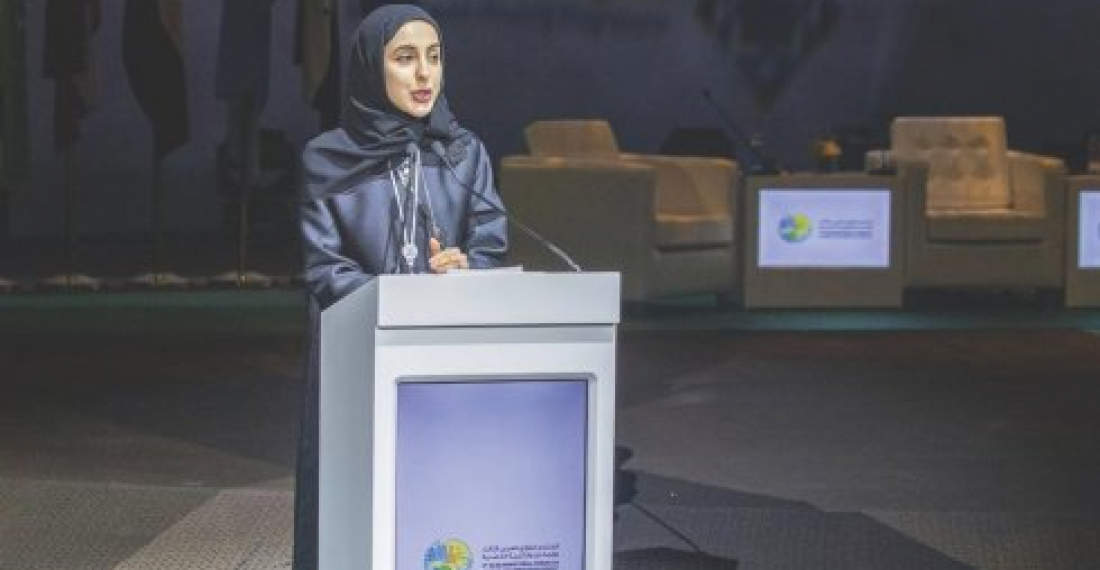
UAE Youth Minister urges governments to treat youth as drivers of development

The Arab region is heavily infested with crisis and conflicts on many scales. However, if one keeps in mind the UN Sustainable Development Goals (SDGs), it also has a key ingredient necessary to achieve regional development: nearly one-third of all population in the Arab world is made up of youth aged 15-29 . Many of those join the labour force every year eager to contribute to their families and communities. Unfortunately, many challenges stand in their way. It is, therefore, of the utmost priority to nurture the young people, and pave opportunities on their way. Youth development is important in the Arab world because the region has the highest concentration of youth in the entire world. Therefore, commitment is required to make sure this force is used for development and ensure they contribute significantly to the UN's SDGs.

A recent report by the Arab Youth Center, based in Abu Dhabi highlighted this opportunity. The study surveyed nearly 7,000 young people across 21 Arab countries. The findings from the Youth Priority Survey indicated that youth seek safety, education and healthcare as the basis for communities where they can thrive.

The need to pay attention to youth development is also acknowledged by the UAE Minister of State for Youth Affairs, Shamma bint Suhail Faris Al-Mazrui. In an interview with Arab News newspaper she said "I honestly believe if there's a big change that can revolutionize the world, it would be done by a young person . . . and I think it's time to unleash the potential of Arab youth entrepreneurs,"

Al-Mazuri recognises the lack of hope among today's youth. She adds that Arab youth aspirations are not only attainable but can be exceeded, provided governments make available the proper platforms for unlocking their full potential. Al-Mazuri herself was appointed to the government in 2016 at the age of 22.

To start with youth must be seen as an asset and an opportunity, rather than a problem. Authorities should put themselves in the shoes of the youth and have empathy. The UAE Ministry of Youth is looking forward to collaborating with a number of Arab states on youth development, including Bahrain, Egypt, Jordan and Kuwait.

Also, an interesting finding is the need to feel safe from domestic violence, an issue traditionally a taboo subject in the Middle East. Al-Mazrui said: "For me, it (the finding on domestic violence) was initially a bit surprising, maybe it's because I come from the UAE and this has been tackled early on. I think it is a sign that in the Arab world it (domestic violence) is still an issue and there needs to be discussion about it.

Satisfying the demands of youth is a task for government officials. As authorities, they are to be held liable for providing the correct tools and fostering technological advancements that enable the achievements of quality education and healthcare. The region has already suffered and youth from conflict countries already feel betrayed. It is hence, first and foremost, the task of officials to deliver to youth's demands.  

Al-Mazrui likened her role as a youth minister catering for 50 percent of the UAE's population to that of "an orchestra conductor" - working in coordination with government departments to address the challenges facing this vital demographic.

source: commonspace.eu with Arab News (Jeddah)

Photo: The Minister of State for Youth Affairs of the United Arab Emirates, Shamma bint Suhail Faris Al-Mazrui. (archive picture)




Related articles

Editor's choice
News
Council of Europe launches new International Claims Commission for Ukraine

Council of Europe launches new International Claims Commission for Ukraine

Thirty-four countries and the European Union have signed a new convention establishing an International Claims Commission for Ukraine at a diplomatic conference co-hosted by the 46-nation Council of Europe and the Netherlands in the Hague. The diplomatic conference was attended by leaders and high-level representatives from over 50 states, including the President of Ukraine, Volodymyr Zelenskyy, the President of the Republic of Moldova, Maia Sandu, and the Prime Minister of the Netherlands, Dick Schoof.  “Today marks a major step forward in ensuring accountability for Ukraine. The International Claims Commission represents justice and hope for tens of thousands of victims—our determination that those who have suffered will not be forgotten. I call for quick ratifications so we can get the commission rapidly up and running for the people of Ukraine,” said Council of Europe Secretary General Alain Berset. Ukrainian President Volodymyr Zelenskyy said: “We expect that every mechanism for compensation from the Register of Damage and Claims Commission to the actual payments – will start working and receive strong and sufficient international support, so that people can truly feel that any kind of damage caused by the war can be compensated. This war, and Russia’s responsibility for it, MUST become a clear example – so that others learn not to choose aggression.” “Accountability is about creating the conditions for peace that endures. And therefore, accountability is a condition of security – today and for the future. But accountability is not only about Ukraine. And it is not only about one aggressor and one victim. Accountability is about Europe. About every country in Europe. It is about whether Europe, as a whole, is willing to defend its peace,” said Maia Sandu, President of the Republic of Moldova, which currently holds the Presidency of the Council of Europe’s Committee of Ministers. The Prime Minister of the Netherlands, Dick Schoof, said: “Every day Russia is deliberately bombarding homes, destroying businesses and damaging infrastructure in Ukraine. Russia must compensate Ukraine for the damage caused. That is why we have launched the International Claims Commission for Ukraine and we are honoured to host it.” The International Claims Commission will be the second part of a comprehensive compensation mechanism related to Russia’s war of aggression, building on the existing Register of Damage for Ukraine. The claims commission will be established within the framework of the Council of Europe and will also be open to other countries. The Register of Damage for Ukraine, created in 2023, collects and records compensation claims submitted by individuals, organisations and public bodies in Ukraine. Forty-four states and the European Union have so far joined the Register, which has already received 86,000 claims. The International Claims Commission will review, assess and decide upon claims submitted to the Register of Damage for Ukraine and determine the amount of compensation, if any, which is due in each case. The convention establishing the commission will enter into force once it has been ratified by 25 signatories, as long as sufficient funds have been secured to support its initial work.

Popular

Editor's choice
News
Council of Europe launches new International Claims Commission for Ukraine

Council of Europe launches new International Claims Commission for Ukraine

Thirty-four countries and the European Union have signed a new convention establishing an International Claims Commission for Ukraine at a diplomatic conference co-hosted by the 46-nation Council of Europe and the Netherlands in the Hague. The diplomatic conference was attended by leaders and high-level representatives from over 50 states, including the President of Ukraine, Volodymyr Zelenskyy, the President of the Republic of Moldova, Maia Sandu, and the Prime Minister of the Netherlands, Dick Schoof.  “Today marks a major step forward in ensuring accountability for Ukraine. The International Claims Commission represents justice and hope for tens of thousands of victims—our determination that those who have suffered will not be forgotten. I call for quick ratifications so we can get the commission rapidly up and running for the people of Ukraine,” said Council of Europe Secretary General Alain Berset. Ukrainian President Volodymyr Zelenskyy said: “We expect that every mechanism for compensation from the Register of Damage and Claims Commission to the actual payments – will start working and receive strong and sufficient international support, so that people can truly feel that any kind of damage caused by the war can be compensated. This war, and Russia’s responsibility for it, MUST become a clear example – so that others learn not to choose aggression.” “Accountability is about creating the conditions for peace that endures. And therefore, accountability is a condition of security – today and for the future. But accountability is not only about Ukraine. And it is not only about one aggressor and one victim. Accountability is about Europe. About every country in Europe. It is about whether Europe, as a whole, is willing to defend its peace,” said Maia Sandu, President of the Republic of Moldova, which currently holds the Presidency of the Council of Europe’s Committee of Ministers. The Prime Minister of the Netherlands, Dick Schoof, said: “Every day Russia is deliberately bombarding homes, destroying businesses and damaging infrastructure in Ukraine. Russia must compensate Ukraine for the damage caused. That is why we have launched the International Claims Commission for Ukraine and we are honoured to host it.” The International Claims Commission will be the second part of a comprehensive compensation mechanism related to Russia’s war of aggression, building on the existing Register of Damage for Ukraine. The claims commission will be established within the framework of the Council of Europe and will also be open to other countries. The Register of Damage for Ukraine, created in 2023, collects and records compensation claims submitted by individuals, organisations and public bodies in Ukraine. Forty-four states and the European Union have so far joined the Register, which has already received 86,000 claims. The International Claims Commission will review, assess and decide upon claims submitted to the Register of Damage for Ukraine and determine the amount of compensation, if any, which is due in each case. The convention establishing the commission will enter into force once it has been ratified by 25 signatories, as long as sufficient funds have been secured to support its initial work.

