Updated on 29 August at 20.00 Central European Summer Time
South Ossetia remained tense on Saturday following a popular expression of outrage after a young Ossetian man was killed whilst in police detention.
The territory's parliament met on Saturday afternoon to discuss the issue and issued an appeal for the removal of the proscutor general. Of the 27 deputies of parliament present at the session, 25 deputies voted for the adoption of the appeal (two of them in absentia), and two abstained. local media reported
The de facto president of South Ossetia, Anatoly Tibilov, accepted the resignation of the prime minister and announced that a new government will be formed shortly. Tibilov has repeatedly tried to distance himself from the death of the young man, saying that all those responsible will be held to account. Tibilov however also warned against those who are trying to exploit the incident for political gains.
In the meantime there are reports that hundreds of people continue to protest against the government in front of the government building in Tskhinvali on Saturday evening. The local security forces say they have the situation under control.
South Ossetia is a self-declared republic that seceded from Georgia in the 1990s. Most of the international community still recognise the territory as part of Georgia but Russia has recognised it as an independent country and maintains a military base there.
_______________
The small, self-declared Republic of South Ossetia, was plunged in political turmoil on Friday (28 August) after a man died as a result of torture whilst in police custody. Hundreds took to the streets to protest, and to call for the government's resignation, a rare occurance in the territory which seceded from Georgia and now exists as a de facto protectorate of Russia.
According to the RES news agency, the territory's official news organ, the deceased was a young local resident who had been accused of an attempt on the life of the Minister of Interior. The dead person was named as 28 year old Inal Dzabiev.
In an attempt to calm down the situation, South Ossetia's de facto president spoke to the crowd announcing that he had fired the Minister and promising a fair investigation into the death of the young man.
However, protestors insisted on the resignation of the entire government and of the Prosecutor General.
Members of the South Ossetian Parliament were called for an emergency session on Friday at 20.00 local time but the meeting could not take place as there was no quorum.
Later, the head of the South Ossetian government, Erik Pukhaev, announced that he had made the decision to resign. The decree on the resignation of the prime minister however has not yet been published.
The RES news agency showed pictures of demonstrators still in the main square well into the night, and reported heightened security measures with police units patrolling the territory's administrative capital, Tskhinvali.
Commonspace.eu political editor said in a comment that South Ossetian politics are an example that small is not always beautiful. Despite having a population of less than one hundred thousand people, South Ossetian politics have seen one internal crisis after another since the territory declared itself independent in the 1990s. South Ossetian politics tend to be based on clan loyalties, and feuds between different clans, some going back decades, often spill over into politics.
The situation is an embarrassment for the Kremlin which acts as de facto protector for South Ossetia, and which in 2008, in the aftermath of the Georgia-Russia War, recognised South Ossetia as an independent country. Only a handful of other countries followed suit. Most of the international community still consider South Ossetia to be part of Georgia.
Related content on commonspace.eu: The moment Russia tore up the rule book
source: commonspace.eu with RES news agency Tskhinvali and agencies
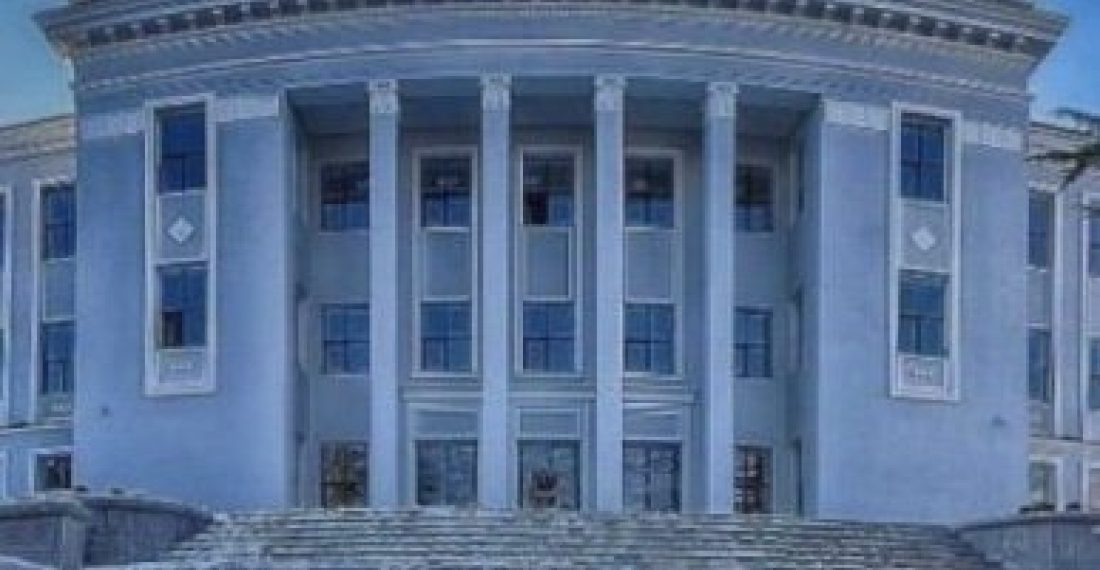
photo: The government building in Tskhinvali (archive picture)