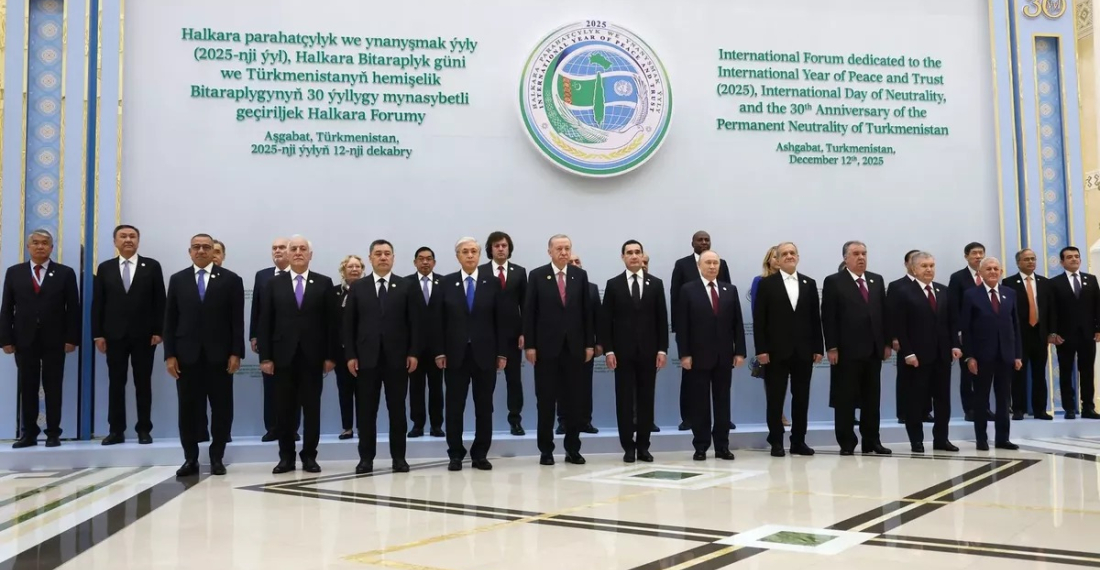
Last week, Turkmenistan celebrated the 30th anniversary that marks the UN decision granting Turkmenistan the status of a permanently neutral country. The anniversary is in sync with Turkmenistan’s 2025 “Year of Peace and Trust” initiative, which looks to advance sustainable development through partnerships and connectivity. The initiative is supported by a UN General Assembly resolution and is in line with the UN Secretary General’s “New Agenda for Peace” objectives. Although Turkmenistan’s status of “permanent neutrality” is difficult to define, it serves as an effective policy tool and rationale for Turkmen leadership to justify a wide range of foreign and domestic policies that keep the country in the bizarre isolation that it finds itself today. Nevertheless, a state that heavily relies on natural gas exports and finds itself in a critical region connecting Europe and Asia can never be truly isolated, and this year’s 30th anniversary is emblematic of that. When compared to the comparatively muted 20th anniversary celebrations a decade ago, this year’s event sent a clear message: Turkmenistan’s prized status as a neutral country, which was enshrined in its constitution in 2016, will not stem from a passive and isolationist approach to its neighbors and the wider region, but through active participation on its own terms. The ceremony in Ashgabat included the other four Central Asian presidents, as well as Russian President Vladimir Putin, Turkish President Recep Tayyip Erdoğan, Prime Minister of Georgia Irakli Kobakhidze, Prime Minister of Azerbaijan Ali Asadov, Prime Minister of Pakistan Mian Muhammad Shehbaz Sharif, and Iranian President Masoud Pezeshkian. It is safe to assume that various important discussions took place throughout the meetings scheduled around the anniversary, the fruits of which are already starting to materialize. For example, Kazakh President Kassym Jomart Tokayev publicly reaffirmed the intention to increase trade, strengthen economic ties, and work on joint projects in energy, logistics, and agriculture. Further statements by the attending leaders affirming Turkmenistan’s Year of Peace and Trust initiative were made, but only time will tell if any concrete agreements on cooperation will materialize as a result of these meetings.
Ultimately, the event’s purpose to reinforce Turkmenistan’s definition of neutrality while also showcasing the government’s intent to continue efforts towards integration and increased economic cooperation with its (near) regional neighbors is in line with the leadership’s gradual but tentative process to open up the country since the death of Saparmurat Niyazov in 2006. Whether these efforts of openness and integration will extend to the Turkmen population in the form of increased freedom of movement and individual rights remains to be seen.
source: commonspace.eu with Central Asia Concise. This item was first published in the issue of 18 December 2025 of the electronic newsletter Central Asia Concise
photo: Leaders who attended Turkmenistan's anniversary event in December 2025