


Rebalancing in Central Africa

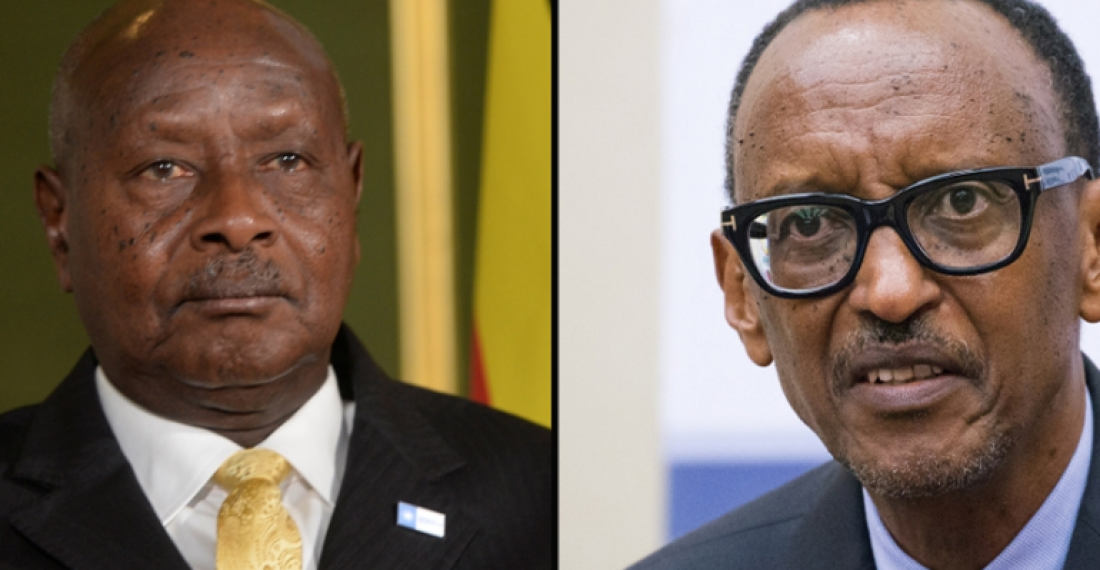
On Sunday, President Paul Kagame of Rwanda and his Ugandan counterpart President Yoweri Museveni met in Kampala for a series of bilateral talks. The two met to further the idea of a regional military force to underpin the East African Community (EAC) and its stabilising efforts in the Democratic Republic of the Congo (DRC).

According to the state-broadcaster, Rwanda Broadcasting Agency, the president arrived in Kampala on Sunday to attend the 48th birthday party of Museveni’s son, Muhoozi Kainerugaba. Kainerugaba was reportedly crucial in the thawing of Rwanda-Ugandan relations, spearheading the opening of their mutual border in January of this year.

Since the accession of the DRC to the EAC, the two heads of state have been forced to make amends. The UN has accused the two countries of contributing to the destabilization of the DRC by supporting insurgent rebel groups such as M23. Relations soured in 2019 as both governments accused the other of sabotage, leading to Rwanda’s sealing of its border with Uganda, halting all trade. 

Both Uganda and Rwanda once supported the Tutsi ‘March 23 Movement’,  with its officials moving freely in Uganda and its fighters being recruited in Rwanda, according to a group of experts in the UNSC Sanctions Committee. Both countries have continuously denied any involvement with the rebel group.

The DRC, a mineral-rich country, has suffered instability since achieving its independence in 1960. Its neighbouring countries to the East have contributed; ousting Mobutu in 1997 and contributing to the loss of 2.5 million lives from 1997-2001. The UN accused the warring parties of prolonging the war in order to plunder the country of its resources. According to government figures, gold continues to be Uganda’s second-most valuable export, after coffee, despite having little domestic production.

Uganda, however, has recently swapped its allegiance, supporting the Congolese government through a joint operation against the Allied Democratic Forces (ADF), an ISIS-affiliated group active in the Eastern Kivu region. The DRC now wants to “look at Rwanda as a partner country, as [they] look at Uganda”, says government spokesman Patrick Muyaya.

The EAC, made up of seven countries, met last week in Nairobi to discuss plans for an expanded military operation in the DRC.  According to Kenyan news outlet, The Standard, rebel leaders were also invited to attend talks on Friday. Chairman of the EAC, Kenyan President Uhuru Kenyatta, was to hold negotiations between the two warring parties after a peak in violence earlier this month. The EAC is yet to communicate any of its results.

UN Secretary-General Antonio Guterres on Sunday tweeted in support of the regional initiative, stating that the “UN fully supports the initiative by the East African countries to bring peace in the Eastern part of the Democratic Republic of the Congo and the neighbouring countries”.


Sources: The Standard (Nairobi), Monitor (Kampala), Newsweek, africanews, The East African, Al Jazeera, Voice of America, ABC News
Photo: Ugandan President Yoweri Museveni, left, and his Rwandan counterpart Paul Kagame. Source: Reuters.

Related articles

Editor's choice
News
Russia adds pressure on Armenia ahead of key elections; recalls Ambassador in Yerevan for consultations

Russia adds pressure on Armenia ahead of key elections; recalls Ambassador in Yerevan for consultations

Ahead of key parliamentary elections,scheduled to be held in Armenia on Sunday, 7 June, Russia continues to attempt to put pressure on the Armenian Government led by prime minister Nikol Pashinyan. On 30 May, Russia recalled its Ambassador to Yerevan for consultations. A terse statement, published on the website of the Russian Foreign Ministry, said, "The Ambassador of the Russian Federation to the Republic of Armenia , S.P. Kopyrkin, has been summoned to Moscow for consultations in connection with the steps taken by the Armenian leadership to move closer to the European Union, which are detrimental to cooperation within the EAEU." This followed a statement issued the day before, by the leaders of the Eurasian Economic Union (EAEU) that challenges the Armenian trajectory towards approximating to the European Union. Vladimir Putin is undertood to have personally pushed the other four EAEU leaders to issue the statement, which said: "Taking into account the significant risks to the economic security of the member states of the Eurasian Economic Union (hereinafter referred to as the Union) arising in connection with the preparation of the Republic of Armenia for accession to the European Union, as well as the need to prevent the associated damage to the member states of the Union: decided that the members of the Eurasian Intergovernmental Council from the Republic of Belarus, the Republic of Kazakhstan, the Kyrgyz Republic and the Russian Federation will report at the next meeting of the Supreme Eurasian Economic Council in December 2026 on the possible consequences of the suspension of the Treaty on the Eurasian Economic Union with respect to the Republic of Armenia. We share the position on the need to hold a national referendum in the Republic of Armenia as soon as possible on joining the European Union or continuing to be part of the Eurasian Economic Union."
Editor's choice
News
The leaders of the states of the Eurasian Economic Union issued a tough statement warning fellow-member state Armenia of the consequences of its desire to join the European Union.

The leaders of the states of the Eurasian Economic Union issued a tough statement warning fellow-member state Armenia of the consequences of its desire to join the European Union.

The leaders of the states of the Eurasian Economic Union (EEAS) issued a tough statement warning fellow-member state Armenia of the consequences of its desire to join the European Union. The stark, sharply worded,  warning, comes days before crucial parliamentary elections in Armenia, scheduled for 7 June. The full statement said, “We, the Presidents of the Republic of Belarus, the Republic of Kazakhstan, the Kyrgyz Republic and the Russian Federation, Taking into account the actions of the Republic of Armenia aimed at joining the European Union, including the approval in 2025 by the National Assembly of the Republic of Armenia and the signing by the President of the Republic of Armenia of the Law of the Republic of Armenia "On the Start of the Process of Accession of the Republic of Armenia to the European Union", as well as the confirmation by the European Union of the European aspirations of the Government of the Republic of Armenia, expressed in the joint declaration following the first Armenia-European Union summit, adopted on 5 May 2026, Taking into account the significant risks to the economic security of the member states of the Eurasian Economic Union (hereinafter referred to as the Union) arising in connection with the preparation of the Republic of Armenia for accession to the European Union, as well as the need to prevent the associated damage to the member states of the Union: decided that the members of the Eurasian Intergovernmental Council from the Republic of Belarus, the Republic of Kazakhstan, the Kyrgyz Republic and the Russian Federation will report at the next meeting of the Supreme Eurasian Economic Council in December 2026 on the possible consequences of the suspension of the Treaty on the Eurasian Economic Union with respect to the Republic of Armenia. We share the position on the need to hold a national referendum in the Republic of Armenia as soon as possible on joining the European Union or continuing to be part of the Eurasian Economic Union. Astana, May 29, 2026” A meeting of the Supreme Eurasian Economic Council was held in Astana, Kazakhstan, on May 29, 2026. The meeting of the Supreme Eurasian Economic Council in a restricted format was attended by Russian President Vladimir Putin, Belarusian President Alexander Lukashenko , Kazakh President Kassym-Jomart Tokayev , Kyrgyz President Sadyr Japarov , Armenian Deputy Prime Minister Mher Grigoryan, and Chairman of the Board of the Eurasian Economic Commission Bakytzhan Sagintayev. From the Russian side, the meeting was also attended by Deputy Prime Minister and member of the Council of the Eurasian Economic Commission Alexey Overchuk and Presidential Aide Yury Ushakov . The heads of delegations from EAEU observer states, including President of Uzbekistan Shavkat Mirziyoyev , Vice President of Cuba Salvador Valdés Mesa, Minister of Industry, Mines, and Trade of Iran Mohammad Atabak, and CIS Secretary General Sergei Lebedev, joined the expanded meeting . Following the meeting of the Supreme Eurasian Economic Council, a number of documents were signed .

Popular

Editor's choice
Interview
Thursday Interview: Murad Muradov

Thursday Interview: Murad Muradov

Today, commonspace.eu starts a new regular weekly series. THURSDAY INTERVIEW, conducted by Lauri Nikulainen, will host  persons who are thinkers, opinion shapers, and implementors in their countries and spheres. We start the series with an interview with Murad Muradov, a leading person in Azerbaijan's think tank community. He is also the first co-chair of the Action Committee for a new Armenian-Azerbaijani Dialogue. Last September he made history by being the first Azerbaijani civil society activist to visit Armenia after the 44 day war, and the start of the peace process. Speaking about this visit Murad Muradov said: "My experience was largely positive. My negative expectations luckily didn’t play out. The discussions were respectful, the panel format bringing together experts from Armenia, Azerbaijan, and Turkey was particularly valuable during the NATO Rose-Roth Seminar in Yerevan, and media coverage, while varied in tone, remained largely constructive. Some media outlets though attempted to represent me as more of a government mouthpiece than an independent expert, which was totally misleading.  Overall, I see these initiatives as important steps in rebuilding trust and normalising professional engagement. The fact that soon a larger Azerbaijani civil society visits to Armenia followed, reinforces the sense that this process is moving in the right direction." (click the image to read the interview in full)

