


Pashinyan heads to Karabakh as uncertainty continues

Armenian Prime Minister Nikol Pashinyan will visit Nagorno-Karabakh over the weekend as reports suggest continued uncertainty within the territory and in the situation on the line of contact between Azerbaijani and Armenian forces in the Nagorno-Karabakh conflict zone.

On Saturday, the military authroties of the self-declared Nagorno-Karabakh Republic said that they had noted "shifts and buildup of manpower and military equipment of Azerbaijan army" along the line of contact in the previous week. This build-up seems however to be connected to an exercise of the Azerbaijani Army held in the last days.The Azerbaijani Ministry of Defence on Friday (15 June) said on its website (as cited by APA news agency,) that "exercises with the involvement of headquarters and units of formations and military units of the Army Corps stationed in the frontline zone conducted in accordance with the combat training plan for 2018 approved by the Minister of Defense have been completed". The report says that "the exercises involved up to 2,000 military personnel, up to 60 tanks and other armored vehicles, up to 250 wheeled and special equipment pieces, up to 70 artillery systems of different caliber and mortars. The formations and military units, which have been put into alert were deployed to the concentration areas and brought to the full combat readiness level to check the training level of troops."

The report adds that "the troops fulfilled tasks to prevent the enemy from attacking, suppress the enemy with fire, as well as restore defense line along advantageous lines"

On the same day, Azerbaijani media reported that a women farmer had been injured in the leg, allegedly by Armenian fire, as she was grazing sheep near the line of contact.

In the meantime international efforts to mediate a solution of the conflict continues. the co-Chairmen of the OSCE Minsk process were in Armenia this week. It was also reported from Moscow that President Aliyev of Azerbaijan and Prime Minister Pashinyan of Armenia met briefly on Thursday (14 June) in Moscow on the margins of the celebrations marking the start of the FIFA world cup. The kremlin confirmed that President Putin had introduced the two man to each other. Pashinyan wronte on his facebook page that the meeting had taken place, but was simply an introductory one and that no discussions or negotiations had taken place.

The last days have also seen unprecedented public protests in Nagorno-Karabakh and the de facto authorities were forced to make changes in the leadership of the security forces as a result. The changes have received mixed reactions in the territory, with residents taking to social media to voice their opinion.

source: commonspace.eu

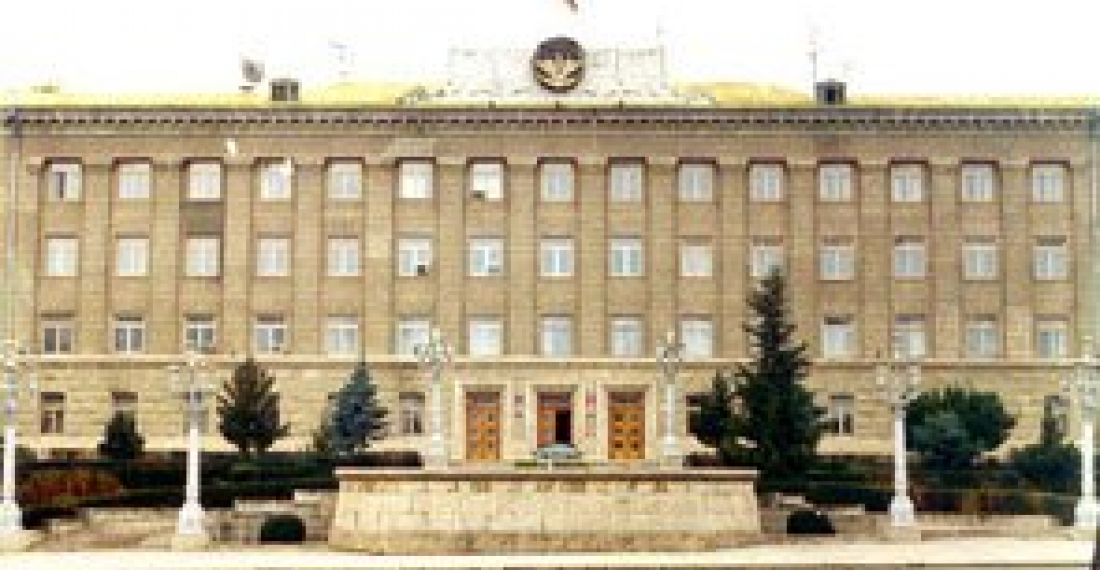
photo: The government bulding in Stepanakert



Related articles

Editor's choice
News
Borrell tells the European Parliament that the situation in Afghanistan was critical, but the EU will remain engaged

Borrell tells the European Parliament that the situation in Afghanistan was critical, but the EU will remain engaged

Borrell underlined that the European Union will make every effort to support the peace process and to remain a committed partner to the Afghan people. "Of course, we will have to take into account the evolving situation, but disengagement is not an option.  We are clear on that: there is no alternative to a negotiated political settlement, through inclusive peace talks.
Editor's choice
News
Germany accuses Russia of cyberattacks and disinformation campaign

Germany accuses Russia of cyberattacks and disinformation campaign

The German government holds Russia responsible for a cyberattack on German air traffic control, and for targeted disinformation campaigns before the last federal election. According to the German Foreign Office in Berlin, the incidents could be clearly attributed to the Russian military intelligence service, the GRU. In response, the Russian ambassador to Berlin was summoned to the Foreign Ministry. "We have been observing a massive increase in threatening hybrid activities by Russia for some time now," a spokesperson for the Foreign Ministry stated. These range from disinformation campaigns and espionage to cyberattacks and sabotage attempts. The aim is to divide society, sow distrust, and undermine confidence in democratic institutions. The spokesperson added that with these actions, Russia is "very concretely threatening our security, not only through its war of aggression against Ukraine, but also here in Germany."  The Foreign Ministry spokesperson explained that the cyberattack on air traffic control in August 2024 was clearly attributed to the hacker collective "APT28," known as "Fancy Bear," and to the responsibility of the Russian military intelligence service, the GRU. Furthermore, it could now be "conclusively stated" that Russia had attempted "to influence and destabilize both the last Federal election and the ongoing internal affairs of the Federal Republic of Germany." There was "absolutely irrefutable evidence" for this". The so-called "Storm 1516" campaign, which has been running since 2024, is allegedly backed by "reliable information" that the Moscow-based think tank "Center for Geopolitical Expertise" is behind it. The Center is also said to be supported by Russian military intelligence. Its primary aim is to influence democratic elections in the West. (Click the image to read more).

Popular

Editor's choice
News
Germany accuses Russia of cyberattacks and disinformation campaign

Germany accuses Russia of cyberattacks and disinformation campaign

The German government holds Russia responsible for a cyberattack on German air traffic control, and for targeted disinformation campaigns before the last federal election. According to the German Foreign Office in Berlin, the incidents could be clearly attributed to the Russian military intelligence service, the GRU. In response, the Russian ambassador to Berlin was summoned to the Foreign Ministry. "We have been observing a massive increase in threatening hybrid activities by Russia for some time now," a spokesperson for the Foreign Ministry stated. These range from disinformation campaigns and espionage to cyberattacks and sabotage attempts. The aim is to divide society, sow distrust, and undermine confidence in democratic institutions. The spokesperson added that with these actions, Russia is "very concretely threatening our security, not only through its war of aggression against Ukraine, but also here in Germany."  The Foreign Ministry spokesperson explained that the cyberattack on air traffic control in August 2024 was clearly attributed to the hacker collective "APT28," known as "Fancy Bear," and to the responsibility of the Russian military intelligence service, the GRU. Furthermore, it could now be "conclusively stated" that Russia had attempted "to influence and destabilize both the last Federal election and the ongoing internal affairs of the Federal Republic of Germany." There was "absolutely irrefutable evidence" for this". The so-called "Storm 1516" campaign, which has been running since 2024, is allegedly backed by "reliable information" that the Moscow-based think tank "Center for Geopolitical Expertise" is behind it. The Center is also said to be supported by Russian military intelligence. Its primary aim is to influence democratic elections in the West. (Click the image to read more).


