


ODIHR issues interim report on forthcoming presidential elections in Azerbaijan

Inaccuracy of the voters list, restrictive political environment, and absence of a genuinely competitive contest, were some of the issues raised by interlocoteurs of the OSCE-ODIHR Election Observation Mission ahead of the forthcoming presidential election in Azerbaijan, according to the Mission's interim report published on 29 March.

ODIHR -  the Office for Democratic Institutions and Human Rights of the OSCE has deployed an Election Observation Mission (EOM) on the forthcoming presidential elections in Azerbaijan which will be held on 11 April 2018. The Mission opened with a press conference in Baku on 9 March.  The Head of Mission is Corien Jonker from The Netherlands. The Mission consists of a core team made up of 10 staff from 7 participating States and 30 long-term observers seconded from participating states who are deployed throughout the country.

The OSCE Parliamentary Assembly and the Parliamentary Assembly of the Council of Europe have announced that they will deploy observer delegations for election-day observation. The OSCE Chairperson-in-Office has appointed Nilza de Sena as Special Co-ordinator and leader of the short term OSCE observer mission for this election.

The ODIHR EOM interim report flags up a number of issues that the report says were raised during meetings with what it described as the Mission's "interlocoteurs".  These issues can be grouped in three clusters - the legal and administrative framework, the political context, and media reporting and election scrutiny.

The report says that the election is administered by the Central Elections Commission, 125 Constituency Election Commissions (ConECs) and around 5,400 Precinct Election Commissions (PECs).  The report says that "Election commissions appear professional and well-resourced. PECs have been trained."

But the report raises issues regarding the accuracy of the voter's list.  It says:

"Voter lists are available online and were also displayed for public scrutiny. Voters can request corrections. While election officials informed the ODIHR EOM that their efforts led to accurate voter lists, other interlocutors noted a large discrepancy between the number of registered voters and the number of citizens of voting age."

In a footnote the report says that according to data from the State Statistics Committee from 2017 there are more than 7.1 million individuals of voting age. This is nearly two million more than the number of people registered as of 21 March which amounted to 5,192,063.

The report says that ten candidates submitted the necessary paperwork to be registered.  Two were not  registered because they failed to collect enough signatures to be nominated as required by law. They did not appeal this decision. Eight were eventually registered, and will appear on the ballot paper. The report says:

"Many ODIHR EOM interlocutors said they do not expect the election to be genuinely competitive, claiming that those who stand against the incumbent in this election either do not present a political alternative, or even actively support him. Several opposition parties are calling for a boycott of the  election, saying that they will not participate in an election that takes place in what they consider a non-competitive environment. Other parties do not participate in the election arguing that the early election date gives them insufficient time to participate in a meaningful way. ODIHR EOM interlocutors from YAP criticized the reasons provided by the opposition, noting that they would have known that elections would take place at some point in 2018."

It adds,

"Several interlocutors informed the ODIHR EOM about restrictions they face in terms of freedom of assembly and association, and some of them shared that they are under continuous police surveillance."

The report also refers to the issue of Ilgar Mammadov saying that one political movement noted that he "is prevented from running in the election despite judgments of the European Court of Human Rights (ECtHR)".

The report says that whilst "freedom of expression, media freedom and the right of access to information are guaranteed in the Constitution "ODIHR EOM interlocutors have expressed concerns about the number of journalists and bloggers who are currently serving prison sentences on charges that are seemingly unrelated to their professional activities."  The report adds:

"The 11 television stations with nationwide coverage remain the main source of political information in Azerbaijan, while the circulation of the print media continues to decline. Some 80 per cent of population have access to the internet. A number of ODIHR EOM interlocutors expressed a lack of trust in the independence and impartiality of traditional media, claiming that websites and social media are the only sources of critical information."

The report adds:

"The ODIHR EOM noted that a number of websites that provide daily political coverage are generally inaccessible in Baku and the regions."

The report says that "in line with legal requirements, the public broadcaster has allocated free airtime to all contestants. The ODIHR EOM was informed that this time will be used exclusively for one-hour long roundtables among the contestants, which are aired on both TV and radio, three times per week."On election observation the report says that

"the Election Code provides for citizen and international election observation, in line with OSCE commitments. Domestic observers can register to observe individually, or as representatives of candidates, political parties or non-governmental organizations. In addition to observers, candidates can have their own authorized representatives registered by the CEC. The CEC reported that as of 21 March, a total of 48,484 domestic observers had been registered by the ConECs, and 822 by the CEC."

The report notes that

"the Election Monitoring and Democracy Studies Center (EMDS) has significant experience in conducting independent and professional observation, both in Azerbaijan and abroad, but remains unregistered and thus without legal status. Therefore, its volunteer observers plan to be accredited individually. Several civil society organizations will engage in election observation and will conduct exit polls."

The full interim report of the OSCE-ODIHR Elections Observation Mission for the Early Presidential Elections in Azerbaijan is available on the OSCE website here

source: commonspace.eu with OSCE.org

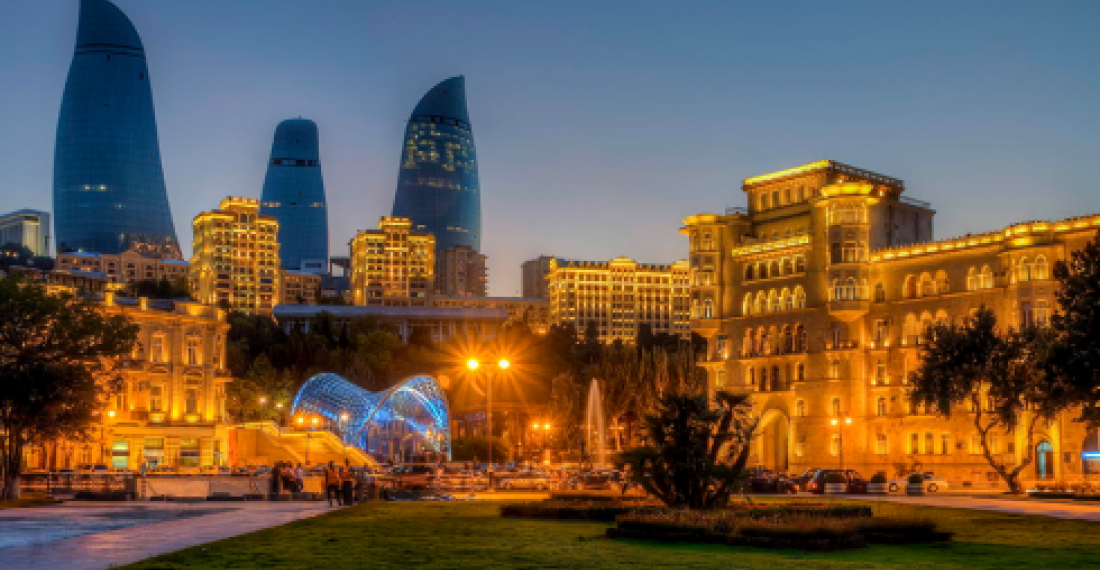
photo: Baku - a general view (archive picture)

 

Related articles

Editor's choice
News
Russia adds pressure on Armenia ahead of key elections; recalls Ambassador in Yerevan for consultations

Russia adds pressure on Armenia ahead of key elections; recalls Ambassador in Yerevan for consultations

Ahead of key parliamentary elections,scheduled to be held in Armenia on Sunday, 7 June, Russia continues to attempt to put pressure on the Armenian Government led by prime minister Nikol Pashinyan. On 30 May, Russia recalled its Ambassador to Yerevan for consultations. A terse statement, published on the website of the Russian Foreign Ministry, said, "The Ambassador of the Russian Federation to the Republic of Armenia , S.P. Kopyrkin, has been summoned to Moscow for consultations in connection with the steps taken by the Armenian leadership to move closer to the European Union, which are detrimental to cooperation within the EAEU." This followed a statement issued the day before, by the leaders of the Eurasian Economic Union (EAEU) that challenges the Armenian trajectory towards approximating to the European Union. Vladimir Putin is undertood to have personally pushed the other four EAEU leaders to issue the statement, which said: "Taking into account the significant risks to the economic security of the member states of the Eurasian Economic Union (hereinafter referred to as the Union) arising in connection with the preparation of the Republic of Armenia for accession to the European Union, as well as the need to prevent the associated damage to the member states of the Union: decided that the members of the Eurasian Intergovernmental Council from the Republic of Belarus, the Republic of Kazakhstan, the Kyrgyz Republic and the Russian Federation will report at the next meeting of the Supreme Eurasian Economic Council in December 2026 on the possible consequences of the suspension of the Treaty on the Eurasian Economic Union with respect to the Republic of Armenia. We share the position on the need to hold a national referendum in the Republic of Armenia as soon as possible on joining the European Union or continuing to be part of the Eurasian Economic Union."
Editor's choice
News
The leaders of the states of the Eurasian Economic Union issued a tough statement warning fellow-member state Armenia of the consequences of its desire to join the European Union.

The leaders of the states of the Eurasian Economic Union issued a tough statement warning fellow-member state Armenia of the consequences of its desire to join the European Union.

The leaders of the states of the Eurasian Economic Union (EEAS) issued a tough statement warning fellow-member state Armenia of the consequences of its desire to join the European Union. The stark, sharply worded,  warning, comes days before crucial parliamentary elections in Armenia, scheduled for 7 June. The full statement said, “We, the Presidents of the Republic of Belarus, the Republic of Kazakhstan, the Kyrgyz Republic and the Russian Federation, Taking into account the actions of the Republic of Armenia aimed at joining the European Union, including the approval in 2025 by the National Assembly of the Republic of Armenia and the signing by the President of the Republic of Armenia of the Law of the Republic of Armenia "On the Start of the Process of Accession of the Republic of Armenia to the European Union", as well as the confirmation by the European Union of the European aspirations of the Government of the Republic of Armenia, expressed in the joint declaration following the first Armenia-European Union summit, adopted on 5 May 2026, Taking into account the significant risks to the economic security of the member states of the Eurasian Economic Union (hereinafter referred to as the Union) arising in connection with the preparation of the Republic of Armenia for accession to the European Union, as well as the need to prevent the associated damage to the member states of the Union: decided that the members of the Eurasian Intergovernmental Council from the Republic of Belarus, the Republic of Kazakhstan, the Kyrgyz Republic and the Russian Federation will report at the next meeting of the Supreme Eurasian Economic Council in December 2026 on the possible consequences of the suspension of the Treaty on the Eurasian Economic Union with respect to the Republic of Armenia. We share the position on the need to hold a national referendum in the Republic of Armenia as soon as possible on joining the European Union or continuing to be part of the Eurasian Economic Union. Astana, May 29, 2026” A meeting of the Supreme Eurasian Economic Council was held in Astana, Kazakhstan, on May 29, 2026. The meeting of the Supreme Eurasian Economic Council in a restricted format was attended by Russian President Vladimir Putin, Belarusian President Alexander Lukashenko , Kazakh President Kassym-Jomart Tokayev , Kyrgyz President Sadyr Japarov , Armenian Deputy Prime Minister Mher Grigoryan, and Chairman of the Board of the Eurasian Economic Commission Bakytzhan Sagintayev. From the Russian side, the meeting was also attended by Deputy Prime Minister and member of the Council of the Eurasian Economic Commission Alexey Overchuk and Presidential Aide Yury Ushakov . The heads of delegations from EAEU observer states, including President of Uzbekistan Shavkat Mirziyoyev , Vice President of Cuba Salvador Valdés Mesa, Minister of Industry, Mines, and Trade of Iran Mohammad Atabak, and CIS Secretary General Sergei Lebedev, joined the expanded meeting . Following the meeting of the Supreme Eurasian Economic Council, a number of documents were signed .

Popular

Editor's choice
Interview
Thursday Interview: Murad Muradov

Thursday Interview: Murad Muradov

Today, commonspace.eu starts a new regular weekly series. THURSDAY INTERVIEW, conducted by Lauri Nikulainen, will host  persons who are thinkers, opinion shapers, and implementors in their countries and spheres. We start the series with an interview with Murad Muradov, a leading person in Azerbaijan's think tank community. He is also the first co-chair of the Action Committee for a new Armenian-Azerbaijani Dialogue. Last September he made history by being the first Azerbaijani civil society activist to visit Armenia after the 44 day war, and the start of the peace process. Speaking about this visit Murad Muradov said: "My experience was largely positive. My negative expectations luckily didn’t play out. The discussions were respectful, the panel format bringing together experts from Armenia, Azerbaijan, and Turkey was particularly valuable during the NATO Rose-Roth Seminar in Yerevan, and media coverage, while varied in tone, remained largely constructive. Some media outlets though attempted to represent me as more of a government mouthpiece than an independent expert, which was totally misleading.  Overall, I see these initiatives as important steps in rebuilding trust and normalising professional engagement. The fact that soon a larger Azerbaijani civil society visits to Armenia followed, reinforces the sense that this process is moving in the right direction." (click the image to read the interview in full)


