Lukashenko: Conflicts in CIS space need to be resolved putting people's interests first

The President of Belarus, Alexander Lukashenko has called on the Commonwealth of Independent States to work for resolving conflicts within its space. The Commonwealth of Independent States would deserve a monument if the organization managed to resolve the problem of Transdniestria, Nagorno-Karabakh, or Ukraine's Donbass, said Lukashenko during an interview with the MIR television company, cited by the BelTA news agency in Minsk

Talking about the future of the Commonwealth of Independent States, the Belarusian head of state noted that the suggested reforms seem insignificant against the background of existing problems. For instance, is it possible to compare attempts to make the CIS administration more effective to the conflicts that currently exist between countries? “If we managed to resolve the Transdniestria problem, the Nagorno-Karabakh problem, or the Donbass problem in Ukraine, then it would be necessary to erect a monument to the Commonwealth of Independent States somewhere in the center of Eurasian space. But we have not accomplished it. We sometimes don't do it not because it is impossible to accomplish but because different interests are at play. Yet the problem needs to be resolved,” stated Alexander Lukashenko.

Alexander Lukashenko said he believes that people's interests should be the top priority for resolving these conflicts. “Do you think people in Nagorno-Karabakh live well if they are constantly subjected to certain military problems? They just keep on living and hoping that something will not happen to them tomorrow, that a bomb will not drop on their heads. Is it normal? Absolutely not! Does anyone benefit from it? No one!” stressed the president. “It is necessary to resolve all these CIS issues that are not hard to notice before thinking about future,” believes the Belarusian head of state. “While dealing with these issues, we will see new strategic avenues that we will have to act upon.”

source; commonspace.eu, with BeLTA news agency, Minsk

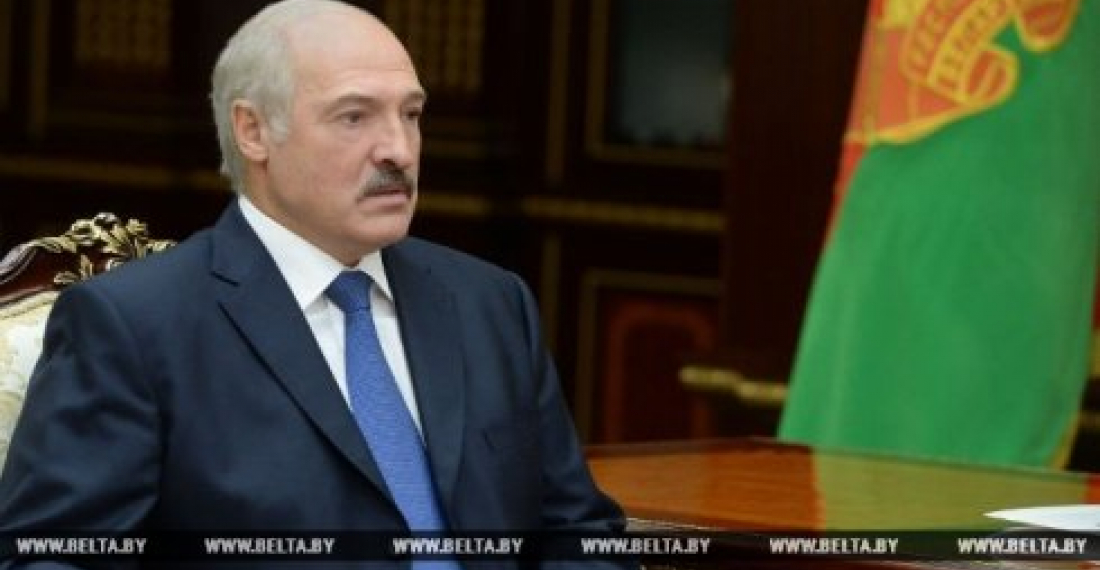
photo: President of Belarus, Alexander Lukashenko (archive picture)


Related articles

Editor's choice
News
Aden under curfew, as problem in Yemen's south deepens

Aden under curfew, as problem in Yemen's south deepens

The port city of Aden, in Yemen's south, has been put under curfew, as the rift in the country between  the Saudi led coalition which  backs Yemen's presidential governing council, and the southern forces led by the Southern Transitional Council (STC), deepens. Abdul Rahman al-Mahrami, a member of the Yemeni Presidential Governing Council and commander of the al-Amalik brigades, has ordered a curfew in the temporary capital, Aden, "to maintain security". "A curfew has been imposed throughout Aden Governorate from 9:00 p.m. to 6:00 a.m., in accordance with the instructions of Commander Abdul Rahman al-Mahrami, a member of the Presidential Management Council," the statement said. It states that only security and military personnel, as well as medical and technical teams with approved permits, will be allowed to move in the area during these hours. Yemen's presidential council, which is backed by Saudi Arabia and which already is in a struggle with the Houthi Movement in the north of the country who also occupy the capital Sanaa, two days ago issued an order for the arrest of the head of the Southern Transitional Council (STC),, Aidarous al Zubaidi. The STC have wide support among people in the South, and advocate that South Yemen restores its independence. The coalition warned of further escalation in Aden, long regarded as an STC stronghold, as the Presidential Leadership Council (PLC) chief accused STC leader Aidarous Al Zubaidi of “high treason” and announced the revocation of his membership in the governing body. The moves mark a sharp escalation in tensions within the anti-Houthi camp, despite National Shield Forces, rivals of the STC and former allies, having recently retaken control of Hadhramaut and Mahra from southern fighters. The STC’s takeover of the two regions last month angered Saudi Arabia and contributed to igniting the current internal conflict. (click the picture to read more)

Popular

Editor's choice
News
Aden under curfew, as problem in Yemen's south deepens

Aden under curfew, as problem in Yemen's south deepens

The port city of Aden, in Yemen's south, has been put under curfew, as the rift in the country between  the Saudi led coalition which  backs Yemen's presidential governing council, and the southern forces led by the Southern Transitional Council (STC), deepens. Abdul Rahman al-Mahrami, a member of the Yemeni Presidential Governing Council and commander of the al-Amalik brigades, has ordered a curfew in the temporary capital, Aden, "to maintain security". "A curfew has been imposed throughout Aden Governorate from 9:00 p.m. to 6:00 a.m., in accordance with the instructions of Commander Abdul Rahman al-Mahrami, a member of the Presidential Management Council," the statement said. It states that only security and military personnel, as well as medical and technical teams with approved permits, will be allowed to move in the area during these hours. Yemen's presidential council, which is backed by Saudi Arabia and which already is in a struggle with the Houthi Movement in the north of the country who also occupy the capital Sanaa, two days ago issued an order for the arrest of the head of the Southern Transitional Council (STC),, Aidarous al Zubaidi. The STC have wide support among people in the South, and advocate that South Yemen restores its independence. The coalition warned of further escalation in Aden, long regarded as an STC stronghold, as the Presidential Leadership Council (PLC) chief accused STC leader Aidarous Al Zubaidi of “high treason” and announced the revocation of his membership in the governing body. The moves mark a sharp escalation in tensions within the anti-Houthi camp, despite National Shield Forces, rivals of the STC and former allies, having recently retaken control of Hadhramaut and Mahra from southern fighters. The STC’s takeover of the two regions last month angered Saudi Arabia and contributed to igniting the current internal conflict. (click the picture to read more)