


Kazakhstan GDP grows by 6.5% in 2025

Preliminary data from the Kazakhstan Bureau of National Statistics show that Kazakhstan’s gross domestic product grew by 6.5% in January–December 2025 compared to the same period last year,  

The Government is implementing a set of systemic measures aimed at diversifying the economy. Over the past year, industry, transport, construction, and trade were the main drivers of economic growth.

The industrial production index reached 7.4% over the year, with the manufacturing sector showing steady growth of 6.4%, driven by gains in food production (+8.1%), oil refining (+5.9%), chemical products (+9.8%), metallurgy (+1.2%), and machinery manufacturing (+12.9%).

Economic growth was reported across most regions of the country, including Aktobe, Almaty, Atyrau, West Kazakhstan, Zhambyl, Karaganda, Kostanay, Mangistau, Pavlodar, North Kazakhstan, and Turkistan, as well as in the Zhetysu and Ulytau regions and the cities of Astana, Almaty, and Shymkent.

The transport and warehousing sector expanded by 20.4% by yearend, up from 20.3% in January–November, driven by increased freight volumes—particularly by road and rail—and stronger passenger traffic in several regions. Additional growth came from auxiliary transport services, including freight forwarding, air traffic management, airport operations, warehousing, and the storage of grain and refrigerated cargo.

Growth in the construction sector reached 15.9%, exceeding the January–November 2025 figure of 14.7%. This expansion was supported by the implementation of infrastructure and social projects, including the construction of modern schools, healthcare facilities, and transport and engineering infrastructure. In January–December 2025, the total area of housing commissioned reached 20.1 million square meters, 5.1% higher than in 2024.

Positive momentum continued in the trade sector, which grew by 8.9% in January–December 2025 (8.8% in January–November). Wholesale trade was the main driver, accounting for more than two-thirds of the sector’s total volume. Growth in wholesale trade was supported by higher sales of grain, seeds, and animal feed (a 2.6-fold increase), machinery and equipment (+99.8%), pharmaceutical products (+44.1%), cars and light motor vehicles (+33%), dairy products, eggs, edible oils and fats (+25.8%), sugar, chocolate, and sugar confectionery (+21.2%), as well as a broad range of consumer goods (+12.5%).

Output in agriculture, forestry, and fisheries increased by 5.9%, supported by positive dynamics in crop production (+7.8%) and livestock farming (+3.3%).

The information and communications sector recorded growth of 3.6%.

Overall, the pace of economic development reflects the stable growth of key sectors.

source: commonspace.eu with Qazinform News Agency (Astana)

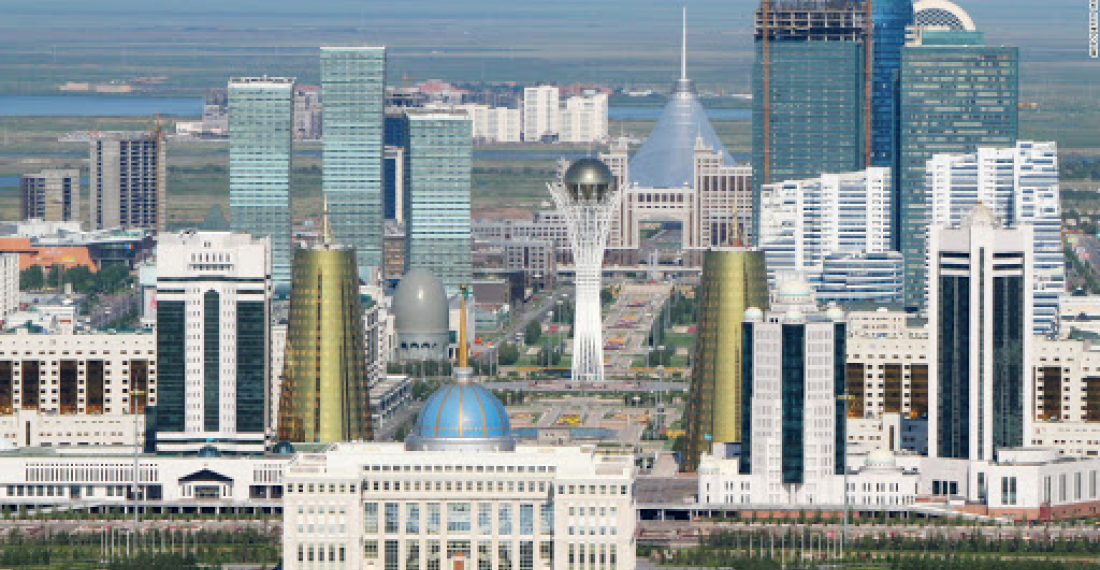
photo: Astana (archive picture)

Related articles

Editor's choice
News
Women emerge favourite to lead United Nations from next year, after straw-poll of UN Security Council members

Women emerge favourite to lead United Nations from next year, after straw-poll of UN Security Council members

​ Two women have emerged as favourite to lead the United Nations as Secretary-General from 1 January 2027, when the term of the present incumbent, Antonio Gutteres, expires. A straw poll of the members of the UN Security Council, held on Thursday, 30 July showed that of the seven candidates, Rebecca Grynspan of Costa Rica and Carolyn Rodriguez-Birkett of Guyana received ten and nine positive endorsements respectively, by the 15 members UN Security Council Although the poll and its result are supposed to be secret, the result leaked within minutes, and was carried on world media outlets, such as Reuters. The result was as follows   Michelle Bachelet 6 encourage 5  discourage   4 no opinion María Fernanda Espinosa 5 2 8 Rafael Grossi 7 2 6 Rebeca Grynspan 10 1 4 Olara Otunnu 2 5 8 Carolyn Rodrigues-Birkett 9 2 4 Macky Sall 6 7 2   Article 97 of the UN Charter states that the “Secretary-General shall be appointed by the General Assembly upon the recommendation of the Security Council”. Straw polls are informal ballots used to determine the viability of Secretary-General candidates.  The seven current candidates are: Michelle Bachelet Jeria (Chile), who was nominated by Brazil, Chile, and Mexico on 2 February, with Chile withdrawing its nomination on 24 March; María Fernanda Espinosa Garcés (Ecuador), who was nominated by Antigua and Barbuda on 11 May; Rafael Mariano Grossi (Argentina), who was nominated by Argentina on 26 November 2025; Rebeca Grynspan Mayufis (Costa Rica), who was nominated by Costa Rica on 3 March; Olara Otunnu (Uganda), who was nominated by Uganda on 24 July; Carolyn Rodrigues Birkett (Guyana), who was nominated by Guyana on 15 June; and Macky Sall (Senegal), who was nominated by Burundi on 2 March. At Thursday's straw poll, there was no difference between the ballots presented to the five permanent members (P5) and the ten elected members (E10). Council members received one ballot per candidate, containing the candidate’s name followed by three options: “encouraged”, “discouraged”, and “no opinion expressed”.   It is ofcourse early days, and the straw poll is just an informal indication of the mood of the UN Security Council, but the strong showwing by the two womencandidates may be an indication that for the first time, the head of the UN can be a women. (click image to read more) ​

Popular

Editor's choice
Interview
Thursday Interview: Murad Muradov

Thursday Interview: Murad Muradov

Today, commonspace.eu starts a new regular weekly series. THURSDAY INTERVIEW, conducted by Lauri Nikulainen, will host  persons who are thinkers, opinion shapers, and implementors in their countries and spheres. We start the series with an interview with Murad Muradov, a leading person in Azerbaijan's think tank community. He is also the first co-chair of the Action Committee for a new Armenian-Azerbaijani Dialogue. Last September he made history by being the first Azerbaijani civil society activist to visit Armenia after the 44 day war, and the start of the peace process. Speaking about this visit Murad Muradov said: "My experience was largely positive. My negative expectations luckily didn’t play out. The discussions were respectful, the panel format bringing together experts from Armenia, Azerbaijan, and Turkey was particularly valuable during the NATO Rose-Roth Seminar in Yerevan, and media coverage, while varied in tone, remained largely constructive. Some media outlets though attempted to represent me as more of a government mouthpiece than an independent expert, which was totally misleading.  Overall, I see these initiatives as important steps in rebuilding trust and normalising professional engagement. The fact that soon a larger Azerbaijani civil society visits to Armenia followed, reinforces the sense that this process is moving in the right direction." (click the image to read the interview in full)


