


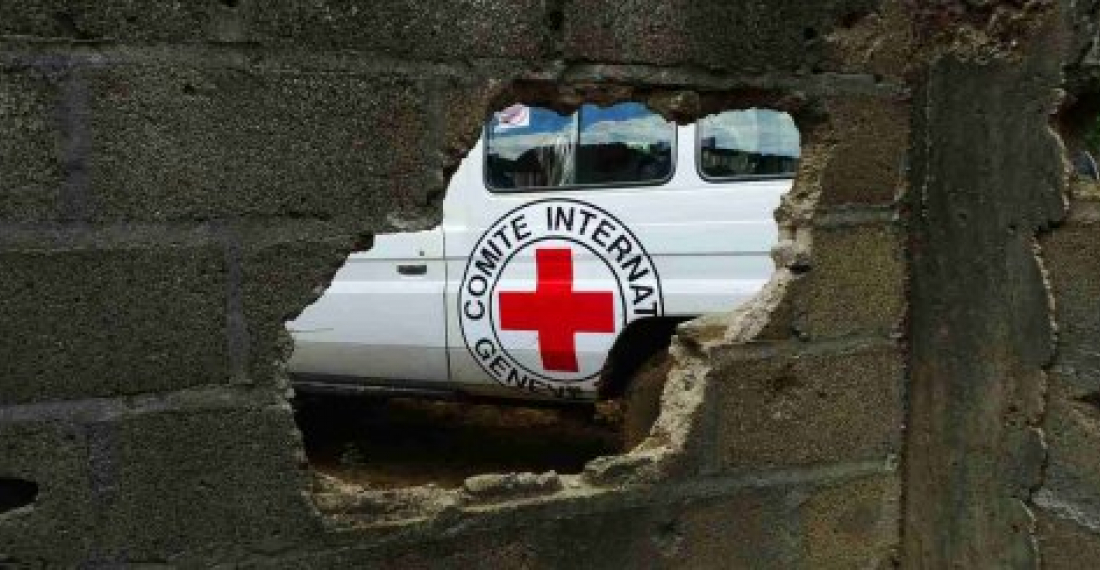
Karabakh conflict: ICRC says hundreds of thousands of people affected across the region

The International Committee of the Red Cross (ICRC) estimates that hundreds of thousands of people have been affected across the South Caucasus region as a result of the ongoing escalation of the Nagorno-Karabakh conflict

In a statement issued in Geneva on Tuesday (13 October) Martin Schuepp, the Eurasia Regional Director of the ICRC, expressed a 'deep hope' that the sides of the conflict over Nagorno-Karabakh would respect the humanitarian ceasefire. We publish the statement here in full:

"Today, we are more than two weeks into a period of intense violence as the Nagorno-Karabakh conflict escalates. We estimate there are hundreds of thousands of people affected across the region.

Civilians are dying or suffering life-changing injuries. Homes, businesses and once-busy streets are being reduced to rubble. The elderly and babies are among those forced to spend hours in unheated basements or to leave their homes for safety.

On top of this, healthcare facilities, health workers and ambulance services are straining to cope or even suffering reported direct attacks in places. There is upheaval, loss and fear in communities on both sides of the line of contact.

It is our deep hope that the humanitarian ceasefire agreement will be abided by and will translate into meaningful relief for these people.

As such, the International Committee of the Red Cross remains ready to facilitate the handover of bodies of those killed in action and the release of detainees. The sides must agree on a format between themselves.

We are in continuous discussions with them, passing proposals back and forth. Operational and logistical arrangements must be in place and the safety of our teams guaranteed, for the operation to begin.

We are not involved in the political negotiations. Our role is strictly humanitarian, as a neutral intermediary. We have long-standing experience of this in conflicts worldwide.

In terms of our response, we are working in the region to alleviate the suffering of those caught up in this.

We are distributing emergency cash assistance and hygiene kits to hundreds of families, providing emergency medical kits to hospitals and forensic support to authorities, and doing field assessments where we can.

And we are working closely with the Armenian Red Cross and the Azerbaijani Red Crescent as they respond to this emergency.

We project that at least tens of thousands of people across the region will need support over the next few months.

To this end we have issued an emergency appeal of an additional 9.2 million Swiss Francs and have already started to receive generous donations from governments, for which we are very grateful.

I will leave you with the experience of one mother who spoke to us - she described how as a child she sheltered in basements and spent nights in the forest to escape the fighting. Almost 30 years later, she is once again forced to do the same thing, this time with her little daughter - barely 2 years old - and her elderly parents, who had once protected her all those years ago.

There are many more like her and for all their sakes we must be there to support and facilitate meaningful humanitarian action where we can."

 source: commonspace.eu with ICRC, Geneva

 

Related articles

Editor's choice
News
Borrell tells the European Parliament that the situation in Afghanistan was critical, but the EU will remain engaged

Borrell tells the European Parliament that the situation in Afghanistan was critical, but the EU will remain engaged

Borrell underlined that the European Union will make every effort to support the peace process and to remain a committed partner to the Afghan people. "Of course, we will have to take into account the evolving situation, but disengagement is not an option.  We are clear on that: there is no alternative to a negotiated political settlement, through inclusive peace talks.
Editor's choice
News
Germany accuses Russia of cyberattacks and disinformation campaign

Germany accuses Russia of cyberattacks and disinformation campaign

The German government holds Russia responsible for a cyberattack on German air traffic control, and for targeted disinformation campaigns before the last federal election. According to the German Foreign Office in Berlin, the incidents could be clearly attributed to the Russian military intelligence service, the GRU. In response, the Russian ambassador to Berlin was summoned to the Foreign Ministry. "We have been observing a massive increase in threatening hybrid activities by Russia for some time now," a spokesperson for the Foreign Ministry stated. These range from disinformation campaigns and espionage to cyberattacks and sabotage attempts. The aim is to divide society, sow distrust, and undermine confidence in democratic institutions. The spokesperson added that with these actions, Russia is "very concretely threatening our security, not only through its war of aggression against Ukraine, but also here in Germany."  The Foreign Ministry spokesperson explained that the cyberattack on air traffic control in August 2024 was clearly attributed to the hacker collective "APT28," known as "Fancy Bear," and to the responsibility of the Russian military intelligence service, the GRU. Furthermore, it could now be "conclusively stated" that Russia had attempted "to influence and destabilize both the last Federal election and the ongoing internal affairs of the Federal Republic of Germany." There was "absolutely irrefutable evidence" for this". The so-called "Storm 1516" campaign, which has been running since 2024, is allegedly backed by "reliable information" that the Moscow-based think tank "Center for Geopolitical Expertise" is behind it. The Center is also said to be supported by Russian military intelligence. Its primary aim is to influence democratic elections in the West. (Click the image to read more).

Popular

Editor's choice
News
Germany accuses Russia of cyberattacks and disinformation campaign

Germany accuses Russia of cyberattacks and disinformation campaign

The German government holds Russia responsible for a cyberattack on German air traffic control, and for targeted disinformation campaigns before the last federal election. According to the German Foreign Office in Berlin, the incidents could be clearly attributed to the Russian military intelligence service, the GRU. In response, the Russian ambassador to Berlin was summoned to the Foreign Ministry. "We have been observing a massive increase in threatening hybrid activities by Russia for some time now," a spokesperson for the Foreign Ministry stated. These range from disinformation campaigns and espionage to cyberattacks and sabotage attempts. The aim is to divide society, sow distrust, and undermine confidence in democratic institutions. The spokesperson added that with these actions, Russia is "very concretely threatening our security, not only through its war of aggression against Ukraine, but also here in Germany."  The Foreign Ministry spokesperson explained that the cyberattack on air traffic control in August 2024 was clearly attributed to the hacker collective "APT28," known as "Fancy Bear," and to the responsibility of the Russian military intelligence service, the GRU. Furthermore, it could now be "conclusively stated" that Russia had attempted "to influence and destabilize both the last Federal election and the ongoing internal affairs of the Federal Republic of Germany." There was "absolutely irrefutable evidence" for this". The so-called "Storm 1516" campaign, which has been running since 2024, is allegedly backed by "reliable information" that the Moscow-based think tank "Center for Geopolitical Expertise" is behind it. The Center is also said to be supported by Russian military intelligence. Its primary aim is to influence democratic elections in the West. (Click the image to read more).


