Iran holds military drills close to the borders with Armenia and Azerbaijan

Iran continues to be anxious at the situation on its north-western border as clashes continue between Armenian and Azerbaijani forces in the Nagorno-Karabakh conflict zone.

On Sunday,  the Iranian Army's Ground Force held a one-day drill in the country's northwestern border region..

A military source said that the military exercise, codenamed 'Lovers of Velayat-99', was held to display the country's defensive might and the readiness of the armed forces to counter any threat against the Islamic Republic's security and integrity. In this specialized tactical exercise, the first phase of which was held overnight, the infantry, engineering, UAV and artillery units supported the 164th Mobile Assault Brigade in achieving predetermined goals during the drill. Maintaining and promoting mobility, responding quickly to threats, and increasing combat readiness and defense capabilities were among the objectives of the 'Lovers of Velayat-99'.

On Saturday (24 October), the commander of Iranian Revolutionary Guards Corps Ground Force paid his third visit to the border area in three weeks to monitor the border security situation. Brigadier General Mohammad Pakpour told Iranian media that any insecurity and threat on Iranian borders that harm the security and psychological tranquility of the citizens of the country will be met with Iran's countermeasures. In a reference to the ongoing conflict the brigadier general stated that the Islamic Republic of Iran opposes any occupation and aggression and condemns it strongly. "Since the first days of recent conflict broke out between Republic of Azerbaijan and Armenia, IRGC Ground Force has been active in the border region, monitoring border developments", he said adding that "necessary measures and reinforcements have been taken in accordance with the situation."

Earlier Iranian media reported that troops and equipment from the Special Division 25 Karbala were deployed to the East Azerbaijan province from the nearby Mazandaran province.

Whilst Iran has officially taken a neutral position in the conflict, public opinion, especially in the norther part of the country populated by ethnic Azerbaijanis is strongly pro- Azerbaijan.

Writing in an op-ed on Mehr News Agency,  an Islamic scholar  Hojjatoleslam Reza Kafili, stated:

"Of course, the UN Security Council also issued four resolutions, calling for the separatists and Armenian government to withdraw from the occupied territories, but Armenia did not heed the resolutions. The Organization for Security and Cooperation in Europe (OSCE) then formed the Minsk Group and consequently, this Group stalled and failed to do anything. Thus, with the testimony of history and even according to the UN Security Council [2], Nagorno-Karabakh is the territory of Azerbaijan and in the very beautiful interpretation of the leader of the Muslims of the world, Grand Ayatollah Khamenei, Nagorno- Karabakh is the land of Islam.

In recent months, with the escalation of conflict between Azerbaijan and Armenia over the Nagorno-Karabakh region, although Islamic Iran has officially announced a policy of maintaining and developing equal relations between the parties to the conflict, some international solutions to resolve the conflict in neighboring countries is not far-fetched.

Islamic Republic of Iran has cultural, religious and linguistic commonalities in this region and this region i.e. Nagorno-Karabakh is considered as a part of Iranian Islamic civilization. Therefore, by fulfilling some international activities, it can play an effective role in this issue. Accordingly, Friday prayers leaders in northwestern part of the country issued a statement and announced their wise and precise position on the Nagorno-Karabakh conflict."

source: commonspace.eu with MEHR news agency (Tehran) and other agencies

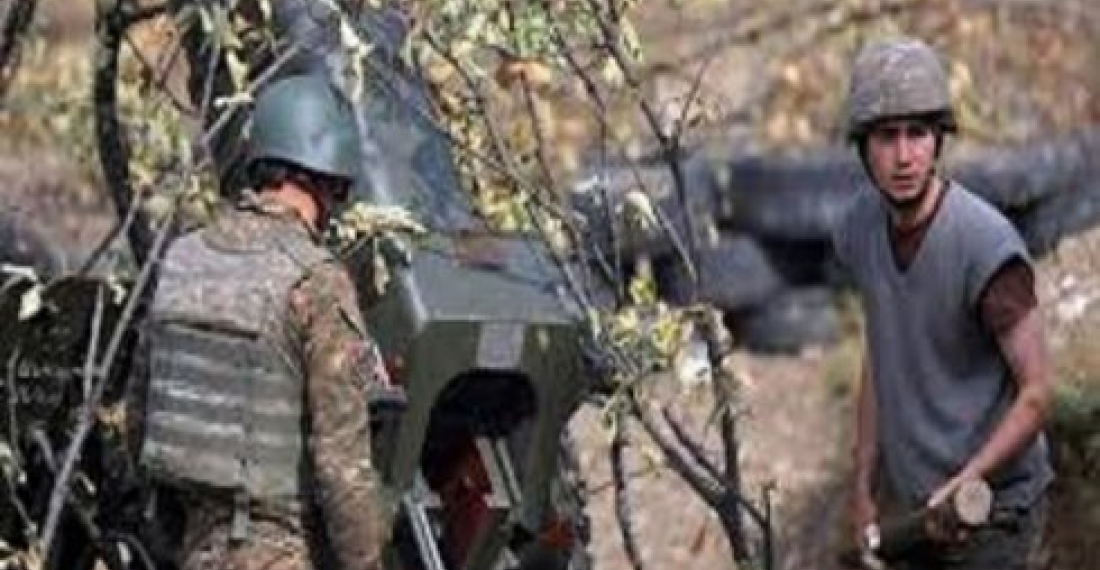
photo: Iranian Revolutionar Guards Corps Servicemen on manoevres (archive picture)
 

Related articles

Editor's choice
News
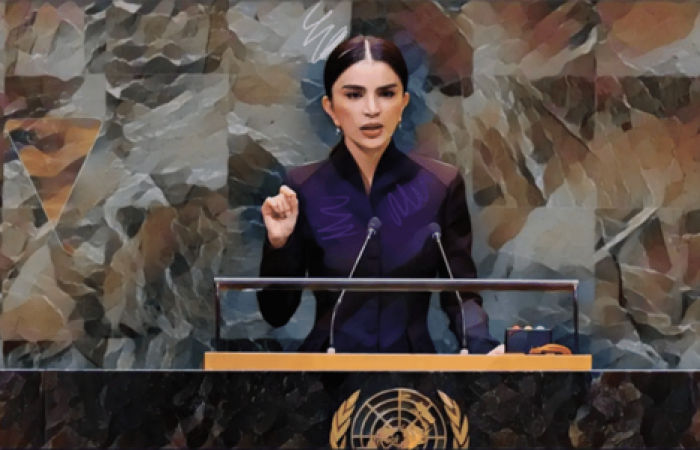
Women emerge favourite to lead United Nations from next year, after straw-poll of UN Security Council members

Women emerge favourite to lead United Nations from next year, after straw-poll of UN Security Council members

​ Two women have emerged as favourite to lead the United Nations as Secretary-General from 1 January 2027, when the term of the present incumbent, Antonio Gutteres, expires. A straw poll of the members of the UN Security Council, held on Thursday, 30 July showed that of the seven candidates, Rebecca Grynspan of Costa Rica and Carolyn Rodriguez-Birkett of Guyana received ten and nine positive endorsements respectively, by the 15 members UN Security Council Although the poll and its result are supposed to be secret, the result leaked within minutes, and was carried on world media outlets, such as Reuters. The result was as follows   Michelle Bachelet 6 encourage 5  discourage   4 no opinion María Fernanda Espinosa 5 2 8 Rafael Grossi 7 2 6 Rebeca Grynspan 10 1 4 Olara Otunnu 2 5 8 Carolyn Rodrigues-Birkett 9 2 4 Macky Sall 6 7 2   Article 97 of the UN Charter states that the “Secretary-General shall be appointed by the General Assembly upon the recommendation of the Security Council”. Straw polls are informal ballots used to determine the viability of Secretary-General candidates.  The seven current candidates are: Michelle Bachelet Jeria (Chile), who was nominated by Brazil, Chile, and Mexico on 2 February, with Chile withdrawing its nomination on 24 March; María Fernanda Espinosa Garcés (Ecuador), who was nominated by Antigua and Barbuda on 11 May; Rafael Mariano Grossi (Argentina), who was nominated by Argentina on 26 November 2025; Rebeca Grynspan Mayufis (Costa Rica), who was nominated by Costa Rica on 3 March; Olara Otunnu (Uganda), who was nominated by Uganda on 24 July; Carolyn Rodrigues Birkett (Guyana), who was nominated by Guyana on 15 June; and Macky Sall (Senegal), who was nominated by Burundi on 2 March. At Thursday's straw poll, there was no difference between the ballots presented to the five permanent members (P5) and the ten elected members (E10). Council members received one ballot per candidate, containing the candidate’s name followed by three options: “encouraged”, “discouraged”, and “no opinion expressed”.   It is ofcourse early days, and the straw poll is just an informal indication of the mood of the UN Security Council, but the strong showwing by the two womencandidates may be an indication that for the first time, the head of the UN can be a women. (click image to read more) ​

Popular

Editor's choice
Interview
Thursday Interview: Murad Muradov

Thursday Interview: Murad Muradov

Today, commonspace.eu starts a new regular weekly series. THURSDAY INTERVIEW, conducted by Lauri Nikulainen, will host  persons who are thinkers, opinion shapers, and implementors in their countries and spheres. We start the series with an interview with Murad Muradov, a leading person in Azerbaijan's think tank community. He is also the first co-chair of the Action Committee for a new Armenian-Azerbaijani Dialogue. Last September he made history by being the first Azerbaijani civil society activist to visit Armenia after the 44 day war, and the start of the peace process. Speaking about this visit Murad Muradov said: "My experience was largely positive. My negative expectations luckily didn’t play out. The discussions were respectful, the panel format bringing together experts from Armenia, Azerbaijan, and Turkey was particularly valuable during the NATO Rose-Roth Seminar in Yerevan, and media coverage, while varied in tone, remained largely constructive. Some media outlets though attempted to represent me as more of a government mouthpiece than an independent expert, which was totally misleading.  Overall, I see these initiatives as important steps in rebuilding trust and normalising professional engagement. The fact that soon a larger Azerbaijani civil society visits to Armenia followed, reinforces the sense that this process is moving in the right direction." (click the image to read the interview in full)