Incidents on Armenia-Azerbaijan border

Both Armenia and Azerbaijan have reported incidents at the northern sector of their international border on Monday evening. The two sides have accused each other of targetting civilian settlements.

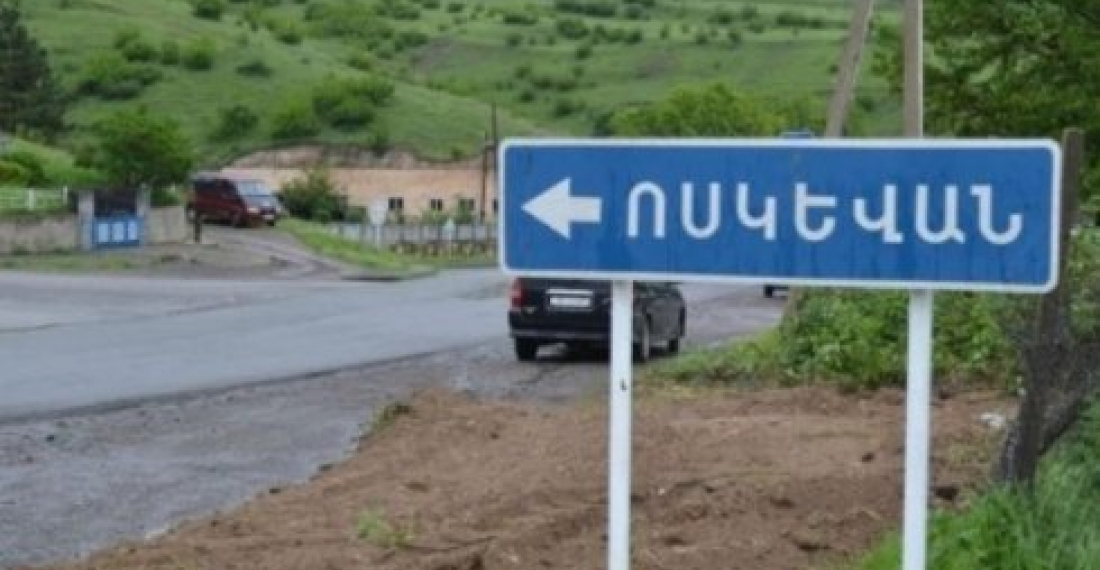
The Azerbaijani side says that starting from 17:30 on March 30, "in the village of Gushchu Ayrim, Gazakh region, houses and civilian vehicles were intensively fired at by large-caliber weapons of the Armenian Armed Forces located near the villages of Boganis and Voskevan in the Noyemberyan region of Armenia. Enemy provocations were prevented, and the positions of the Armenian Armed Forces, which opened fire on our settlement and civilian vehicles, were silenced by retaliatory fire.".

On its part, the Armenian side said that at 19.00 on Monday "the Azerbaijani side launched a diversion penetration attempt on the Armenian positions in the Noyemberyan region of Tavush region. Due to the actions of the Armenian forces, the enemy was thrown back, the information about the losses is being clarified. The Armenian side has no casualties, as a result of the operations two soldiers were slightly injured. At the same time, the enemy targeted the villages of Baghanis and Voskevan, and a boy who was on the balcony was injured".

The State Border Service of Azerbaijan in a statement on Tuesday morning denied they had targeted civilian settlements.

Armenian media sources report that the boy who was injured in the incident is from the Voskevan and that he has a bullet wound to his chest. The boy has now been transferred to a hospital in Yerevan.

related content on commonspace.eu: The conflict that keeps ticking despite the pandemic

source: commonspace.eu with agencies


Related articles

Editor's choice
News
Council of Europe launches new International Claims Commission for Ukraine

Council of Europe launches new International Claims Commission for Ukraine

Thirty-four countries and the European Union have signed a new convention establishing an International Claims Commission for Ukraine at a diplomatic conference co-hosted by the 46-nation Council of Europe and the Netherlands in the Hague. The diplomatic conference was attended by leaders and high-level representatives from over 50 states, including the President of Ukraine, Volodymyr Zelenskyy, the President of the Republic of Moldova, Maia Sandu, and the Prime Minister of the Netherlands, Dick Schoof.  “Today marks a major step forward in ensuring accountability for Ukraine. The International Claims Commission represents justice and hope for tens of thousands of victims—our determination that those who have suffered will not be forgotten. I call for quick ratifications so we can get the commission rapidly up and running for the people of Ukraine,” said Council of Europe Secretary General Alain Berset. Ukrainian President Volodymyr Zelenskyy said: “We expect that every mechanism for compensation from the Register of Damage and Claims Commission to the actual payments – will start working and receive strong and sufficient international support, so that people can truly feel that any kind of damage caused by the war can be compensated. This war, and Russia’s responsibility for it, MUST become a clear example – so that others learn not to choose aggression.” “Accountability is about creating the conditions for peace that endures. And therefore, accountability is a condition of security – today and for the future. But accountability is not only about Ukraine. And it is not only about one aggressor and one victim. Accountability is about Europe. About every country in Europe. It is about whether Europe, as a whole, is willing to defend its peace,” said Maia Sandu, President of the Republic of Moldova, which currently holds the Presidency of the Council of Europe’s Committee of Ministers. The Prime Minister of the Netherlands, Dick Schoof, said: “Every day Russia is deliberately bombarding homes, destroying businesses and damaging infrastructure in Ukraine. Russia must compensate Ukraine for the damage caused. That is why we have launched the International Claims Commission for Ukraine and we are honoured to host it.” The International Claims Commission will be the second part of a comprehensive compensation mechanism related to Russia’s war of aggression, building on the existing Register of Damage for Ukraine. The claims commission will be established within the framework of the Council of Europe and will also be open to other countries. The Register of Damage for Ukraine, created in 2023, collects and records compensation claims submitted by individuals, organisations and public bodies in Ukraine. Forty-four states and the European Union have so far joined the Register, which has already received 86,000 claims. The International Claims Commission will review, assess and decide upon claims submitted to the Register of Damage for Ukraine and determine the amount of compensation, if any, which is due in each case. The convention establishing the commission will enter into force once it has been ratified by 25 signatories, as long as sufficient funds have been secured to support its initial work.

Popular