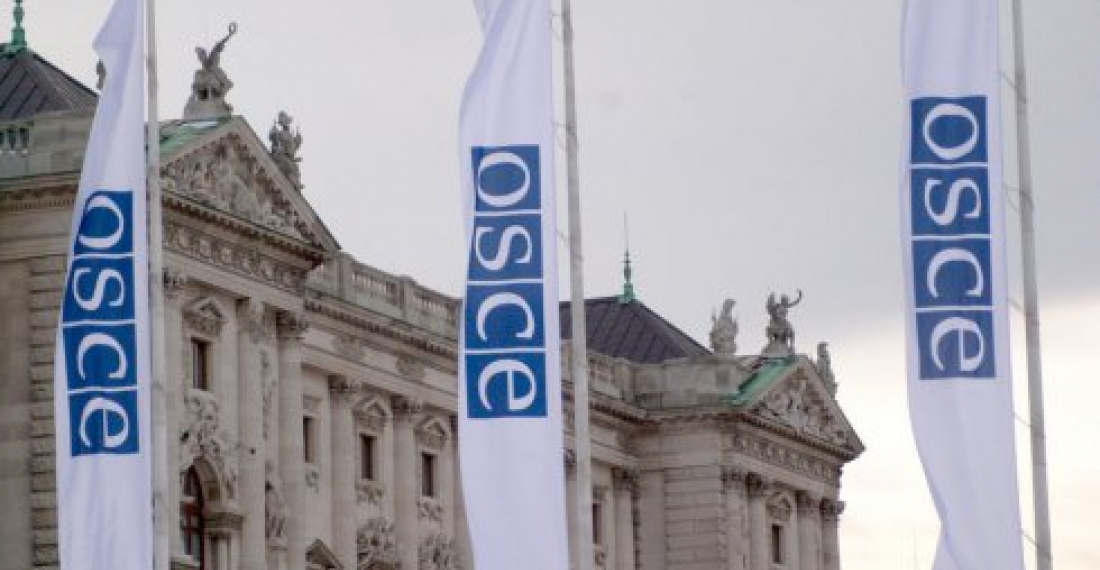
As fighting rages on in the South Caucasus between Armenians and Azerbaijanis, the role of the co-chair of the OSCE Minsk Group is often discussed. Who gave this group and the mandate to mediate in the conflict? This was done by the Organisation for Security and Co-operation in Europe (OSCE) in 1995. The mandate was issued by the Chairmanship of the organisation for that year, which was Hungary. Since the original mandate was envisaged that the process will end with a peace conference in Minsk, the group became known as the Minsk Group.
The mandate reads as follows
Mandate
of the Co-Chairmen of the Conference
on Nagorno Karabakh under the auspices of the OSCE
("Minsk Conference")
The Co-Chairmen are appointed by the Chairman-in-Office;
The Co-Chairmen will be guided in their activities by the principles and norms of the
OSCE, the United Nations Charter, decisions of the OSCE fora, including the decisions by the
Council of Ministers on 24 March 1992 and particularly the Budapest Summit Decision, and as
applicable resolutions of the United Nations Security Council.
The Co-Chairmen will in their work be guided by the objectives of the Minsk Conference,
e. promoting a resolution of the conflict without the use of force and in particular facilitating
negotiations for a peaceful and comprehensive settlement, according to the rules of procedure as
these are stated in the decisions of the 10th meeting of the CSO of the CSCE.
The Co-Chairmen will realize full co-ordination in all mediating and negotiating activities,
harmonizing them into a single coordinated effort within the framework of the OSCE;
The Co-Chairmen will, jointly and in full parity, on the basis of impartiality:
1. make joint efforts in order to strengthen the cease-fire;
2. develop a common basis for negotiations with the parties to the conflict;
3. conduct negotiations with the parties to the conflict for the conclusion of a political
agreement on the cessation of the armed conflict, drawing upon the progress achieved in
previous mediating activities;
4. promote direct contacts, as appropriate, including substantial talks. among the parties to
the conflict;
5. continue working with the parties to the conflict on confidence-building measures,
particularly in the humanitarian field, synchronizing them with the political process;
6. assist the Chairman-in-Office in developing a plan for the establishment, composition and
operation of a multinational OSCE peace-keeping force;
7 forward to the Chairman-in-Office the received approvals and formal requests by the parties
to the conflict concerning the OSCE peace-keeping operation;
8. Report to the Chairman-in-Office on the process of negotiations with the parties to the
conflict on a draft mandate, Memoranda of Understanding and provisions of guaranties for
the safety at all times of personnel involved;
The Co-Chairmen will:
9. jointly chair the regular consultations of the Minsk Group, dispatch jointly to the Minsk
Group members, documents, information and proposals, including proposals on the dates
and venues of the Minsk Group meetings and the set of issues to be discussed;
10. jointly and continuously inform and consult with the OSCE Chairman-in-Office and jointly
inform, on a regular basis, the Permanent Council of the OSCE on the progress of their
work;
11. after consultations with the CiO, jointly inform, the President of the United Nations Security
Council and the United Nations Secretary-General on the progress of the Minsk process
and on all aspects of the situation on the ground, on the implementation of its relevant
resolutions as well as on the present and future co-operation between the OSCE and the
United Nations in this regard; when necessary, and after appropriate consultation with the
CiO, present to the United Nations considerations and proposals concerning new
resolutions that might be adopted by the United Nations Security Council in the interests of
the peaceful settlement of the conflict;
12. visit jointly, or when appropriate separately, on an agreed basis, the region of conflict to
maintain contacts with parties to the conflict concerning the above-mentioned and other
related issues;
13. upon consultation with the CiO, maintain necessary contacts with the !CRC, the UNHCR
and other relevant international and regional organizations and institutions.
14. jointly chair the Minsk Conference and the preparatory meetings leading to it.
15. The Co-Chairmen will co-operate with the Personal Representative of the Chairman-inOffice in accordance with provisions, contained in the Mandate of the Personal
Representative.
You can also read the mandate on the OSCE website here
source: commonspace.eu with osce.org