


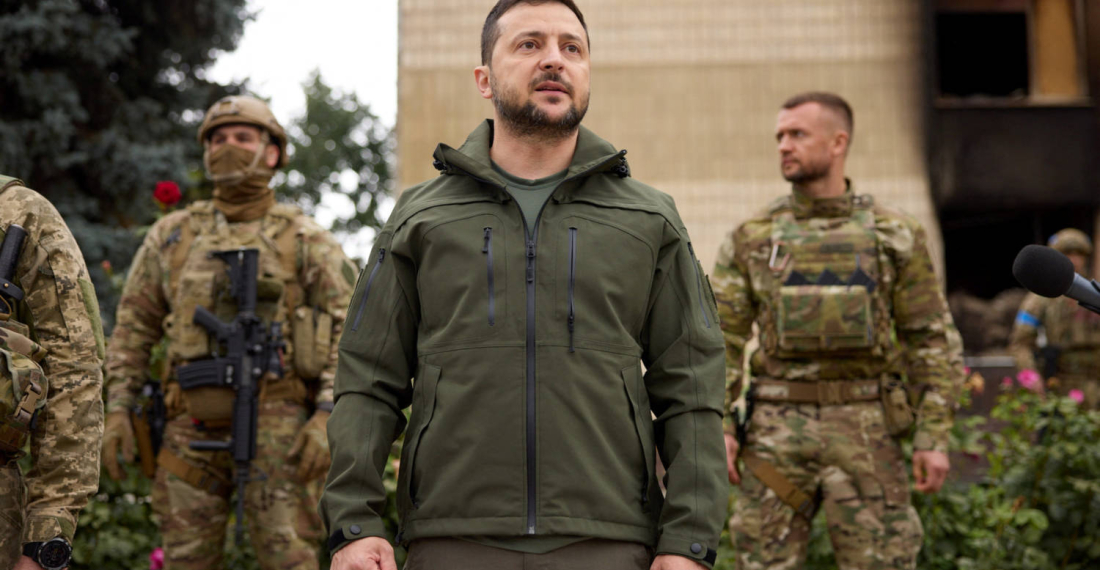
British Prime Minister Andy Burnham welcomed Ukrainian President Volodymyr Zelensky to the United Kingdom on Monday (July 27), marking Burnham's first meeting with a foreign leader since taking office on July 20. The visit underscored London's commitment to continued military and technological support for Ukraine ahead of Zelensky's scheduled talks with U.S. President Donald Trump in Washington on July 28.
During the visit, Burnham reiterated Britain's backing for Kyiv, stating that "Britain stands with Ukraine, shoulder to shoulder, and our support remains unwavering." He added that Russia "should be in no doubt of our resolve" and said the UK would continue supporting Ukraine until a "long-lasting and just peace" is achieved.
The two leaders visited a naval base, where they met more than 200 Ukrainian personnel participating in Exercise Sea Breeze, a three-week maritime security and counter-mine training program designed to prepare forces for future Black Sea operations.
The UK government also announced that it will transfer the intellectual property behind its new electronic warfare system, Stone Cloak, allowing Ukraine to manufacture the technology domestically. The tablet-sized jammer is designed to disrupt Russian air defence systems by making drones more difficult to detect and target. Thousands of the devices have already been supplied to Ukrainian forces. London said the technology, developed under the two countries' 100-year partnership signed in 2025, will also be incorporated into the UK's future long-range strike capabilities, including the Project Brakestop cruise missile program.
In an interview with Sky News before the visit, Zelensky called for a comprehensive UK-Ukraine "drone deal" and proposed establishing a drone manufacturing facility in Britain, saying he hoped to "open a new page" in bilateral relations. He also stressed Ukraine's urgent need for additional air defence systems, warning that Russia continues to expand production of ballistic missiles. "We don't have enough missiles to defend," Zelensky said, adding that rapid delivery of air defence capabilities remains essential.
The visit comes as diplomatic efforts to end the more than four-year war remain stalled and as U.S. attention has been partly diverted by the conflict in the Middle East. According to Downing Street, the UK has committed £25 billion in support to Ukraine since Russia's full-scale invasion in 2022, including £16 billion in direct military assistance. Zelensky is expected to seek further military cooperation during his meeting with Trump in Washington on Tuesday.
Source: commonspace.eu with The Independent (London), Kyiv Post (Kyiv), and agencies



