Our live blog on the coronavirus pandemic and its impact on the world is on every day from 1200-1600 Central European Summer Time (equivalent to 1400-1800 in Tbilisi and Dubai).
This blog is compiled by our team of journalists and researchers based in The Hague in the Netherlands and in Tbilisi, Georgia, working with partners and associates in a number of different countries. You can also follow us on twitter @commonspaceEU. We are happy to hear from you wherever you are. Please send us your comments, stories and suggestions by email to editor@commonspace.eu
This live blog has been running daily since 19 March. You can read earlier blogs here
__________________________________________________________________________________________________________________________________________________________________________________________________________________________________________
Sunday, 12 April 2020
____________________
16.00 CEST (1800 Tbilisi/Dubai)
We are now pausing this live blog for today.
This Easter Sunday political and religious leaders issued messages urging courage and resilience as the world continues to struggle against the coronavirus pandemic. In Rome, Pope Francis made a passionate appeal calling for a cease fire in all conflict areas, and for countries to work together to fight the pandemic and more.
We will resume this live blog tomorrow Monday, 13 April at 1200 Central European Summer Time, equivalent to 14.00 in Tbilisi and Dubai. Till then from all of us in The Hague and in Tbilisi a good evening. Be Safe! Be Healthy! Be Happy!.
________________________________________________________________________________
1545 CEST (1745 Tbilisi/Dubai)
Our wellness moment today is a reminder of the Andrea Bocelli concert that will start in just over three hours live from the Duomo Milan. Here is a preview. And you can watch it simply by clicking this link here

1530 CEST (1730 Tbilisi/Dubai)
In our blog today we have tried to keep the message of hope, which is the message of Easter. But we must also not forget the present reality. The number of peiople mwho died from coronavirus has now exceeded 110,000. More than 20,000 of these are in the United States. Spain and Italy have taken the biggest hits in Europe, but France and UK are also heavily impacted, as are a number of other countries. The message from governments across the world is for people to stay at home and help defeat the virus but lessening its spread..
1500 CEST (17.00 Tbilisi/Dubai)
For the last hour of our live blog for today we will be looking at developments outside Europe with the help of our two researchers Noman Ahmed and Maximiliaan van Lange.
 Kyrgyzstan
The Ministry of Health reported 12 new cases of coronavirus infection among health workers. Six doctors were infected in Osh, five in Naryn, and one in Bishkek. In total, 63 health workers have already become infected in the country. Many of these workers travel across the country to identify and test new cases.
The Prime Minister said that 200 thousand sons ($2570) should be paid to infected doctors and if they pass away, their families will receive a million sons ($12853)
In Kyrgyzstan, total infections reached 377 with 5 deaths and 44 recoveries.
 Saudi Arabia
Saudi King Salman announced the extension of curfew until further notice. The curfew lasts from 3 pm to 6 am. The country has already placed major cities until total lockdown.
No news on whether the Hajj will be held this year. Saudi Arabia has 4033 total infections, 52 deaths, and 720 recoveries.
 Egypt
For the first time in history, Egypt's Coptic Church cancelled this year's Easter festivities under restrictions imposed due to the coronavirus pandemic.
The government enacted a ban on public gatherings and celebrations on Easter, the non-religious springtime holiday of Sham El-Nessim, and all congregational prayers and events taking place in Ramadan which is due to start by the end of the month.
Violations can lead to fines up to 4,000 Egyptian pounds ($250) and jail sentences.
Copts in Egypt and all over the world have been disappointed.
"It's devastating and heart-breaking to be honest. This is a huge part of our religion - everything we believe is centred around this one event. A lot of it involves going to church, even more than we usually do, during Holy Week to pray and reflect on ourselves. This is a time where Christian families come together." said one person who planned to visit Egypt for the festivities.
"Prayer always feels different at church," she said. "But we will watch the Pope's mass on TV."
Many Copts are planning to pray from home. Pope Tawadros, head of the Coptic community in Egypt said he was confident "God's hand" will intervene in order to protect Egypt and all countries of the world from the pandemic.
As the celebration of the resurrection approaches, "we have hope that this exceptional period will soon be over," he said.

East Asia
Several Asian countries published new figures of infection and deaths on Sunday (12 April). In the Republic of the Philippines, the Ministry of Health reports that fifty new victims have been registered for the consequences of the COVID-19 virus, the highest number of victims in one day. The death toll has thus risen to 297. Two hundred twenty new infections were confirmed, bringing the number of infections in the Philippines to 4,648. In the country, 197 patients have recovered from the virus.
In the Republic of Indonesia, 46 new victims have been reported in the last 24 hours. A total of 373 people has now died from the effects of the virus. According to the Indonesian authorities, there are now 4.241 known infections in the country.
The Government of Abdullah of Pahang confirms that 153 new infections have been detected in Malaysia, bringing the total number of infections to 4.683. A total of 76 civilians died on Sunday (12 April), three more than on Saturday (11 April). The Ministry of Health reports that in 45 per cent of all confirmed cases, the patient is recovering fro
___________________________________________________________________________
1415 CEST (1615 Tbilisi and Dubai)
 United Kingdom
Her Majesty Queen Elizabeth has made another powerful message, this time on the occasion of Easter. The Queen is Head of the Anglican Church, as well as Monarch, but she ends her message wishing a Happy Easter to people of all faiths and all denominations.
And the latest news from the UK is that prime Minister Boris Johnson who was hospitalised with Coronavirus has now been discharged from hospital. We wish him a speedy recovery as he goes into covalensence.
____________________________________________________________________________________________________________
1345 CEST (1545 Tbilisi/Dubai)]
 An invitation
 to the Duomo in Milan for our commonspace.eu readers
This evening, by invitation of the City and of the Duomo cathedral of Milan, Italian global music icon Andrea Bocelli will give a solo performance representing a message of love, healing and hope to Italy and the world.
You can watch live at 1900 CEST (2100 Tbilisi /Dubai) and although this blog would be paused by then you can still use the link to log on. You can watch simply by pressing this link here
"On the day in which we celebrate the trust in a life that triumphs, I'm honored and happy to answer ‘Sì' to the invitation of the City and the Duomo of Milan. I believe in the strength of praying together; I believe in the Christian Easter, a universal symbol of rebirth that everyone - whether they are believers or not - truly needs right now. Thanks to music, streamed live, bringing together millions of clasped hands everywhere in the world, we will hug this wounded Earth's pulsing heart, this wonderful international forge that is reason for Italian pride. The generous, courageous, proactive Milan and the whole of Italy will be again, and very soon, a winning model, engine of a renaissance that we all hope for. It will be a joy to witness it, in the Duomo, during the Easter celebration which evokes the mystery of birth and rebirth"
Andrea Bocelli

_______________________________________________________
1330 CEST (1530 Tbilisi/Dubai)
More from EU leaders. this tweet from EU Commissioner Johannes Hahn
1315 CEST (1515 Tbilisi/Dubai)
 Germany
German President Frank-Walter Steinmeier on Saturday made a rare message to the nation. German presidents traditionally only address the country once a year during Christmas. There was no presidential address, even when the Berlin Wall fell in 1989
The president called on the nation to show patience, discipline and solidarity in the face of the coronavirus. "The solidarity that you show every day now, we will need all the more of in the future," he said.
The crisis has brought out "the best and the worst in people," he added.
Steinmeier also called on individuals to adhere to the measures in place to prevent the spread of the virus.
"How things will continue and when and how the restrictions can be relaxed, will not be decided by politicians and experts alone." The crisis had brought out "the best and the worst in people," he said.
The president also predicted that society would be drastically changed by the crisis. "We don't want to become an anxious or distrustful society. But we can be a society with more trust, more consideration and more confidence," he said.
The German president called for international solidarity across the European Union. "Germany cannot come out of this crisis strong and healthy if our neighbors do not also come out strong and healthy," he said.
_________________________________________________________________________________________________
1305 CEST (1505 Tbilisi/Dubai)
We are now shifting our attention to the situation in the European Union, where several leaders have given interviews to Sunday newspapers, or issued Easter messages.
 European Union
We start first with a report prepared by Maximiliaan van Lange of our Research Team regarding an interview with the President of the European Commission
In an interview with the German newspaper, Bild am Sonntag, the President of the European Commission, Ursula von der Leyen, said she expects that it will take until the end of 2020 to develop a vaccine against the COVID-19 virus. Von der Leyen called on older people in care homes and at-risk groups to remain in isolation until then. She asked EU citizens not to book summer holidays for the time being.
In the interview the President of the European Commission also announced that two major laboratories in Europe are currently working on the development of a vaccine against the virus. The first study is being carried out in Tübingen by CureVac. CureVac has been working on the development of a vaccine since January. Following American intervention, the European Union immediately established links with the pharmaceutical company with an EU subsidy of 80 million euros. The second study is being conducted with a clinical study at the Medizinischen Hochschule. The study puts its hopes in the drug 'VPM 1002', originally developed against tuberculosis, which boosts the immune system in the human body. The vaccines will soon be clinically tested and could be ready to be mass-produced by the end of the year. Von der Leyen said that the European Union is working with various manufacturers to start a vaccination campaign as soon as possible.
_________________________________________________________________________________
1250 CEST (1450 Tbilisi/Dubai)
We continue with our updates from across the Caucasus Region
 Azerbaijan
 reports 1058 coronavirus cases, with eleven deaths.
Several officials have expressed concern that many people are not obeying instructions to stay at home, and that more severe measures may be necessary. In an attempt to make people more aware of the dangers of covid-19, the national broadcaster, AzTV has been showing graphic footage from hospitals of people who have caught the virus.
 Georgia
Four administrative districts in Kobuleti municipality in the Georgian Black Sea region of Adjara will be placed under "strict quarantine" after several locals tested positive for the coronavirus.
The districts of Gvara, Mukhaestate, Leghva and Tskavroka will be placed under "strict quarantine" as the infected individuals had contact with a large group of people.
The Georgian Army is deploying around the villages to enforce the quarantine.

North Caucasus
Ingushetia
The Mufti of Ingushetia, Abdurakhman Martazanov, who was hospitalized on 10 April in Nazran due to COVID-19, has died. This is the second death in Ingushetia which has reported 29 infections.
The doctors did everything they could, but, unfortunately, Martazanov could not be saved.
Martazanov was elected mufti of the Spiritual Center of Muslims of Ingushetia in July 2019 for a term of five years.
_____________________________________________________________
1230 CEST (1430 Tbilisi/Dubai)
So the Pope has given his urbi et orbi blessing from the vartican. Normally tens of thousands of people are present, but this year the square was completely empty. However Pope Francis made very strongly the argument for the world to come together, for a global cease fire and for the end to sanctions regimes. The Pope also highlighted the role of the European Union which he said was particularly important in this moment, not only for Europe but for the whole world.


An empty Basilica of St Peters on Easter Sunday
1215 CEST (1415 Tbilisi /Dubai)
 Vatican City
In the menatime we are still watching the ceremony in the Vatican, where Pope Francis has finished Mass and is now speaking. Shortly he will give the papal blessing urbi et orbi. The Pope has spoken about European solidarity and reminded Europeans that it was through solidarity that Europe had recovered from World War II and reminded that the European Union was not only a project important for Europe but for the whole world. The Pope has renewed his call for a global cease fire.
Follow events on the live feed from Vatican Media here
_____________________________________________________________
1210 CEST (1410 Tbilisi/Dubai)
Georgia
Whilst the Georgian Easter is in one week's time, today the Georgian Church celebrates Palm Sunday, known locally as Bzoba
The Catholicos Patriarch of All Georgia Ilia II led the service at the Holy Trinity Cathedral. The patriarch congratulated the parish on the feast of Bzoba.
In his sermon, Ilia II noted that when we encounter trials like the present, we must remember that if we accept these trials with gratitude, the Lord will give us the strength to endure them. He added,
"Congratulations on this glorious holiday, Bzoba. I could not imagine that the Georgian people would meet these trials so calmly and so bravely. Praise the Lord and thank the Lord! God gives us strength. The Lord gave strength to the nation in a month. May the Lord bless the nation with His peace".

The picture is a screen grab from Maestro TV
The number of coronavirus infections in Georgia has reached 252. 3 have died
________________________________
1205 CEST (1405 Tbilisi/Dubai)
We start by looking at the situation in the South Caucasus
 Armenia
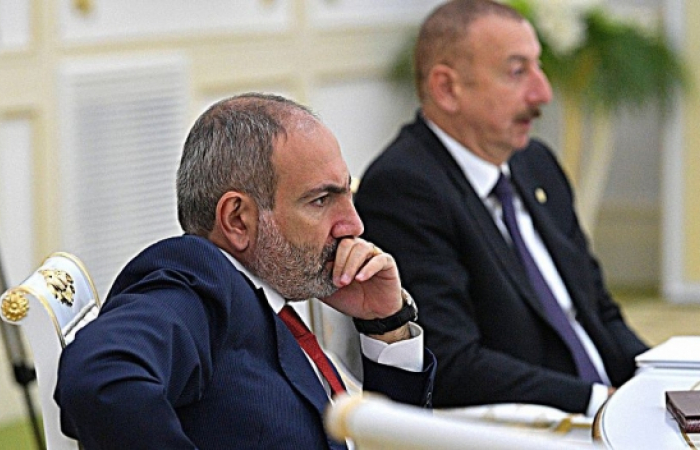
The number of coronavirus cases in Armenia is now 1013. There have also been 13 deaths.
The government has announced that the State of Emergency is going to be extended by 30 days. A special meeting of parliament is expected to be convened to formalise the decision.
The Armenian Apostolic Church is celebrating Easter today.
Divine Liturgy was celebrated in the Mother See of Etchmiadzin presided over His Holiness Karekin II, Supreme Patriarch and Catholicos of All Armenians.
In his message to the faithful, referring to the coronavirus pandemic Karekin II said
"With God's mercy the world will withstand this trial. However, it is of vital importance to become stronger while overcoming it, united and spiritually strengthened, always having God as our guide and support. "This is the victory that conquers the world, our faith", says the Apostle (1 John 5:4). Yes, beloved ones, with the faith of the Resurrection, with the awareness of the Savior's presence in our lives, we will be able to resolve all the problems our people face and build the bright future we all dream of."
The leader of the Armenian Church called on all Armenians "to give a helping hand to the government authorities in their efforts to overcome the difficult situation created by the pandemic.
"We are painfully aware that you are facing hardships, adversity, and anxiety all over the world. However, our willingness and commitment to care for our homeland, our sisters and brothers, are vitally needed and must continue to be demonstrated. We once again call on the sons and daughters of our nation in the homeland and in the diaspora, to give a helping hand to our government authorities in their efforts to overcome the difficult situation created by the pandemic, in caring for the patients, and the welfare of those sons and daughters of our nation who are in great distress; by making your contributions to a special account opened for this cause."

Picture courtesy of Armenpress
_______________________
Goodday and welcome to our daily live blog on commonspace.eu
It is Sunday, 12 April 2020 - 12 noon Central European Summer Time, equivalent to 1400 in Tbilisi and Dubai
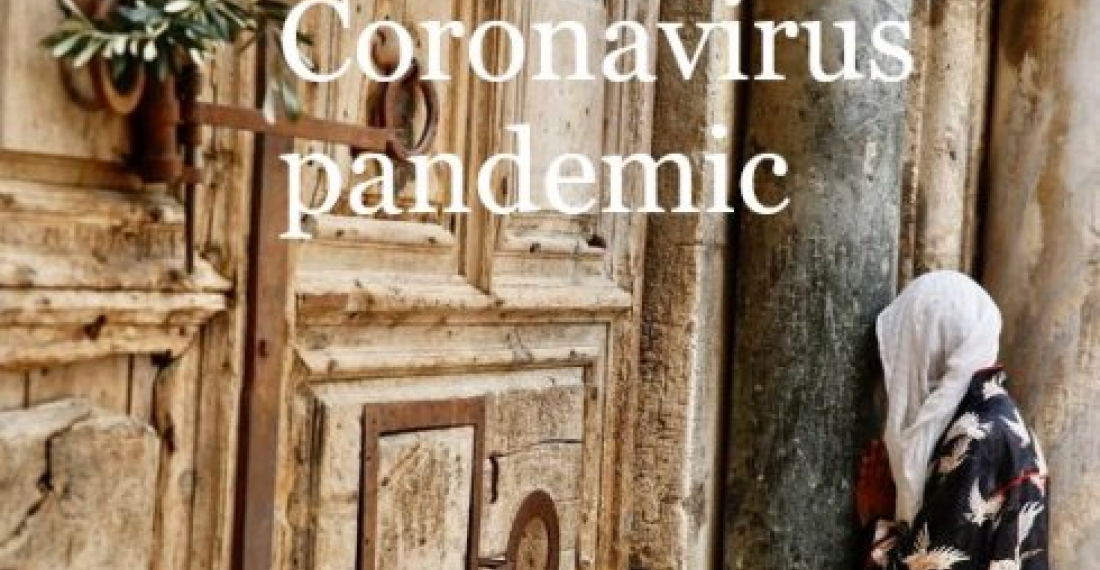
For many Christians today is Easter Sunday, although Orthodox Christians in Greece, Russia, Georgia and elsewhere celebrate Easter next week. This has been for many a very different Easter. Not least in Jerusalem where the Church of the Holy Sepulchre, usually the centre of Easter night festivities, is closed. Our cover picture today shows a lonely woman praying in front of the Church.
Over the next four hours we will be getting updates on the situation developing from the coronavirus pandemic across the world, and we will hear from the Easter messages of various world leaders in this, the most extraordinary of Easter Sundays.
You can also follow the events in the Vatican where Pope Francis has been marking Easter. Usually tens of thousands of people flock to these events. This year the Pope is presiding over ceremonies without any live audience, except for a handful of officials. But tens of milliosn are watching on TV and social media. You can join them on this video link provided by Vatican media here (Vatican Media Feed). Pope Francis will shortly give the urbi et orbi blessing to the world.