Our live blog on the coronavirus pandemic and its impact on the world is on every day from 1200-1600 Central European Summer Time (equivalent to 1400-1800 in Tbilisi and Dubai).
This blog is compiled by our team of journalists and researchers based in The Hague in the Netherlands and in Tbilisi, Georgia, working with partners and associates in a number of different countries. You can also follow us on twitter @commonspaceEU. We are happy to hear from you wherever you are. Please send us your comments, stories and suggestions by email to editor@commonspace.eu
This live blog has been running daily since 19 March. You can read earlier blogs here
__________________________________________________________________________________________________________________________________________________________________________________________________________________________________
Saturday, 11 April 2020
___________________
1600 CEST (1800 Tbilisi Dubai)
We are now pausing this blog for today. We will be back tomorrow Sunday at 1200 noon CEST (1400 in Tbilisi aand Dubai)
It has been another difficult day with plenty of bad new from across the world. This war against covid 19 has not been won yet. That is why it is important that unless there is good reason we should all stay at home.
From all of us in The Hague and in Tbilisi, a good evening. Be Safe! Be Healthy! Be Happy!
____________________________________
1545 CEST (1745 Tbilisi/Dubai)

 Georgia-Poland
We wanted to end with a positive story of two friendly countries helping each other. These expressions of solidarity across countries and communities fills us all with hope for the future.
Today #Polish Ambassador together with #SolidarityFundPL_In Georgia handed over equipment to Emergency Management Service of Georgian Interior Ministry

1530 CEST (1730 Tbilisi/Dubai)
Situation in Yemen and Libya
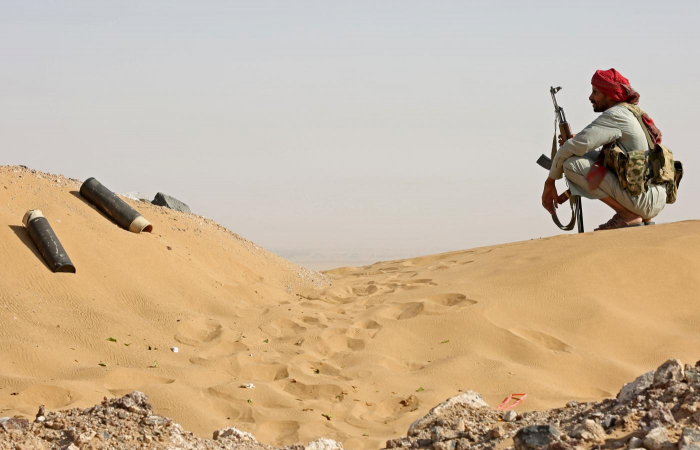
Whilst we are reporting about the difficult situation resulting from covid-19 across the world, and whilst we have emphasisied that this virus knows no frontier and no status, we must highlight the vulnerability of those countries caught in conflict, such as Yemen and Libya.
- The UAE Minister of State for Foreign Affairs, Anwar Gargash, has discussed the need for an immediate end to hostilities in Libya in a conversation with Stephanie Turco Williams, the deputy head of the UN Support Mission in Libya (UNSMIL), he revealed in a tweet.And Gargash said there was a shared concern for Libya's ability to handle the situation with COVID-19 as an equal priority to any ceasefire.
- Williams previously said that an escalation in Libya's war was straining the country's ability to handle the coronavirus pandemic. "It's incredibly reckless. It's inhumane, it's stretching the capacity of local authorities and the health infrastructure that is already decimated," Stephanie Williams told Bloomberg in an interview. "And they're whistling past the graveyard, that's what they're doing."
- One of Tripoli's largest hospitals has been forced to close amid intensified fighting in which the facility came under three days of shelling as the country reported at least 24 cases of coronavirus infections.
- We also heard today that the water supply to the capital city Tripoli has been cut after a water reservoir was captured by a rebel group. The UN has condemned this in the strongest terms.
Commonspace.eu supports the calls of UN Secretary-General for an immediate cease fire in all conflict zones so that humanity can concentrate on fighting covid-19
1515 CEST (1715 Tbilisi/Dubai)
Georgia
We have some updates from the commonspace.eu team in Tbilisi on the latest from Georgia
There are now 233 confirmed covid-19 cases in Georgia and 3 people have died. 4856 persons are under strict quarantine
Two patients, including a two-year-old child, have recovered in Bochorishvili Clinic, Maka Sologhashvili, Chairperson of the Supervisory Board of the clinic has said. According to her, a 5 year-year-old child with pneumonia, who is from Lentekhi cluster, has been transferred to one of the clinics in Tbilisi
.
1500 CEST (1700 Tbilisi/Dubai)
 Egypt
Egypt is a country with a hundred million people and not very adequate medical facilities. Noman Ahmed from research team has been looking at the situation in the country:
In Egypt, the coronavirus pandemic is shedding light on the country's poor health system. Many believe that hospitals are contributing to the spread of the virus amid daily announcements of doctors and nurses resulting in positive.
Last month, several hospitals were shut down including the University of Alexandria Hospital, the Al-Shorouk Hospital in Cairo and the Al-Salam Hospital in Mohandessin when medical staff were found to be infected by COVID-19.
The National Cancer Institute in Cairo was also shut down after several cases among care workers were found to be positive. The Institute was participating in the efforts to fight the virus outbreak. It is the largest of its kind in the Middle East treating 300,000 patients annually and employing 600 nurses and 750 doctors.
Such news ignited Egyptians' fears about the weaknesses of healthcare in the country after initially receiving signs that everything was under control.
Reports then surfaced that hospital managers were forcing nurses to work in heavily infected hospitals.
"I understand the concerns and fears toward doctors at this stage," Dr. Ahmed Youssef, a chest specialist at a quarantine hospital in Cairo, said. "I too am afraid of becoming infected, but we must all join forces to fight this virus," Youssef said.
In the meantime many Egyptians are relying on relief from humanitarian agencies for their livelyhood. In this picture a woman carries a carton filled with food distributed by the non-governmental organization Resala in Cairo, Egypt, Thursday, April 9 picture credit AP)

___________________
1430 CEST (1630 Tbilisi/Dubai)
 Turkey
We are on this blog watching carefully the situation in Turkey, where the risks of a huge hike in covid-19 cases is very real
At the moment Turkey reports 47,029 cases, and 1006 deaths.
The Government has introduced a weekend curfew in 31 Turkish provinces, including the large cities of Istanbul and Ankara
One victim of the virus has been the 39th Istanbul Film Festival, which was planned to be organized by the Istanbul Foundation for Culture and Arts (İKSV) between April 10 and 21. It has been delayed to a later date due to the COVID-19 pandemic. But there is a silver lining. A number of entries have been put on line for everyone to see at home:
MUBI, the online cinema platform sponsoring the festival, will present a selection of the festival's award-winning films to the audience on the same dates in cooperation with the event.
This 12-film selection of MUBI, brought together for those who have missed or want to watch again, consists of films that have won the Golden Tulip Award, Jury Special Award and FIPRESCI Award in the festival's national and international competitions.
The platform also announced that it will present a 30-day free trial period to moviegoers on mubi.com/istanbul so that they can watch the Istanbul Film Festival special selection.
________________________________
1400 CEST (1600 Tbilisi/Dubai)
China
We have not had too much news on this blog from China. The latest reports are of a slight increase in covid-19 infections. Our Research Team member, Maximiliaan van Lange, has this update:
After the relaxation of lockdown measures in China last week, the fear of the second wave of infections has now arisen. Yesterday (11 April), the Chinese authorities announced reports of new infections with the COVID-19 virus in the country. It concerns 46 new infections. A slight increase compared to Thursday when there were 42 new infections. No new infections were reported in China for an extended period. The Chinese authorities also reported three new deaths from the virus. This brings the number of deaths in China to 3,339. Remarkably however China says that the cause of the new infections probably lies with travelers arriving from abroad.
Worldwide, however, there are doubts about the reliability of the Chinese figures. Scientists suspect that not everyone who is ill is included in the statistics, such as patients with no or hardly any symptoms or people who die at home.
1345 CEST 1545 Tbilisi/Dubai)
Our wellness moment today comes with a piece of advice on how to make best use of free time you may have on your hands if you are in self-isolation - learning a language. Some have told us they are spending their time planning their next holiday. That beach in Ibiza or Bodrum this year somehow appears to be more blue and inviting than ever.
But hey, how about getting ready for it by polishing your Spanish or Turkish. Or how about going for that exotic language that you always thought it would be so great to know. Our indifatigable William Murray has been putting together some advice as to how and where to start. Read it here

_________________________
1330 CEST (1530 Tbilisi/Dubai)
These are unusual times, and nothing is working as we were used to before. this goes to the highest levels of government. The traditional summits of world leades in different formats were part of the daily political and diplomatic life: the carcades with police outriders, the family photo - with the oligatory statesman arriving late and leaving the others waiting uncomfortably; the set piece speeches in round, oval, square or rectanular tables, depending on the format. That is now all gone.
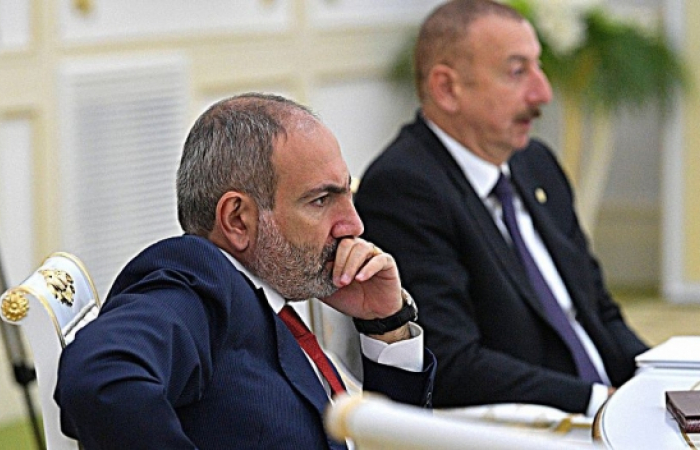
But summits are still taking place, but on line. We already had a G20 summit, and the EU leaders seem as if they can't wait for the next one. Yesterday it was the turn of the Turkic countries leaders to come together in a virtual summit hosted by the current Chair of the group, Azerbaijan
_________________________
1305 CEST (1505 Tbilisi/Dubai)
 Iran
We love this!
________________________
1245 CEST (1445 Tbilisi/Dubai)
 United States
The big story overnight was from the United Stateswhere as our research team member, Maximiliaan van Lange, reports the death toll increased sharply.
Johns Hopkins University figures show that 2,108 people died in the United States in the last 24 hours as a result of the COVID-19 virus. This makes the U.S. the first country to report more than two thousand deaths in a day.
The total number of deaths has therefore risen to 19,000.
Last Friday (April 10) President Donald Trump said that the U.S. economy needs to be reopened as soon as possible, but that it is too early now.
___________________________________
1230 CEST (1430 Tbilisi/Dubai)
Some updates from the MENA region from our research team member Noman Ahmed.
Egypt
Egypt enters its second wave of night curfew with both death toll and recoveries rising. As of yesterday, Egypt registered 1794 total cases with 135 deaths and 384 recoveries.
The government said it hasn't reached the peak yet and expects a rise.
Meanwhile, the Egyptian government seems to be sending mixed messages with calls for workers to return back to factories, yet it is also advising residents to stay home as much as possible. Many people expressed frustrations against the social distancing measures.
Morocco
Morocco has started manufacturing its own ventilators. 500 devices are expected to be ready by mid-April to help meet demand. Morocco currently has 1448 total infections, with 107 deaths and 122 recoveries.
Both non-invasive ventilators, where an oxygen mask is secured over the patient's face, and invasive models where a tube feeds oxygen straight to a sedated patient's lungs will be made using locally supplied material. Doctors and engineers from public institutions helped design ventilators.
In the meantime the process of disinfection of public areas continues. Here a municipality worker is seen hard at it in Rabat, the capital city, earlier this week.

________________________________________________
1215 CEST (1415 Tbilisi/Dubai)
We start this morning with an update from across the South Caucasus
Abkhazia
Abkhazia's human rights commissioner, Asida Shakryl, called on all media and citizens to respect privacy and personal data of COVID-19 patients.
Local TV stations had earlier disclosed the personal information of a patient by showing pictures of her passport, Users on social media have also shared footage of a hospital where another patient was being treated.
Abkhazia has been in a state of emergency with a curfew enacted since 28 March. Yesterday, the Abkhazian de facto authrotiies introduced fines for those breaching curfew rules.
 Armenia
The Government of Armenia will ask parliament to renew the State of Emergency but the government has ialso ncreased the number of areas were activity can resume. However public transport is now going to be stopped completely (except for taxis)
This is apparently to try to prevent irreparable damage to the economy.
In the meantime the number of cases in Armenia has now increased to 966 and there were two new deaths in the last twenty four hours.
 Azerbaijan
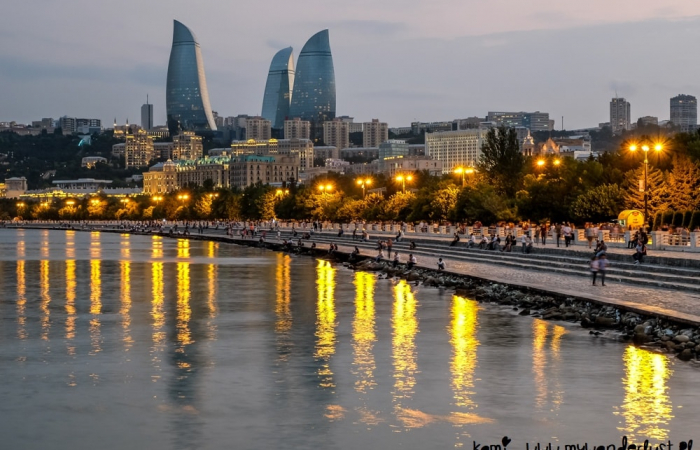
Writing on commonspace.eu this morning the Azerbaijani analyst Ahmad Alili says that covid-19 has brought Azerbaijanis together and that the crisis is the first big test for the newly appointed state officials who had no time to settle into their jobs before being faced with this global crisis. He concludes:
"COVID-19 in Azerbaijan is a test not only for the public health management system, but also tests the unity among people, among groups with different political views, and among different ethnic groups. Besides, it can also create a favourable environment for confidence-building measures across the region, especially between Nagorno-Karabakh Armenians and Azerbaijanis. "
You can read it here
_______________________________________________
Goodday and welcome to our readers to this live blog on commonspace.eu
It is Saturday, 11 April 2020, 12 noon Central Europe and 14.00 hours in Tbilisi and Dubai. We will be live for the next four hours with updates on the coronavirus from across the world, but focusing especially on the Caucasus and Central Asia, Europe and the Middle East. For those asking why we focus more on these regions, the answer is that this is where our expertise lays, and also where most of our readers are. But we will ofcourse report from other regions as necessary.
Today is the second day of the Easter weekend when Christians mark the death and resurrection of Christ. It is a big holiday in most of Europe - although for Orthodox Christians Easter comes one week after. This time is usually a time for family reunions,and for the famous easter eggs. In many countries there are egg hunts - coloured eggs are hidden in different places and children go round trying to find them. This year with billions of people in self isolation this may not be possible. But you can still have easter egg fun, for example by colouring stones like easter eggs as is shown in our cover picture today.