A few days ago a rather bizarre discussion took place in the Parliament of Azerbaijan, a place not usually known for surprises or spontaneity. One MP stood up to propose that Azerbaijan should change its name and be known forthwith as North Azerbaijan. Another stood up to support his idea, followed by another, and another. The incident created quite a lot of attention and speculation.
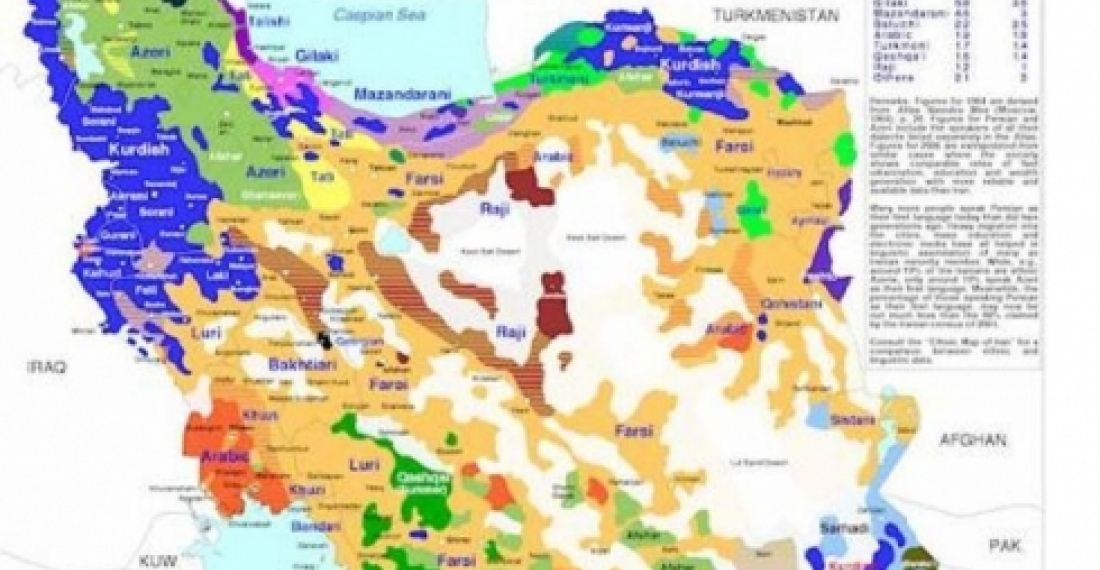
The incident highlighted the complex relations of Iran with the South Caucasus, a region that for centuries was occupied by Persians and that still shares many legacies of this period. There are then the millions of people in todays Iran that are ethnic Azeris as the map shows. In recent years some political circles in Baku have started referring to the area where these Azeris live as South Azerbaijan. The members of parliament by suggesting that Azerbaijan be called North Azerbaijan, were bringing attention to this point, without saying much about.
Iran also has a complicated relationship with Armenia. An influential Armenian community lives in Tehran where it is allowed to practise its religion and customs. In the current complicated geopolitical situation Iran and Armenia have maintained good warm relations with each other.
Two of our regular contributors discuss Iran's complex relations with the South Caucasus. Richard Giragosian in his piece for the English edition says "Armenia’s relationship with Iran that raises concerns and poses challenges. And as the West imposes ever tighter sanctions against Iran and the threat of military action over Iran’s nuclear programme mounts, so do the challenges to Armenia." In another article Sergei Markedonov discusses the background for the proposal to rename Azerbaijan and says that someone in Baku is trying to raise the stakes.
Azerbaijan is unlikely to change its name soon, but one suspects we will be hearing more on this issue in the weeks and months to come.
source: commonspace.eu
photo: ethnic map of Iran, courtesy of farsi.net
Iran's complex relations with the South Caucasus. Sergey Markedonov and Richard Giragosian comment on Iran's relations with the region.
Iran's complex relations with the South Caucasus. Sergey Markedonov and Richard Giragosian comment on Iran's relations with the region.