


Editorial: Armenia votes

Expectations in and out of Armenia about these elections, have been modest. Internally political cynicism is the order of the day. Externally, western governments hope for small steps forward.

This is an editorial comment prepared by the editorial team of commonspace.eu

On Sunday, 2 April, Armenians will go to the polls to vote in parliamentary elections. Following recent constitutional amendments the party that forms the majority chooses the Prime Minister who will in turn form the government. As from next year Armenia will also turn into a parliamentary republic, so the Prime Minister will replace the president as the country's effective leader.

Armenian politics is broken in many ways. It is built on an extreme form of clientelism, which in a country where a large part of the population is still under the poverty line, very often determines the result of elections. It is also prone to regular outbursts of violence: the incidents in the Parliament in 1999; the violence following the 2008 presidential elections, and the incidents in Erebuni in 2016 are some examples.

Expectations in and out of Armenia about these elections have been modest. Internally political cynicism is the order of the day. Externally, western governments hope for small steps forward.

So far the electoral process has been reasonably free. Parties were, by and large, able to campaign freely, and had some access to the main television stations. The voters have a choice between nine political parties and blocs providing a range of policy options, and despite rumours of back-room deals that should not be dismissed lightly, the elections remain competitive. The elections up to now however have been far from fair. A statement by the EU, US, UK and Germany on 29 March, stated:

"We are aware of and concerned by allegations of voter intimidation, attempts to buy votes, and the systemic use of administrative resources to aid certain competing parties. We continue to urge all parties engaged in the election to abide by the letter and spirit of Armenia's electoral law, and call upon relevant law enforcement authorities and electoral institutions to implement existing laws in an unbiased and credible manner." (You can read the statement in full here)

Whilst the electoral process has been reasonably well managed so far, there are concerns that the voter's list has been artificially inflated. A final assessment of the elections will only be possible based also on what happens on election day, and in the counting process. Particular attention needs to be put to ensure that secrecy of the ballot is upheld.  Hundreds of international observers and thousands of domestic monitors will contribute to providing a final assessment. It is regrettable that at least one credible international observation mission was refused accreditation by the CEC.

The statement of the international community earlier this week concluded with a hope that "the ultimate result of the election will pave the way to a future of prosperity, peace, and progress. The Armenian people deserve as much." We can only agree.

This editorial was prepared by the editorial team of Commonspace.eu

related material on commonspace.eu

Commentary: In Armenia has everything changed so that everything can remain the same

There will be a live blog on the Armenian elections starting at 14.00 Yerevan time (11.00 CET) on Saturday 1 April 2017 on commonspace.eu

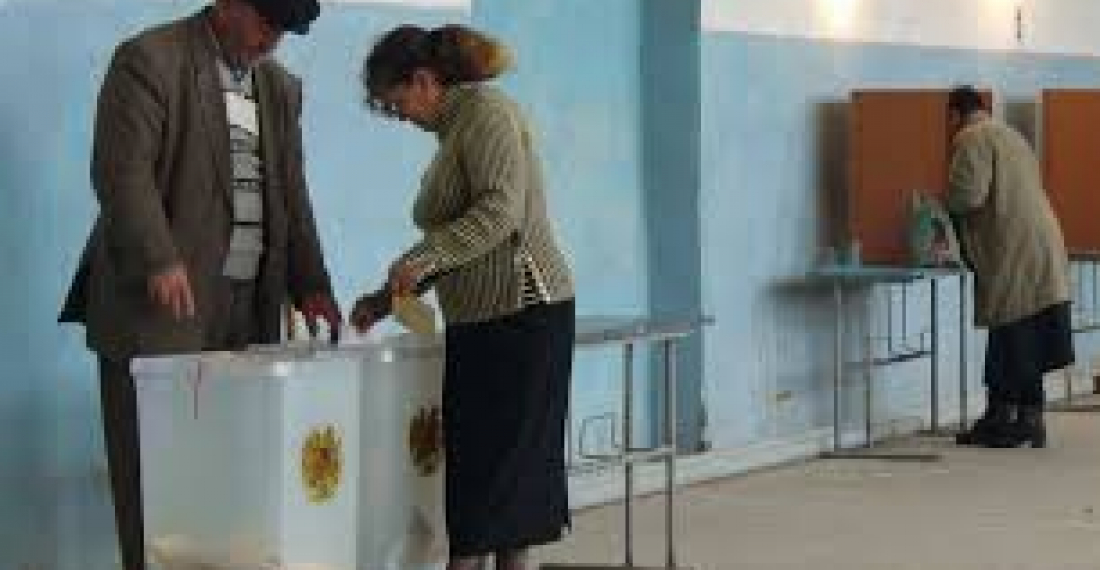
photo: Armenians voting in the 2012 parliamentary elections (picture courtesy of osce.org)


You can follow the Armenian elections on a live blog on commonspace.eu from 1-3 April 2017. The live blog starts at 11.00 CET (14.00 Yerevan) on Saturday, 1 April and ends at 15.00 CET (17.00 Yerevan) on Monday 3 April.
Related articles

Editor's choice
News
Borrell tells the European Parliament that the situation in Afghanistan was critical, but the EU will remain engaged

Borrell tells the European Parliament that the situation in Afghanistan was critical, but the EU will remain engaged

Borrell underlined that the European Union will make every effort to support the peace process and to remain a committed partner to the Afghan people. "Of course, we will have to take into account the evolving situation, but disengagement is not an option.  We are clear on that: there is no alternative to a negotiated political settlement, through inclusive peace talks.
Editor's choice
News
Germany accuses Russia of cyberattacks and disinformation campaign

Germany accuses Russia of cyberattacks and disinformation campaign

The German government holds Russia responsible for a cyberattack on German air traffic control, and for targeted disinformation campaigns before the last federal election. According to the German Foreign Office in Berlin, the incidents could be clearly attributed to the Russian military intelligence service, the GRU. In response, the Russian ambassador to Berlin was summoned to the Foreign Ministry. "We have been observing a massive increase in threatening hybrid activities by Russia for some time now," a spokesperson for the Foreign Ministry stated. These range from disinformation campaigns and espionage to cyberattacks and sabotage attempts. The aim is to divide society, sow distrust, and undermine confidence in democratic institutions. The spokesperson added that with these actions, Russia is "very concretely threatening our security, not only through its war of aggression against Ukraine, but also here in Germany."  The Foreign Ministry spokesperson explained that the cyberattack on air traffic control in August 2024 was clearly attributed to the hacker collective "APT28," known as "Fancy Bear," and to the responsibility of the Russian military intelligence service, the GRU. Furthermore, it could now be "conclusively stated" that Russia had attempted "to influence and destabilize both the last Federal election and the ongoing internal affairs of the Federal Republic of Germany." There was "absolutely irrefutable evidence" for this". The so-called "Storm 1516" campaign, which has been running since 2024, is allegedly backed by "reliable information" that the Moscow-based think tank "Center for Geopolitical Expertise" is behind it. The Center is also said to be supported by Russian military intelligence. Its primary aim is to influence democratic elections in the West. (Click the image to read more).

Popular

Editor's choice
News
Germany accuses Russia of cyberattacks and disinformation campaign

Germany accuses Russia of cyberattacks and disinformation campaign

The German government holds Russia responsible for a cyberattack on German air traffic control, and for targeted disinformation campaigns before the last federal election. According to the German Foreign Office in Berlin, the incidents could be clearly attributed to the Russian military intelligence service, the GRU. In response, the Russian ambassador to Berlin was summoned to the Foreign Ministry. "We have been observing a massive increase in threatening hybrid activities by Russia for some time now," a spokesperson for the Foreign Ministry stated. These range from disinformation campaigns and espionage to cyberattacks and sabotage attempts. The aim is to divide society, sow distrust, and undermine confidence in democratic institutions. The spokesperson added that with these actions, Russia is "very concretely threatening our security, not only through its war of aggression against Ukraine, but also here in Germany."  The Foreign Ministry spokesperson explained that the cyberattack on air traffic control in August 2024 was clearly attributed to the hacker collective "APT28," known as "Fancy Bear," and to the responsibility of the Russian military intelligence service, the GRU. Furthermore, it could now be "conclusively stated" that Russia had attempted "to influence and destabilize both the last Federal election and the ongoing internal affairs of the Federal Republic of Germany." There was "absolutely irrefutable evidence" for this". The so-called "Storm 1516" campaign, which has been running since 2024, is allegedly backed by "reliable information" that the Moscow-based think tank "Center for Geopolitical Expertise" is behind it. The Center is also said to be supported by Russian military intelligence. Its primary aim is to influence democratic elections in the West. (Click the image to read more).

