


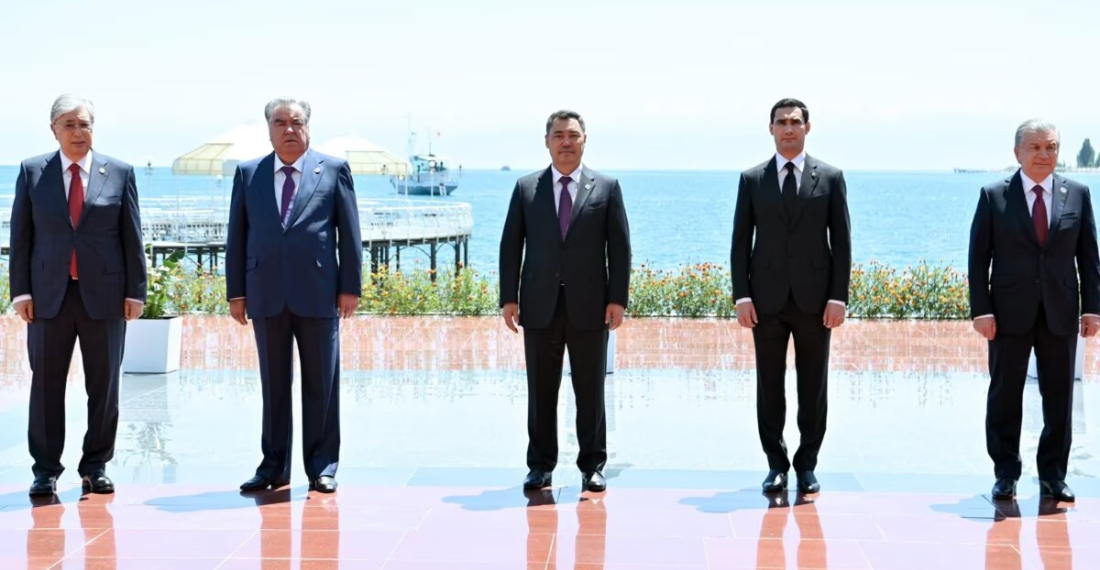
A new sense of purpose in Central Asia as leaders seek better relations between their countries and with the rest of the world

This is a commentary prepared by the editorial team of commonspace.eu.

For more than three decades after the collapse of the USSR the five Central Asia Republics continued to live largely in the shadow of Moscow. 

Neighbouring China made headway, particularly in the economic sphere, largely with Moscow’s acquiescence, and there were a few moments when the west appeared to be making a mark on the region too, especially after the 9/11 attacks, when the US was allowed facilities to help with its invasion of Afghanistan. But this moment did not last long. On everything else that mattered, and for most of the time, Moscow continued to call the shots.

The last five years have seen a seismic change in the region. A new generation of leaders are seeking better relations with the rest of the world: connectivity has become a buzzword, and there is a genuine effort to engage with the EU and the US, in most if not all the capitals. Ukraine, and the implications of the Russian invasion on future relations with all the post Soviet states, has focused minds, particularly in Tashkent and Astana.

Summits of the five have been held regularly in recent years, but a new sense of purpose could be seen in the more recent ones. There is now a better understanding of common threats as well as common opportunities.

Soviet collapse has left a problematic legacy on Central Asia

First though, the countries of Central Asia have had to manage relations between them, both bilaterally and multilaterally. The collapse of the Soviet Union left a thread of unfinished business, including undefined borders. This has in the past resulted in violent skirmishes between Kyrgyzstan and Tajikistan, and between Uzbekistan and Tajikistan. A few days ago the latter two finally agreed on a landmark agreement settling border issues. In a speech at the signing of the historic border agreement in Bishkek, Uzbek leader Shavkat Mirziyoev was profuse in his praise of his Kyrgyz counterpart, Sadyr Japarov.

"I want to tell you that we have no problematic issues. In the 31 years of the independent history of Kyrgyzstan and Uzbekistan, this is the first time there has been this level of mutual relations [...] I want to give special thanks to my respected colleague Sadyr.... If not for his political will, we would have not reached today's result. We could have said like we used to that we will solve these problems tomorrow or the day after. Well, tomorrow lasted 30 years, and the problems weren't solved", the Uzbek leader said.

Kyrgyzstan also has border problems with Tajikistan, and these may take longer to work out, but the Uzbek-Kyrgyz agreement may be an indication that the Central Asians are on the way to sorting out the problems between them as they look outwards to new challenges and opportunities.

In this, Kazakhstan and Uzbekistan – the two giants of the region – will need to lead the way. Mutual competition between them is historic, but it need not be rivalry, let alone enmity. Both Mirziyoev, and the Kazakh leader, Kassym-Jomart Tokayev, are products of the system that has been in power for the last three decades, but since assuming power both have also shown a capacity to embrace change, and importantly, to challenge Moscow in the process. On these two factors depends much of Central Asia’s future.

Central Asian regional and international engagement is increasing

Multilaterally a number of frameworks have evolved in Central Asia in the past three decades, largely in response to Central Asia’s peculiarities. The Conference on Confidence-building measures in Central Asia is one example. Another is a UN framework –  the United Nations Regional Centre for Preventive Diplomacy in Central Asia (UNRCCA), based in Ashgabat in Turkmenistan. Often seen as the odd one out, Turkmenistan has in the past tried to insulate itself from regional and global processes in the past, declaring itself a neutral country. In the process of doing so it has however embraced the UN as its international organisation of choice. This approach has obvious limitations, but there are signs that now even Turkmenistan is understanding the need for a more active international engagement.

Interesting initiatives are now emerging, particularly from Kazakhstan and Uzbekistan. The latest is the Kazakh initiative to host on June 8-9 in Astana, the Astana International Forum, an initiative of President Kassym-Jomart Tokayev, which aims to tackle global challenges on climate, food scarcity, and energy security.

The forum is expected to serve as a platform for eminent delegates from governments, international organisations, businesses, and academia and will address four key global challenges that include foreign policy, security and sustainability, energy and climate, and economy and finance.

Commenting on the launch of the new forum, the Kazakh president said, “Through the Astana International Forum, we hope to build new bridges and strengthen ties, as we come together to overcome the collective challenges we face, charting a new way forward – diplomatically, economically, and politically”.

This is an ambitious agenda. It reflects the new mood in Central Asia. The world needs to positively assess developments in this region that has been isolated for too long, and embrace these new initiatives and engage with them effectively.
source: commonspace.eu editorial team
photo: euractiv
The views expressed in opinion pieces and commentaries do not necessarily reflect the position of commonspace.eu or its partners

Related articles

Editor's choice
News
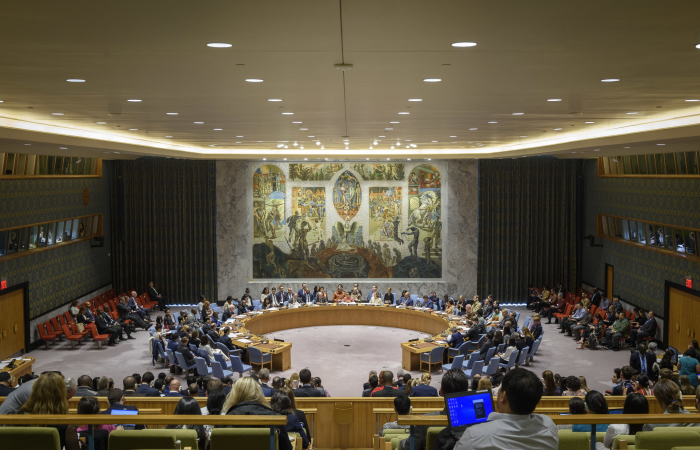
UN Security Council will discuss "Children and Armed Conflict" on Monday

UN Security Council will discuss "Children and Armed Conflict" on Monday

On Monday (26 October), the United Nations Security Council will hold an open briefing to mark the 30th anniversary of the establishment of the children and armed conflict mandate by the General Assembly. Greek Minister of Foreign Affairs Giorgos Gerapetritis is expected to chair the meeting, which is a signature event of Greece’s October Council presidency. The anticipated briefers are Special Representative of the Secretary-General for Children and Armed Conflict Vanessa Frazier; UNICEF Executive Director Catherine Russell; the Special Envoy for Children Affected by Armed Conflict of the African Union (AU), Jainaba Jagne; and the Director of Watchlist on Children and Armed Conflict, Bethany Ellis. Greece served as the chair of the Working Group on Children and Armed Conflict in 2025, but has yet to be reappointed this year due to the ongoing delays in the allocation of subsidiary body chairs. It has nonetheless continued to prioritise the agenda, including by promoting a resolution addressing the impact of digital technologies on the perpetration of violations and abuses against children, which was adopted unanimously on 19 October as resolution 2832 and was co-sponsored by 93 member states. (For more information, see our 18 October What’s in Blue story.) In addition to organising tomorrow’s signature event, Greece invited civil society briefers focusing on the protection of children to two Council meetings—on Yemen and Syria, on 9 and 12 October, respectively—and chaired a meeting of the Working Group on Children and Armed Conflict on 13 October. Greece has circulated a concept note ahead of tomorrow’s meeting, which says that the briefing aims to assess the progress achieved in the 30 years since the children and armed conflict agenda was established as well as the challenges it faces. (click image to read more)
Editor's choice
News
Indian Foreign Minister meets Aliyev in Baku

Indian Foreign Minister meets Aliyev in Baku

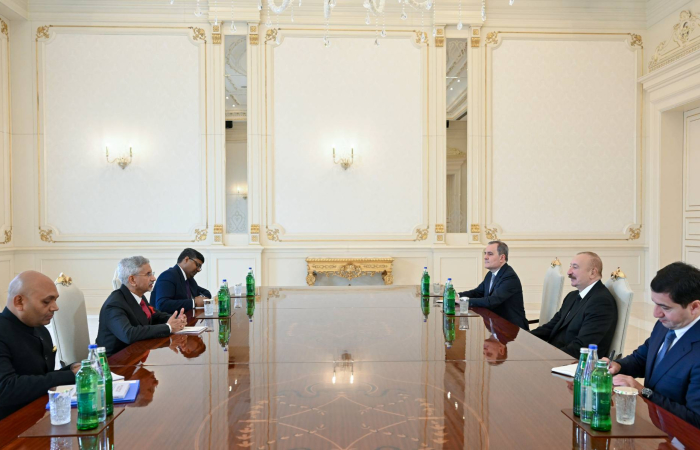
On October 23, the president of Azerbaijan Ilham Aliyev met in Baku with Subrahmanyam Jaishankar, Minister of External Affairs of India. This was the highest level visit by an Indian official to Azerbaijan in a long time. According to the website of the Azerbaijani president, Aliyev fondly recalled his meeting with Indian Prime Minister Narendra Modi in Bishkek and the exchange of views during that meeting. President Ilham Aliyev highly appreciated the visit of India’s Minister of External Affairs to Azerbaijan on the instructions of Prime Minister Narendra Modi, stressing its importance for discussing the current state and prospects of bilateral relations. During the meeting, the sides held an extensive exchange of views on the current state of relations between Azerbaijan and India, highlighting ample opportunities to develop cooperation in areas of mutual interest. The sides noted that Azerbaijan and India, as members of the Global South, share similar positions on a number of issues on the international agenda, including matters of concern to countries of the Global South. In this regard, they discussed prospects for bilateral cooperation in political, trade and economic, high-tech, cultural, humanitarian and other fields. The conversation also touched upon the importance of cooperation within international organizations. The sides emphasized the need to intensify political contacts and organize reciprocal visits at various levels, including exchanges involving economic and business delegations, to further advance bilateral relations.

Popular

Editor's choice
Interview
Thursday Interview: Murad Muradov

Thursday Interview: Murad Muradov

Today, commonspace.eu starts a new regular weekly series. THURSDAY INTERVIEW, conducted by Lauri Nikulainen, will host  persons who are thinkers, opinion shapers, and implementors in their countries and spheres. We start the series with an interview with Murad Muradov, a leading person in Azerbaijan's think tank community. He is also the first co-chair of the Action Committee for a new Armenian-Azerbaijani Dialogue. Last September he made history by being the first Azerbaijani civil society activist to visit Armenia after the 44 day war, and the start of the peace process. Speaking about this visit Murad Muradov said: "My experience was largely positive. My negative expectations luckily didn’t play out. The discussions were respectful, the panel format bringing together experts from Armenia, Azerbaijan, and Turkey was particularly valuable during the NATO Rose-Roth Seminar in Yerevan, and media coverage, while varied in tone, remained largely constructive. Some media outlets though attempted to represent me as more of a government mouthpiece than an independent expert, which was totally misleading.  Overall, I see these initiatives as important steps in rebuilding trust and normalising professional engagement. The fact that soon a larger Azerbaijani civil society visits to Armenia followed, reinforces the sense that this process is moving in the right direction." (click the image to read the interview in full)

