


Analysis: Special and Strategic Relations - (2) Azerbaijan and Turkey: One nation, two states, separate chequebooks

Special and Strategic Relations (2)

The relationship between Turkey and Azerbaijan has often been described as "strategic". More often it looked like one of convenience, but recently the partnership has become more equal and solid.

It was perhaps by coincidence, perhaps not, but whilst Armenian President Serzh Sargsyan was being feted in Moscow during his state visit to Russia this week, President Ilham Aliev of Azerbaijan travelled to Izmir to participate in the first meeting of the High Level Strategic Council that Turkey and Azerbaijan agreed to establish earlier this year.

“Strategic” is a word used often to describe Turkish-Azerbaijani relations. The deep historical, cultural, linguistic and religious affinities between the two countries have often been underlined by politicians from both sides. Former Azerbaijan President Elchibey was a great believer in pan-Turanism, and his successor President Heidar Aliev, coined the term “One nation, two states” to describe the relationship. Both had expectations from the relationship with Turkey that were not fulfilled. Elchibey, a romantic, was disappointed. Heidar Aliev, a pragmatist, understood the limitations of the relationship and worked within them.

For the last two decades the relationship looked more like one of mutual convenience. Turkey benefited from access to Azerbaijani markets. It could rely on Azerbaijan for support on such issues as Cyprus. Azerbaijan benefited from some Turkish investment, from the use of Turkey as a transit route for its energy resources on their way to the world markets, and from a modest amount of military support and undefined promises of defence guarantees. Turkey also gave Azerbaijan moral and diplomatic support in its standoff with Armenia over Nagorno-Karabakh, including by closing its land border with Armenia.

It was this issue that two years ago put the relationship between Azerbaijan and Turkey to its biggest test ever. When in 2009 Turkey, urged on by the whole international community, moved to normalise relations with Armenia, including by establishing diplomatic relations and opening the land border, Azerbaijan reacted sharply. The Turkish government was surprised and taken aback by the reaction, and to everybody’s surprised backtracked on its agreements with Armenia.

This was the moment Turkish-Azerbaijani relations entered a new stage.

For most of the last two decades Turkey acted as a patron to Azerbaijan, and the relationship was far from equal. Azerbaijan in 2011 is however a very different country from ten years ago. Buoyed by revenues from energy resources, it is now much more self-confident. Its election last week as a non -permanent member of the UN Security Council is justifiable described as a sign of the success of its foreign policy. The new Azerbaijan is no longer ready to be a junior partner in its relationship with Turkey.

It however must not itself now make the mistake of not appreciating the changes that are going on in Turkey. Turkey is also now a much more self-confident country then it was ten years ago. Its political texture has changed dramatically. It sees its role as that of a regional, in some ways even global, power. This new Turkey is demanding respect from its neighbours, regardless of whether they are Muslim, Turkic, European or whatever. Azerbaijan will have to manage its relations with Turkey very carefully if it wants to maintain the “strategic” element of the relationship.

The key is through economic co-operation. In many ways the economies of Azerbaijan and Turkey have now become complimentary. Azerbaijan has natural resources, excess financial liquidity and a huge amount of infrastructure that it needs building. Turkey has a skilled labour force, access to world markets and the need for investment for its growing economy. There is much that can be done to develop the economic co-operation between the two, and the meeting in Izmir was an indication that this work has now begun.

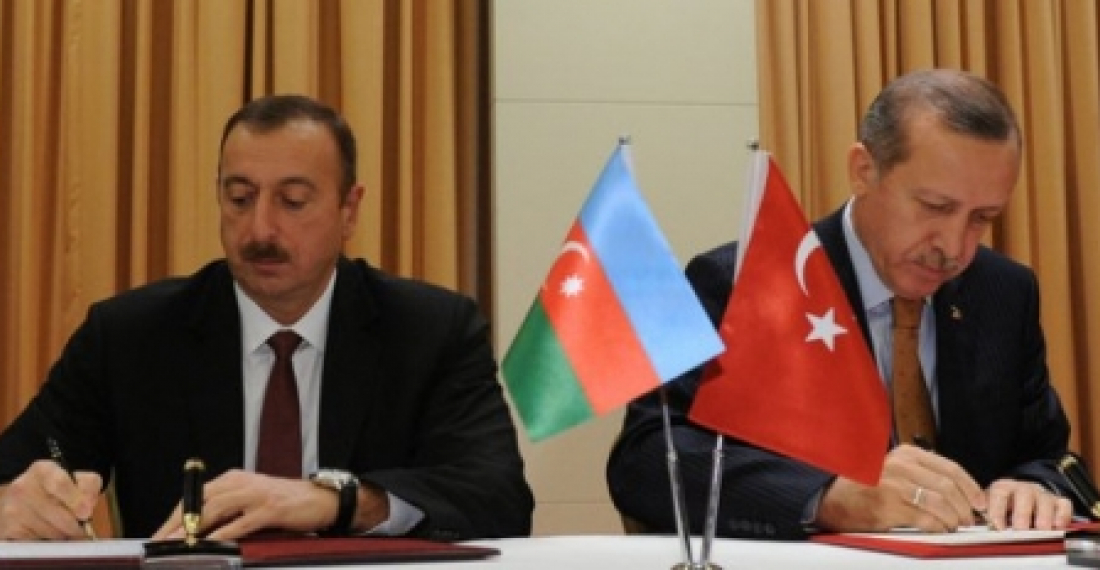
Azerbaijan has started investing seriously in the Turkish economy. In Izmir this week Turkey and Azerbaijan also signed 15 documents, including an agreement to sell gas to Turkey from the Shah Deniz-2 in 2017, and an agreement on transit of gas from Shah Deniz-2 to Turkey in 2017-2042 via the networks of Turkish Botas State Pipeline Company. The long awaited gas agreeements will consolidate Turkey’s position as an energy hub, and justify the construction of the Nabucco pipeline. These are all projects from which both countries can benefit.

Now that Azerbaijan is mature and affluent enough to get its own cheque book it is likely that its relations with Turkey, whilst not being without their problems, will actually be more fruitful, regardless of whether or not they are also called “strategic”.

source: This is the second article of a three part series on "special and strategic relations" in the South Caucasus and was prepared for commonspace.eu by the analytical team of LINKS. Opinion expressed does not necessarily reflect the editorial policy of the website. The third and final article in this feature will be published on Monday, 31 October.

read the first part of this feature: Armenia in the bosom of Mother Russia

photo: President Ilham Aliev of Azerbaijan and Turkish Prime Minister recip Tayip Erdogan signing bilateral agreements in Izmir on 26 October 2011 (picture courtesy of the Press Service of the President of Azerbaijan
Related articles

Editor's choice
News
Borrell tells the European Parliament that the situation in Afghanistan was critical, but the EU will remain engaged

Borrell tells the European Parliament that the situation in Afghanistan was critical, but the EU will remain engaged

Borrell underlined that the European Union will make every effort to support the peace process and to remain a committed partner to the Afghan people. "Of course, we will have to take into account the evolving situation, but disengagement is not an option.  We are clear on that: there is no alternative to a negotiated political settlement, through inclusive peace talks.
Editor's choice
News
NATO Chief says war is on Europe's doorstep, and warns against complacency

NATO Chief says war is on Europe's doorstep, and warns against complacency

Russia could attack a Nato country within the next five years, the Secretary General of NATO, Mark Rutte, said in a stark new warning. "Nato's own defences can hold for now," Rutte warned in Berlin, but conflict was "next door" to Europe and he feared "too many are quietly complacent, and too many don't feel the urgency, too many believe that time is on our side. "Russia is already escalating its covert campaign against our societies," Rutte said in a speech in Germany. "We must be prepared for the scale of war our grandparents or great-grandparents endured." Earlier this month, Russia's President Vladimir Putin said his country was not planning to go to war with Europe, but it was ready "right now" if Europe wanted to - or started a war. But similar reassurances were given by Moscow in 2022, just before 200,000 Russian troops crossed the border and invaded Ukraine. Putin has accused European countries of hindering US efforts to bring peace in Ukraine - a reference to the role Ukraine's European allies have recently played in trying to change a US peace plan to end the war, whose initial draft was seen as favouring Russia. But Putin was not sincere, Nato's secretary-general said in the German capital, Berlin. Supporting Ukraine, he added, was a guarantee for European security. "Just imagine if Putin got his way; Ukraine under the boot of Russian occupation, his forces pressing against a longer border with Nato, and the significantly increased risk of an armed attack against us." Russia's economy has been on a war footing for more than three years now - its factories churn out ever more supplies of drones, missiles and artillery shells. According to a recent report by the Kiel Institute for the World Economy, Russia has been producing each month around 150 tanks, 550 infantry fighting vehicles, 120 Lancet drones and more than 50 artillery pieces. The UK, and most of its Western allies, are simply not anywhere near this point. Analysts say it would take years for Western Europe's factories to come close to matching Russia's mass-production of weapons. "Allied defence spending and production must rise rapidly, our armed forces must have what they need to keep us safe," the Nato chief said.

Popular

Editor's choice
News
NATO Chief says war is on Europe's doorstep, and warns against complacency

NATO Chief says war is on Europe's doorstep, and warns against complacency

Russia could attack a Nato country within the next five years, the Secretary General of NATO, Mark Rutte, said in a stark new warning. "Nato's own defences can hold for now," Rutte warned in Berlin, but conflict was "next door" to Europe and he feared "too many are quietly complacent, and too many don't feel the urgency, too many believe that time is on our side. "Russia is already escalating its covert campaign against our societies," Rutte said in a speech in Germany. "We must be prepared for the scale of war our grandparents or great-grandparents endured." Earlier this month, Russia's President Vladimir Putin said his country was not planning to go to war with Europe, but it was ready "right now" if Europe wanted to - or started a war. But similar reassurances were given by Moscow in 2022, just before 200,000 Russian troops crossed the border and invaded Ukraine. Putin has accused European countries of hindering US efforts to bring peace in Ukraine - a reference to the role Ukraine's European allies have recently played in trying to change a US peace plan to end the war, whose initial draft was seen as favouring Russia. But Putin was not sincere, Nato's secretary-general said in the German capital, Berlin. Supporting Ukraine, he added, was a guarantee for European security. "Just imagine if Putin got his way; Ukraine under the boot of Russian occupation, his forces pressing against a longer border with Nato, and the significantly increased risk of an armed attack against us." Russia's economy has been on a war footing for more than three years now - its factories churn out ever more supplies of drones, missiles and artillery shells. According to a recent report by the Kiel Institute for the World Economy, Russia has been producing each month around 150 tanks, 550 infantry fighting vehicles, 120 Lancet drones and more than 50 artillery pieces. The UK, and most of its Western allies, are simply not anywhere near this point. Analysts say it would take years for Western Europe's factories to come close to matching Russia's mass-production of weapons. "Allied defence spending and production must rise rapidly, our armed forces must have what they need to keep us safe," the Nato chief said.

