In this commentary, Dennis Sammut says this should serve as a trigger for urgent action on many issues - OSCE reform, a holistic engagement with the problems of the Caucasus, a resolution of the Karabakh conflict, and a recognition of the deadly legacy of landmines
On Thursday, 4 May, the Austrian Chairmanship of the Organisation for Security and Co-operation in Europe (OSCE) informed the organisation's governing body - the Permanent Council, that due to a lack of consensus on the mandate, the OSCE was now obliged to close its office in the Armenian capital Yerevan.
The decision was a huge disappointment for the Austrian Chairmanship of the OSCE that has spent the last months trying to broker a solution, and comes at the end of months of diplomatic activity behind the scenes. The Austrian Foreign Minister, Sebastian Kurz, was involved directly in the negotiations, and in the last weeks sent the former President of Austria Heinz Fischer to the region as his personal emissary in an effort to break the deadlock
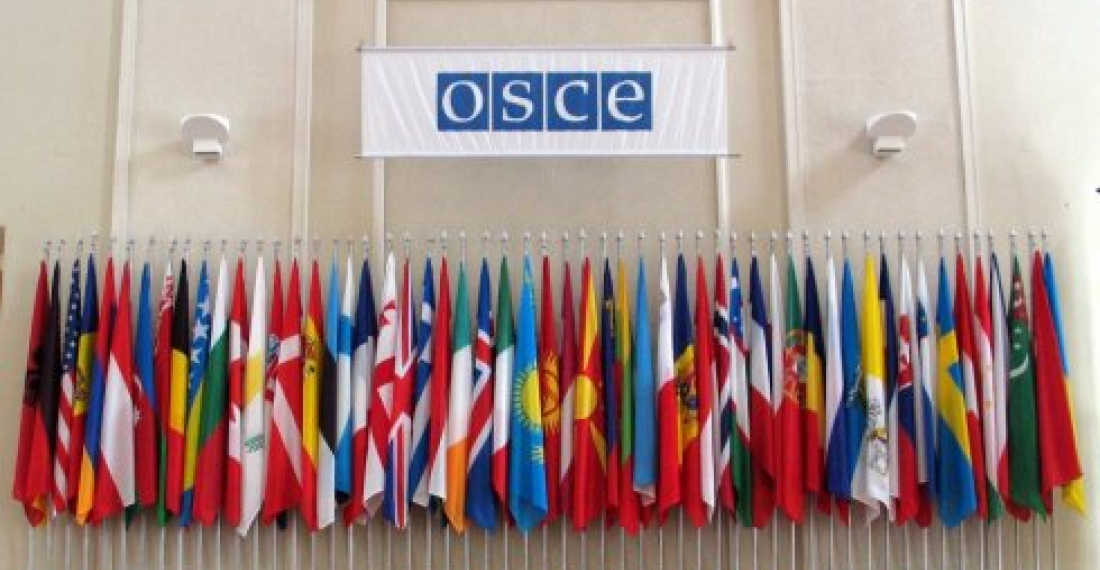
The OSCE works on a consensus basis, and all decisions require the approval of all 57 member states of the organisation. In practice, the veto power is used as a last resort, and usually to enable for more discussions. A decision, even if a fudged one, very often emerges. In this case it hasn't.
The issue, and the Azerbaijani logic
Azerbaijan has based its case on the fact that the Yerevan Office had started supporting projects of demining in areas affected by the Karabakh conflict. This, the Azerbaijani government argues, was in direct contradiction to an understanding within the OSCE that anything that had to do with conflict was outside the remit of the OSCE offices in the region, and was to be dealt with exclusively through the channels of the Minsk Group
The Azerbaijani side says that it tried to find a solution but the intransigence of the Armenian side left it no other choice but to veto the whole mandate of the office, resulting in its closure. "We regret that the Office was closed down, but this was a result of a deliberate attempt of Armenia to use every means possible to maintain the status quo and consolidate the occupation of Azerbaijani territories", the Azerbaijani Permanent Representative to the OSCE, Galib Isralifov, told Trend News Agency.
On its part, the Armenian side is livid. The spokesperson of the Armenian Foreign Ministry, Tigran Balayan, immediately accused Azerbaijan of "depriving the OSCE of fully-fledged presence in the South Caucasus, which will have a detrimental impact not only on the activities of the Organisation in our region but the OSCE as a whole and its structures".
Consequences and implications
This decision has consequences in both short and medium terms. In the short term, it makes the OSCE increasingly irrelevant in a part of the area under its jurisdiction where it is needed most - the Caucasus. This plays straight in the hands of Russia, whose long-term ambition is to exclude all international presence from the region in order it may restore its own paramount role. Not so long ago the OSCE had missions in Chechnya and Georgia, and offices in Baku and Yerevan. Now there are none. The Russians forced the closure of the Chechnya mission some time ago, and after the 2008 Georgia-Russia war vetoed the mandate of the mission in Georgia. Azerbaijan forced the closure of the Office in Baku in 2015, saying it no longer needed it. Now the last presence, the office in Yerevan, is closed too.
The OSCE is a fragile organisation that has not quite finished its transition from an ad hoc conference - the CSCE, that gave Europe and the world important benchmarks such as the Helsinki Final Act, and contributed hugely to European Peace and Security - to become an effective peace and security organisation for Europe and the northern hemisphere. Since the transition started in 1994 the OSCE has done some very useful work. Its role in bringing some stability to Eastern Ukraine was highlighted only a few days ago when one of the members of its mission there lost his life in the course of duty. Yet the organisation's structure, and the veto power of members means it is often perceived exercising its power and authority clumsily. The decision to close the Yerevan Office will further add to this perception.
A challenge has been thrown
The closure of the last OSCE presence in the Caucasus throws a challenge to the international community. The region remains one of the most security challenging and risky in Europe. There now needs to be a discussion on how the international community engages with the region, despite the shenanigans exercised by different political actors in the region whenever it suits them. In the end Russia, Turkey, as well as the three Caucasus states want to be inside any forum that discusses the region. Iran, which has not been so far, knows how frustrating it is when you are excluded. The current impasse must therefore be used to trigger a bigger discussion. Someone needs to take the political initiative to start the process. In its statement at the Permanent Council yesterday, the Austrian Chairmanship highlighted the importance of this: "In order to enable further support to and co-operation in all dimensions of security in the South Caucasus, we are convinced that options for an alternative OSCE engagement should be explored in-depth", it stated.
Even more urgent is the need to resolve the Karabakh conflict before it is too late. Once more, the destabilising nature of the conflict way beyond the conflict zone itself, has been shown by this latest diplomatic incident.
Mine clearance is a humanitarian issue that must be taken outside current disputes
In addressing these wider diplomatic challenges the international community must remain constantly sensitive to the humanitarian dimension of these problems. Large areas of deadly mine infested territory is the legacy that this generation of Caucasians are leaving to their next generations. Let there be no doubt about the gravity of the problem. Even if perfect peace is restored tomorrow between Armenia and Azerbaijan - an unlikely prospect - the consequences of unexploded mines and ordinance will haunt the two nations for decades to come. It is therefore everyone's responsibility to start dealing with this issue promptly. Mine-clearance is an important and urgent confidence building measure, and a new framework needs to be established to ensure that it is not caught in the petty squabbles that dominate all aspects of relations between the two sides at the moment, of which the saga with the OSCE Yerevan Office is yet another example of.
This negative development needs to be a wake-up call
The decision to force the closure of the OSCE Yerevan office following Azerbaijan's veto of the mandate is a very negative development. It adds pressure on an already difficult situation for Europe's leading pan continental security body. It further reduces the means of the international community to engage and contribute for a solution to the problems of the Caucasus region. This should serve as a trigger for urgent action on many issues - OSCE reform, a proper and holistic engagement with the issues of the Caucasus Region, a resolution of the Karabakh conflict, and a recognition of the problem of landmines in the region. It is now time to act.
Dennis Sammut is the Director of LINKS (Dialogue, Analysis and Research) and may be contacted at dennis@links-dar.org. He contributed this commentary to commonspace.eu.
RELATED CONTENT
Armenia and Azerbaijan hold the OSCE to ransom (31 January 2017)
Baku's decision to close OSCE office sharply criticised in Vienna (9 June 2015)