This commentary was prepared by the editorial team of Caucasus Concise, a weekly electronic newsletter published in association with commonspace.eu
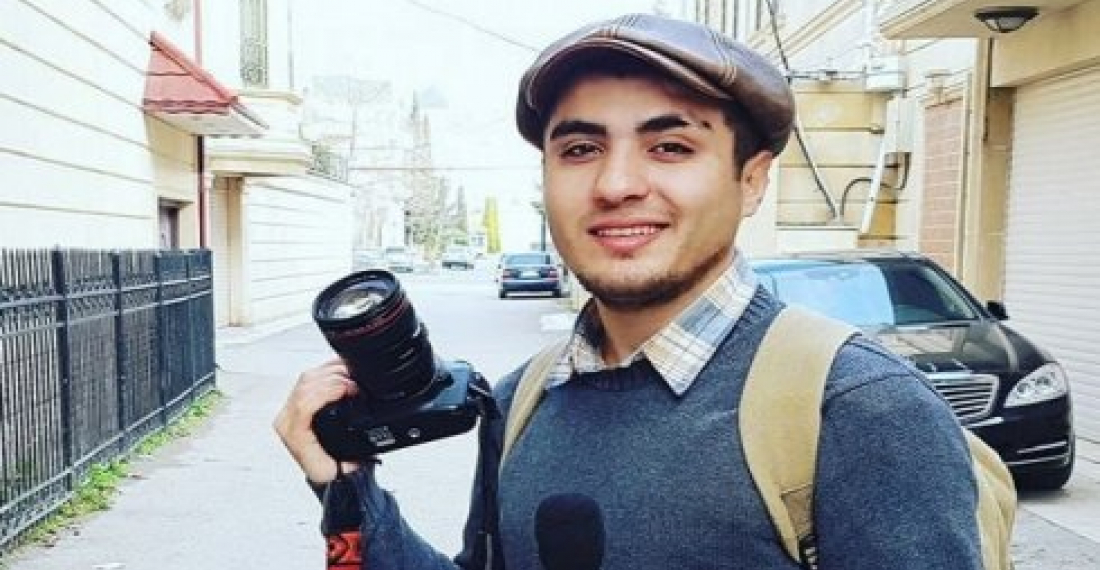
The two-year prison sentence handed down on the young blogger and photo-journalist, Mehman Husseynov, by an Azerbaijani court on 3rd March has once more triggered a wave of criticism of the Azerbaijan government, and its record on freedom of speech and media freedom. The case could not have come at a worse moment for Azerbaijan, only days after the visit of President Ilham Aliev to Brussels and the launch of discussions on a new agreement with the European Union.
The case is likely to put Azerbaijan on the spot, even more than other similar cases in the recent past, for a number of reasons. First Mehman Husseynov is highly popular in Azerbaijan especially with young people. The blogger cum photographer has a sharp sense of humour, and his biting photo and video reports were seen by tens of thousands. Second the circumstances of his imprisonment have opened up a discussion on abuse in Azerbaijan's law enforcement bodies. Thirdly, the short trail prior to Huseynov's sentencing is widely seen as a travesty - perhaps the worst example yet of Azerbaijan's unreformed judicial system.
In February Huseynov was picked up by the police one evening and interrogated. The following morning he was presented in court where he appeared in a very distressed state, and fined 200 manats for resisting arrest. On his release however Huseynov claimed he had been tortured while in detention at Nasimi District Police Station. In response, the senior officer at the police station, Musa Musayev, decided to sue him for slander and for falsely accusing an individual with a serious felony. Husseynov's friends say that the blogger's claim of being tortured was never properly investigated, and that he was being punished for his investigative reporting
At the court hearing on Friday, 3 March, Mehman Huseynov's lawyer Elchin Sadiqov filed a petition for a postponement of the trial, but this was not granted. "I requested one week's time to prepare additional evidence and investigate the matter further...however the judge only gave me half an hour. 10 minutes later he [the judge] demanded that I begin delivering evidence. . .Now he has been sentenced to two years", Meydan TV quoted the lawyer as saying. The lawyer further added that the decision will be appealed.
No wonder then that on Tuesday, 7 March the European Union issued an unusually blunt statement on the case. The statement, posted on the web site of the European External Action Service said,
The two-year sentence handed down on 3 March by a court in Baku to Azerbaijani blogger Mehman Huseynov on a charge of slander, after he reported that he was tortured during a brief incarceration in January, raises serious questions both as regards respect for freedom of expression and due process of law.
Mr Huseynov is known in Azerbaijan for his efforts to expose corruption. On the face of it, his sentence appears clearly disproportionate to the alleged crime. Reports of his irregular arrest, alleged ill-treatment, and irregularities in the subsequent court proceeding that ended in his conviction are of equally serious concern and should be immediately investigated. Mr Huseynov should be a witness in a credible and independent investigation of these allegations, seeking accountability for the perpetrators, as appropriate, not in jail.
Respect for freedom of expression is vital in any democratic society. The European Union expects Azerbaijan to respect its international commitments both as regards fundamental freedoms and due process.
All this was going on as Azerbaijani Deputy Foreign Minister, Mahmud Mamed Guliev - Azerbaijan's Chief Negotiator for the new agreement, was in the European Parliament, together with several Azerbaijani parliamentarians making his country's case to a large audience of MEPs, diplomats and others. The event, initiated by a number of MEPs and think tanks, was part of an effort to intensify constructive dialogue with the Azerbaijani government following a low point in the relationship after 2013. Both sides had some plain talking to the other, but the event was remarkably amicable, constructive and engaging.
MEP Heidi Hautala said that relations with Azerbaijan had improved in the last year after falling to a low point in 2014/15. She said both sides now have opened a new chapter in the relationship between them. The European Parliament was looking forward to the new agreement with Azerbaijan that has just started being negotiated. Mrs Hautala raised the issue of the arrest of blogger Mehman Husseynov, and called on the Azerbaijani government to show a sense of proportion in dealing with this matter, also suggesting that the Novruz holiday can be used as an opportunity for an amnesty for imprisoned journalists and activists.
Mr Mamed-Guliev in his speech reiterated that Azerbaijan is ready for continued, enhanced, and inclusive co-operation with the EU based on mutual interest and joint ownership. He said that the conference was very timely, coming at a time when the two sides embarked on a negotiating a new strategic agreement between them. The Deputy Foreign Minister said that Azerbaijan was entering the negotiations with a belief that the new agreement will provide a strong basis for EU-Azerbaijan co-operation, which are already very strong.
The Deputy Foreign Minister said that the new agreement will have three main blocks: political and security; trade and investment; and sectorial areas, including economic and humanitarian). The Deputy Foreign Minister said the Government of Azerbaijan wanted to focus on the first block. He said that Azerbaijan had already made its ideas known to the EU, and was awaiting now the response of the EU. He called for a timely process of negotiations.
Deputy Foreign Minister Mamad Guliev spoke at length on the Karabakh conflict and Azerbaijan's vision for resolving the conflict. The speaker said that the Azerbaijan government has concerns regarding illegal economic activity in Nagorno-Karabakh, and the participation of European entities in such activity. He said that the Azerbaijani Foreign Ministry had made representation to the EU on these issues.
Referring to Azerbaijan's human rights record, the Deputy Foreign Minister said that he did not want to say that everything is perfect, but Azerbaijan was actively taking steps to make the situation better for civil society in the country, and Azerbaijan is aware of the EU's interest in these areas.
The case of Mehman Husseynov will continue to attract a lot of attention, and the timing of his arrest may be linked to internal processes within Azerbaijani ruling circles. It cannot be excluded that there are some elements who want to derail the discussions with the EU, and who hoped that the predictable reaction to Huseynov's imprisonment will disrupt the talks. So far however it seems that both the European Union and Azerbaijan have decided to stay the course with the negotiations. An EEAS official speaking at the 7 March conference in the European Parliament made it clear however that for the EU issues of human rights and good goverence were an essential part of the discussions that have just started (read more here)
This commentary was prepared by the editorial team of Caucasus Concise