Baku asks Moscow for $300 million for Gabala Radar Station

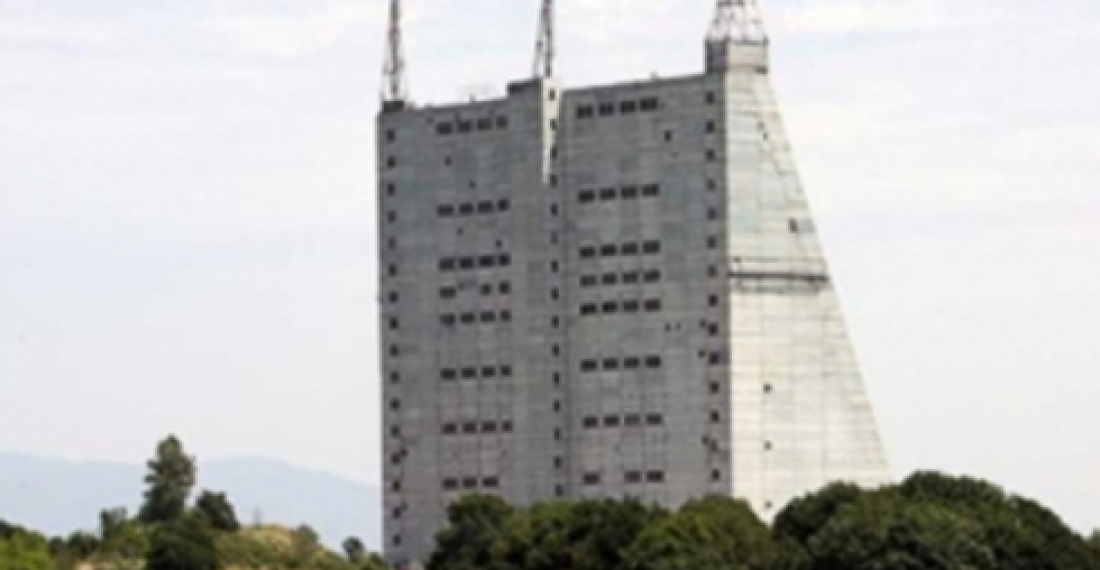
According to reports in the Russian Media, Azerbaijan is requesting an annual payment of $300 million for the rent of the Gabala Radar facility, a Soviet era military facility that continues to operate on Azerbaijani territory. It is understood that the current rent is $7 million. Negotiations on the renewal of the agreement between the two countries regarding the facility started last year. The current agreement expires at the end of 2012.

The Azerbaijani demand seems to have taken Russian officials by surprise. The Russian daily Kommersant this morning, quoted a Russian Foreign Ministry official as saying that the demand was "agenda-driven". Earlier reports had also suggested that Azerbaijan is insisting on dual control over Gabala and that it would be allowed to share the data from the Radar Station. Currently Gabala is operated by Russian personnel and around one thousand military personnel are deployed for the purpose, this being the only Russian military presence in Azerbaijan. In the early days following the collapse of the USSR NATO had recognised the importance of Gabala for Russian defence and had raised no objection to its continued operation in Azerbaijan. At some point the possibility of Gabala coming under joint US-Russian control in lieu of the new European Missile Defence shield was also considered.

Commonspace.eu political editor said in a comment that "Azerbaijan is very sensitive on the Gabala issue. On the one hand it wants to show it as a positive sign of good relations with Russia, on the other hand it wants to make it clear that Russia is renting the facility at commercial rates. Azerbaijan also wants to exclude the use of Gabala against its own interests in the case of renewed hostilities with Armenia. These negotiations are likely to continue for some time. The Russian side on the other hand is keen to keep its only remaining military facility in Azerbaijan, for political as well as military reasons. However the prospect of other CIS countries that host Russian military facilities, making similar demands for high rent creates a dilemma for Russian strategists. Already a few days ago the President of Kyrgistan accused Russia of not paying the rent for a military base in his country and called for its closure. On the other hand Azerbaijan can argue that it needs the money because of the environmental hazard that Gabala constitutes. In 1998 the Baku newspaper Zerkalo carried an article claiming that grave environmental damage was resulting from the operation of the radar station but an investigation by the Azerbaijani Academy of Sciences did not find any health hazards resulting from the operation of the Station, however most experts consider that a certain ammount of environmental damage is inevitable."

source: commonspace.eu with Kommersant and RIA-Novosti

photo: Gabala Radar Station in Azerbaijan (picture courtesy of Russia Today)

Related articles

Editor's choice
News
Borrell tells the European Parliament that the situation in Afghanistan was critical, but the EU will remain engaged

Borrell tells the European Parliament that the situation in Afghanistan was critical, but the EU will remain engaged

Borrell underlined that the European Union will make every effort to support the peace process and to remain a committed partner to the Afghan people. "Of course, we will have to take into account the evolving situation, but disengagement is not an option.  We are clear on that: there is no alternative to a negotiated political settlement, through inclusive peace talks.
Editor's choice
News
Egypt rejects Israeli "offer" for an exit only Rafah checkpoint in Gaza

Egypt rejects Israeli "offer" for an exit only Rafah checkpoint in Gaza

Egypt has rejected an Israeli "offer" for opening for exit only the Rafah checkpoint in Gaza. According to the Egyptian State Information Service, Egyptian authorities refuted on Wednesday afternoon reports that Israel claims it will open the Rafah crossing, the only lifeline for Gaza to the outside world, but only for those wishing to leave the besieged coastal enclave.  Citing an Egyptian official, the service stated that ''any agreement to open the crossing will cover both entry and exit, in line with US President Donald Trump's plan for humanitarian and political arrangements following the ceasefire.'' Cairo reaffirmed its adherence to the plan and UN Security Council Resolution 2803, including the right of return for Palestinians and maintaining two-way operations at the crossing. Earlier in the day, Israel's Coordinator of Government Activities in the Territories (COGAT) announced that the Rafah crossing would reopen ''within the next few days,'' marking the first such move since February 2025. According to the statement, departures would require prior Israeli security approval and would follow mechanisms previously implemented under EU supervision. Notably, the statement made no mention of the entry of humanitarian aid, which continues to flow through the Kerem Shalom crossing. A Palestinian official also echoed the Egyptian denial of Israel's claim. The announced agreements stress that no Palestinians will be forced to leave Gaza. Those who choose to travel will have the right to return, while humanitarian aid will continue through UN agencies, the International Red Cross and Crescent, and other independent organisations. A European Union official, who requested anonymity and is familiar with the matter, told TNA that the EU has received no official notification from Israel regarding new arrangements, stressing that "no changes exist beyond the January agreements, and we await Israel's formal approval for crossing operations under the Trump plan. "Reopening the crossing will follow mechanisms jointly supervised by the EU and the Palestinian Authority to ensure oversight and transparency, according to the EU official.

Popular

Editor's choice
News
Egypt rejects Israeli "offer" for an exit only Rafah checkpoint in Gaza

Egypt rejects Israeli "offer" for an exit only Rafah checkpoint in Gaza

Egypt has rejected an Israeli "offer" for opening for exit only the Rafah checkpoint in Gaza. According to the Egyptian State Information Service, Egyptian authorities refuted on Wednesday afternoon reports that Israel claims it will open the Rafah crossing, the only lifeline for Gaza to the outside world, but only for those wishing to leave the besieged coastal enclave.  Citing an Egyptian official, the service stated that ''any agreement to open the crossing will cover both entry and exit, in line with US President Donald Trump's plan for humanitarian and political arrangements following the ceasefire.'' Cairo reaffirmed its adherence to the plan and UN Security Council Resolution 2803, including the right of return for Palestinians and maintaining two-way operations at the crossing. Earlier in the day, Israel's Coordinator of Government Activities in the Territories (COGAT) announced that the Rafah crossing would reopen ''within the next few days,'' marking the first such move since February 2025. According to the statement, departures would require prior Israeli security approval and would follow mechanisms previously implemented under EU supervision. Notably, the statement made no mention of the entry of humanitarian aid, which continues to flow through the Kerem Shalom crossing. A Palestinian official also echoed the Egyptian denial of Israel's claim. The announced agreements stress that no Palestinians will be forced to leave Gaza. Those who choose to travel will have the right to return, while humanitarian aid will continue through UN agencies, the International Red Cross and Crescent, and other independent organisations. A European Union official, who requested anonymity and is familiar with the matter, told TNA that the EU has received no official notification from Israel regarding new arrangements, stressing that "no changes exist beyond the January agreements, and we await Israel's formal approval for crossing operations under the Trump plan. "Reopening the crossing will follow mechanisms jointly supervised by the EU and the Palestinian Authority to ensure oversight and transparency, according to the EU official.