"A bad peace is better than any war". Russia reiterates commitment to conflict settlement in the OSCE region but is this freezing the conflicts?

Russian Deputy Foreign Minister Alexey Meshkov on Thursday (14 March) addressed the Permanent Council of the Organisation for Security and Co-operation in Europe (OSCE) on the need to create a system of "equal and indivisible security" and said that this was the Russian priority within the organisation for the future.

According to a statement issued by the OSCE in Vienna, Meshkov said that an important issue in shaping the security community from Vancouver to Vladivostok is to "apply in practice the OSCE principle of the indivisible security, and to ensure the implementation by all countries and groups of countries of the commitment not to strengthen their security at the expense of others", and noted the importance of continuing the involvement of the civil society and academia into the collective "brainstorming" on the security community creation.

Conventional arms control and combatting transnational threats and challenges are essential for strengthening security in the OSCE region, Meshkov said. He also noted the importance of the "Helsinki+40" process as a "window of opportunity to strengthen the role, reputation and relevance of the OSCE" and for its transformation into a full-fledged international organization.

He reiterated Russia's commitment to conflict settlement in the OSCE region "based on three key principles: conflicts must be settled exclusively by peaceful means, within the existing formats and respecting the interests of the sides".

"It is important to always remember that a bad peace is better than any war," Meshkov said. "Therefore we caution against any actions from the OSCE that could be of detriment to the positive achievements of any given peace process."

Speaking about economic and environmental dimension of security, Russian Deputy Foreign Minister stressed the importance of socio-economic aspects of human rights.

Meshkov outlined the Russian position on the human dimension of the work of the OSCE, focusing on the issues of visa-free travel, election legislation and protecting human rights. He said it was "necessary that the OSCE Office for Democratic Institutions and Human Rights observed elections in all OSCE states and on an equal footing".

Commonspace.eu political editor said that "Russia's quest for creating a new security architecture in Europe and Eurasia has been ongoing for more than two decades, but there are inconsistencies in the Russian position which have made western countries cautious. Again on this occasion Russian diplomats seem to be more interested in the form rather than the content or the result and in Europe as elsewhere Russia is perceived to be "behind the curve" in dealing with ongoing processes and challenges. Russian moves are often seen as attempts to freeze conflicts in the OSCE area and this is absolutely unacceptable to many of those  that are suffering as a result of those conflicts. Meshkov's statement was therefore unlikely to encourage other countries to be sympathetic to Russia's position which becomes increasingly isolated. On the other hand continued engagement with Russia on this issue may provide an opportunity to secure Russian flexibility as part of a wider negotiation format"

source: commonspace.eu with www.osce.org

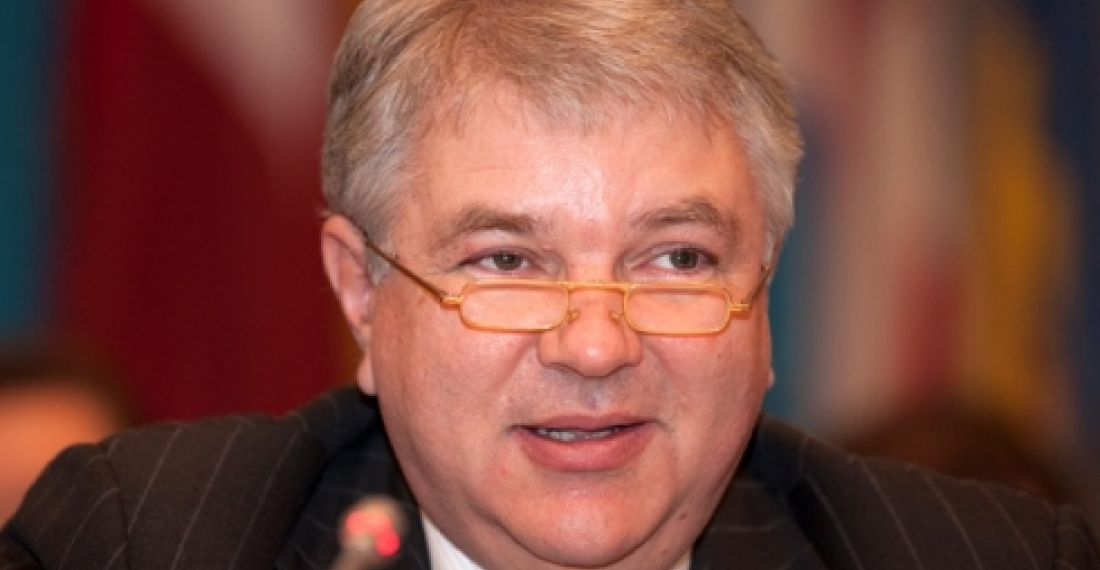
photo: Russian Deputy Foreign Minister Alexei Meshkov (picture courtesy of OSCE)

 

Related articles

Editor's choice
News
Borrell tells the European Parliament that the situation in Afghanistan was critical, but the EU will remain engaged

Borrell tells the European Parliament that the situation in Afghanistan was critical, but the EU will remain engaged

Borrell underlined that the European Union will make every effort to support the peace process and to remain a committed partner to the Afghan people. "Of course, we will have to take into account the evolving situation, but disengagement is not an option.  We are clear on that: there is no alternative to a negotiated political settlement, through inclusive peace talks.
Editor's choice
News
Germany accuses Russia of cyberattacks and disinformation campaign

Germany accuses Russia of cyberattacks and disinformation campaign

The German government holds Russia responsible for a cyberattack on German air traffic control, and for targeted disinformation campaigns before the last federal election. According to the German Foreign Office in Berlin, the incidents could be clearly attributed to the Russian military intelligence service, the GRU. In response, the Russian ambassador to Berlin was summoned to the Foreign Ministry. "We have been observing a massive increase in threatening hybrid activities by Russia for some time now," a spokesperson for the Foreign Ministry stated. These range from disinformation campaigns and espionage to cyberattacks and sabotage attempts. The aim is to divide society, sow distrust, and undermine confidence in democratic institutions. The spokesperson added that with these actions, Russia is "very concretely threatening our security, not only through its war of aggression against Ukraine, but also here in Germany."  The Foreign Ministry spokesperson explained that the cyberattack on air traffic control in August 2024 was clearly attributed to the hacker collective "APT28," known as "Fancy Bear," and to the responsibility of the Russian military intelligence service, the GRU. Furthermore, it could now be "conclusively stated" that Russia had attempted "to influence and destabilize both the last Federal election and the ongoing internal affairs of the Federal Republic of Germany." There was "absolutely irrefutable evidence" for this". The so-called "Storm 1516" campaign, which has been running since 2024, is allegedly backed by "reliable information" that the Moscow-based think tank "Center for Geopolitical Expertise" is behind it. The Center is also said to be supported by Russian military intelligence. Its primary aim is to influence democratic elections in the West. (Click the image to read more).

Popular

Editor's choice
News
Germany accuses Russia of cyberattacks and disinformation campaign

Germany accuses Russia of cyberattacks and disinformation campaign

The German government holds Russia responsible for a cyberattack on German air traffic control, and for targeted disinformation campaigns before the last federal election. According to the German Foreign Office in Berlin, the incidents could be clearly attributed to the Russian military intelligence service, the GRU. In response, the Russian ambassador to Berlin was summoned to the Foreign Ministry. "We have been observing a massive increase in threatening hybrid activities by Russia for some time now," a spokesperson for the Foreign Ministry stated. These range from disinformation campaigns and espionage to cyberattacks and sabotage attempts. The aim is to divide society, sow distrust, and undermine confidence in democratic institutions. The spokesperson added that with these actions, Russia is "very concretely threatening our security, not only through its war of aggression against Ukraine, but also here in Germany."  The Foreign Ministry spokesperson explained that the cyberattack on air traffic control in August 2024 was clearly attributed to the hacker collective "APT28," known as "Fancy Bear," and to the responsibility of the Russian military intelligence service, the GRU. Furthermore, it could now be "conclusively stated" that Russia had attempted "to influence and destabilize both the last Federal election and the ongoing internal affairs of the Federal Republic of Germany." There was "absolutely irrefutable evidence" for this". The so-called "Storm 1516" campaign, which has been running since 2024, is allegedly backed by "reliable information" that the Moscow-based think tank "Center for Geopolitical Expertise" is behind it. The Center is also said to be supported by Russian military intelligence. Its primary aim is to influence democratic elections in the West. (Click the image to read more).