This briefing first appeared in the 25 May 2023 issue of our newsletter, Karabakh Concise. If you would like to subscribe to Karabakh Concise, or any other of our newsletters, please click here.
As Armenia and Azerbaijan edge closer to signing an agreement ending decades of conflict between them, the future of the Armenian population in Nagorno-Karabakh remains one of the most crucial outstanding issues, writes commonspace.eu.
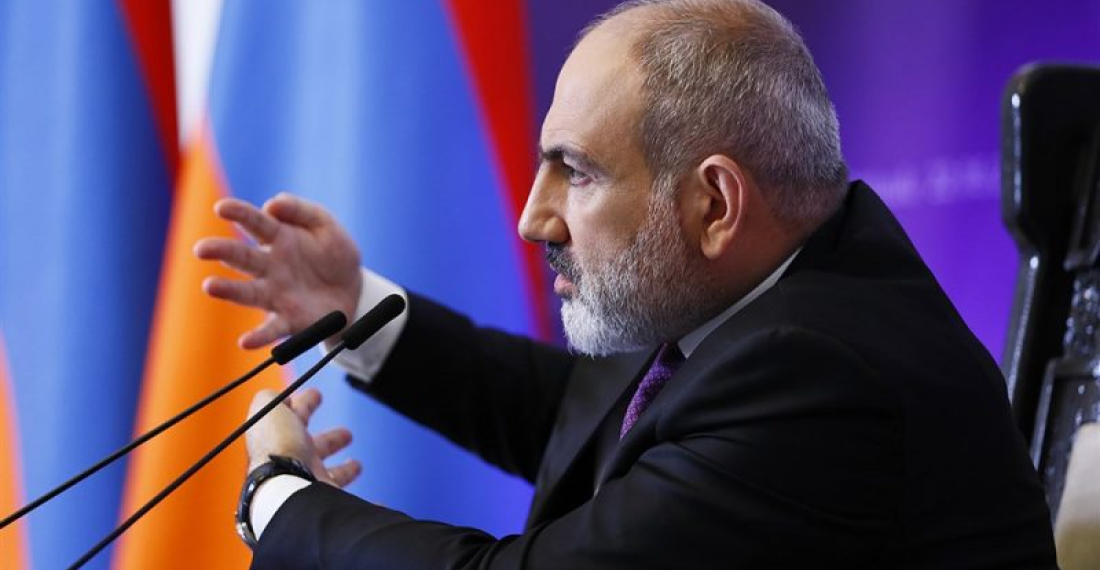
Intense discussions and negotiations have been ongoing throughout May, with meetings in Washington, Brussels and Moscow involving the leaders of the two countries, their foreign ministers, and other senior officials. In a lengthy press conference on 22 May, Armenian Prime Minister Nikol Pashinyan said that he wants to reach an agreement "as soon as possible".
The international community's perception of the negotiations is that Armenia and Azerbaijan should, without reservations, recognise each other's territorial integrity of 29,800 square kilometers and 86,600 square kilometers, respectively, said Pashinyan. He added that a dialogue between Stepanakert and Baku should take place on the issue of the "rights and security of Nagorno-Karabakh Armenians".
"We agree with this logic and conduct the negotiations with this logic, emphasising that the international mechanisms for guaranteeing the Stepanakert-Baku dialogue are extremely important. At the same time, I am convinced that the strategic guarantee of ensuring Armenia’s security is peace, which is possible by normalising relations with all neighbours. This is not an easy process at all, but I believe it is what our people want and expect," said Pashinyan.
When asked by a reporter whether Armenia's recognition of Azerbaijan's area as being 86,600 square kilometres includes Nagorno-Karabakh, Pashinyan confirmed this to be the case. "No matter what the current government of Armenia says, all the governments of Armenia have recognised the territorial integrity of Azerbaijan. I have made it more concrete, and I find it difficult to imagine more concretely [...] Armenia is ready to recognise the territorial integrity [of Azerbaijan] of 86,600 square kilometers, and in our opinion, Azerbaijan is ready to recognise the territorial integrity of Armenia of 29,800 square kilometers," said Pashinyan.
Washington talks were a critical moment in the Armenia-Azerbaijan peace process, according to Pashinyan
On the talks between the Armenian and Azerbaijani foreign ministers just outside Washington D.C. at the start of May, Pashinyan said that from this moment the sides began communicating with each other more openly, directly, and with a greater mutual understanding than previously.
Pashinyan said that, during the Washington talks, "many nuances have emerged, which may not have been mutually visible to the parties before, or at least not recorded."
"When I say 'mutual understanding,' I mean that I consider the style of conversation to be the biggest feature of the Washington talks, that a lot of it was a direct conversation. At some point, the hidden meanings started to be less, and the conversations were more mutually understandable," he said.
He did caution, however, that this was only his interpretation and that he could not say how Baku perceived the dynamic of the Washington talks.
Pashinyan calls for troop withdrawals to allow for border delimitation work
In the press conference on Monday (22 May), Pashinyan repeated the Armenian position that both sides should withdraw their troops from the Armenia-Azerbaijan border as shown by the maps of the USSR General Staff of 1975. This would allow for border delimitation work to commence, according to Pashinyan.
"Also, I want to emphasise that the simultaneous withdrawal of troops does not in itself predetermine the border delimitation work. That is a separate process, this is just about ensuring the stability of the border situation. However, we also believe that the 1975 map can and should be the basis for further border delimitation work, too, because it implies the agreements reached in Prague on 6 October 2022, regarding carrying out border delimitation based on the Alma Ata declaration [of 1991]," said Pashinyan.
In Stepanakert, political elites come out largely against Pashinyan’s position, but the Armenian leader is convinced he has the Armenian people behind him
In the self-declared Nagorno-Karabakh Republic, the political entity established by the Karabakh Armenians after their military victory in 1994 the mood was sombre. The political elite is broadly against the territory returning to Azerbaijani control. This was expressed clearly after a session of the territory’s parliament called with urgency at 11pm following Pashinyan’s speech. Equally negative was the position of two former de facto presidents of the self-declared NKR – Arkadi Ghukasyan and Bako Sahakian. They were joined in chorus by former Armenian presidents Robert Kocharian and Serzh Sargsyan, both of whom hail from Karabakh.
Politicians supporting prime minister Nikol Pashinyan have however, perhaps for the first time, come out fighting on this issue, repeating Pashinyan’s message that there was no other option but to normalise relations with all neighbours and sign a peace treaty with Azerbaijan, and dismissing opposition accusations of betrayal. Pashinyan has over the last five years read the mood of the Armenian people much better than his opponents, or even his allies. In his press conference Pashinyan appeared confident that he had the people of Armenia behind him – even if most of the political and intellectual elite were not.
Things are now expected to move quickly, with meetings between the leaders of Armenia and Azerbaijan scheduled to be held in Moscow, Chisinau, and possibly Brussels, over the coming days and weeks. It is possible that the two leaders will start by signing a number of agreements on specific issues, such as border demarcation and transport connections, whilst negotiations continue on the last stumbling blocks.
Baku hopeful, but keeping up the pressure, just in case
In Azerbaijan people close to the political leadership are hopeful that a peace agreement with Armenia is now within reach. But the Azerbaijani government appeared to be keeping up the pressure on both Yerevan and the Karabakh Armenians, just in case. The issue of how to manage the future of the Armenian community in Nagorno-Karabakh, is now one of the main outstanding issues. Baku has withdrawn previous offers of political autonomy, and now insists on no special status and rejects the idea of a long-term international presence in the territory. This notwithstanding, however, there may be things that the Azerbaijani leadership may be willing to offer to the Armenian community, and reassurances to the international community, but for the moment it has decided not to make them public.
For decades in the South Caucasus, people were apprehensive with the approach of summer. The warm weather was usually also the harbinger of increased violence and tension, especially on the Armenia-Azerbaijan line of contact. For the first time this summer may be remembered for different reasons, including a historic breakthrough towards peace that can open a new chapter in the region’s history.