Heavy armaments are being used by both sides in the recent outbreak of hostilities between Armenia and Azerbaijan in Nagorno-Karabakh, with much of them bought from Russia.
The last few days have seen reports of heavy shelling by tanks on both sides. Dozens have died, including civilians, in the worst fighting since a 1994 ceasefire.
Over the past two decades, both sides have built up large arsenals of modern weaponry. Russia maintains close relations with both countries and is formally neutral.
Though both sides buy arms from Russia, there are key differences. Being formal allies, as joint members of the Collective Treaty Security Organisation, Armenia can buy arms from Russia at domestic prices, whereas Azerbaijan must pay international prices.
Russia also recently extended a $200 million line of credit to Armenia to buy advanced weaponry including rocket systems, anti-tank missiles, handheld antiaircraft missiles and upgrades to tanks.
The loan was confirmed last year, and details were unveiled a few weeks ago. The move was strongly criticised by Azerbaijan.
The dynamic changed when a Russian fighter was downed on the Turkey-Syria border in November, with two Russian pilots killed. The Russians blamed Turkey for the deaths, and Turkey blamed Russia for violating its airspace.
Turkey has close ties with Azerbaijan, its geographical, cultural and linguistic neighbour. President Erdogan of Turkey has declared its unconditional support for Azerbaijan in the Karabakh dispute.
Meanwhile Russia has been pursuing closer ties with Armenia since the fighter jet incident, adding fighter jets to its military base in Gyumri, just a few kilometres from the Turkish border, and attempting to combine its air defence system with Armenia’s.
Azerbaijan, attempting to change the status quo rather than defend it, has spent around five times as much on its military in recent years as Armenia has, using its vast oil reserves to build up troops along the Line of Contact.
However Armenia also maintain a huge military, much of it based within the territory of Nagorno-Karabakh.
At the start of last month Russian media reported that Azerbaijan was unable to pay for a shipment of Russian arms, after Azerbaijan’s budget is struggling to cope with a huge drop in the global oil price, which has badly affected Azerbaijan.
Russia\'s deputy prime minister in charge of defense industry, Dmitry Rogozin, went to visit Ilham Aliyev in Baku to discuss the issue.
Both sides have dozens of tanks, planes, helicopters, artillery and advanced air-defence equipment, according to data collected by the London-based International Institute for Strategic Studies (IISS).
Azerbaijan has 66,950 active troops with 300,000 in reserve, while Armenia has 44,800 with 210,000 in reserve, according to the IISS, with the majority weaponry used Russian-made.
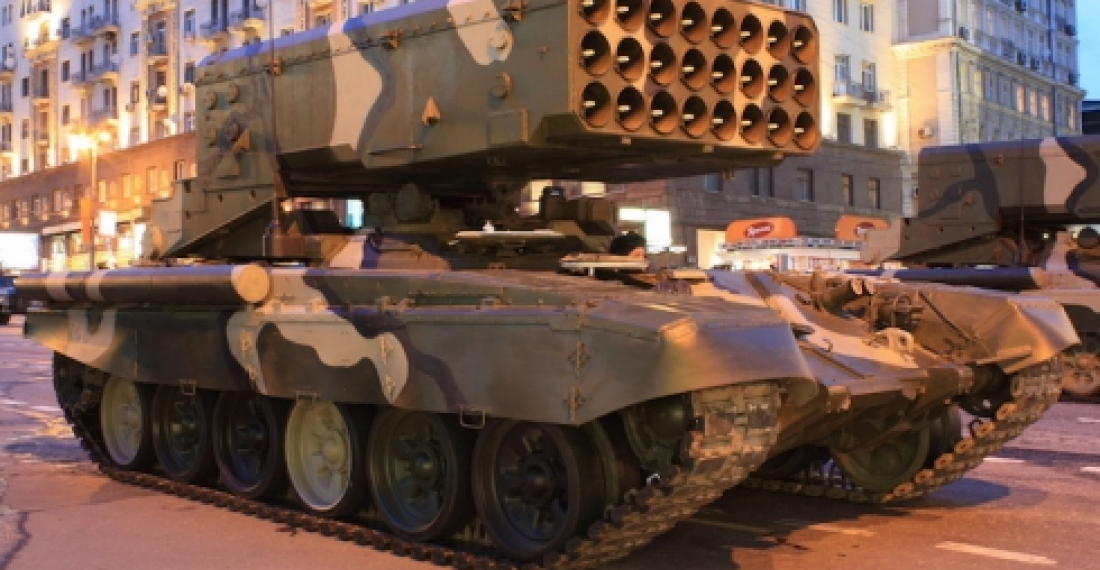
Armenian media also reported on Monday that Azerbaijani forces used a TOS-21 \"Solntsepyok” flame thrower for the first time.
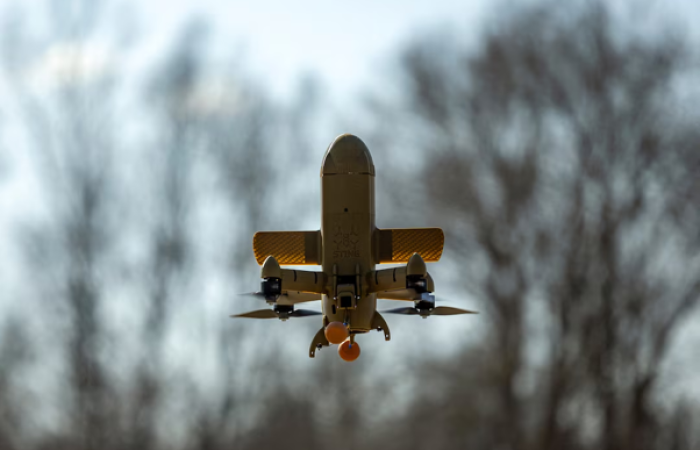
There are reports that combat drones have been used, and shot down, by both sides.
SOURCE: commonspace.eu and agencies
PHOTO: ТОS-1A — Russian 24-barrel multiple rocket launcher