


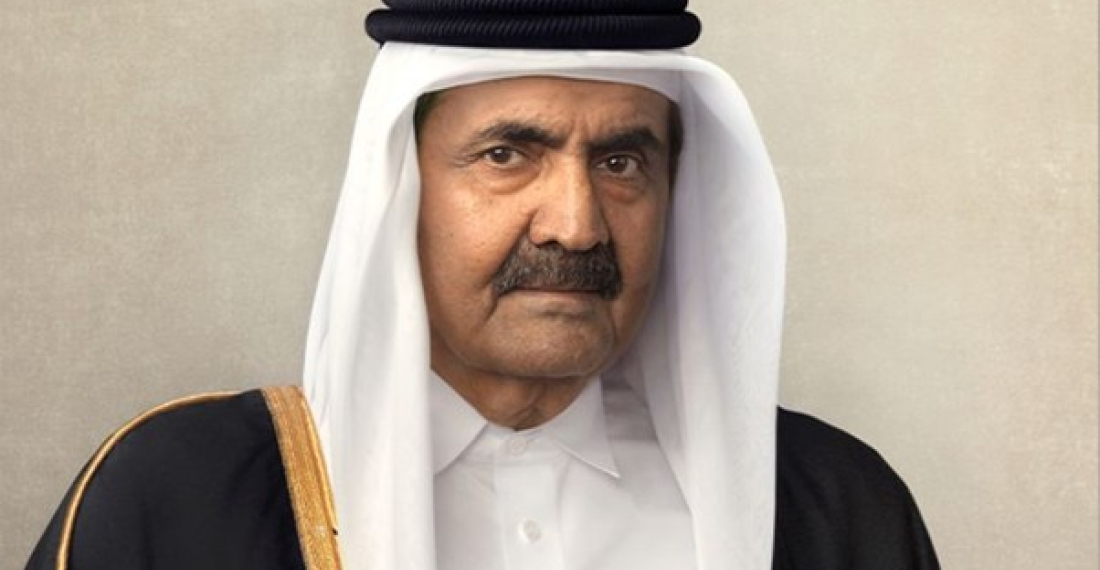
Sheikh Hamad bin Khalifa Al Thani, the former emir of Qatar who transformed the small Gulf state into one of the world’s wealthiest and most influential nations through its vast natural gas wealth and an ambitious programme of political, economic and social reforms, has died. He was 74.
A charismatic figure with a friendly demeanor, the father Emir assumed the reins of power in 1995. Regarded as the architect of modern Qatar, he embarked on forging development and reform plans and education programs.
During his reign, Qatar’s GDP increased more than twenty-fourfold, while production from the North Field turned the country into the world’s largest exporter of liquefied natural gas by 2006. After four years, the small nation’s LNG production capacity reached 77 million tons per annum, according to government’s figure.
His tenure also saw the establishment of the Qatar Foundation, the launch of Al Jazeera News Channel in 1996, the promulgation of Qatar’s first permanent constitution in 2004 and the introduction of municipal elections in which women were granted the right to vote and stand as candidates. Under his leadership, the Gulf nation also adopted the Qatar National Vision 2030 and secured the right to host the 2022 FIFA World Cup.
Born in Doha in January 1952, Sheikh Hamad graduated from the British Royal Military Academy at Sandhurst before becoming commander of Qatar’s armed forces. He became heir apparent and defence minister in 1977, assumed power as emir on June 27, 1995, and handed over leadership to his son, Sheikh Tamim bin Hamad Al Thani, on June 25, 2013.
“The future lies ahead of you, the children of this homeland, as you usher into a new era where young leadership hoists the banner,” Sheikh Hamad said as he announced his abdication and the carefully crafted transition to his son, the British-educated crown prince Sheikh Tamim bin Hamad Al Thani, who was then 33.
The peaceful, voluntary transfer of power was rare in a region where such change usually results from death or overthrow.
source: commonspace.eu with Al Jazeera (Doha) and agencies



