Houthis seize the strategic port city of Mokha

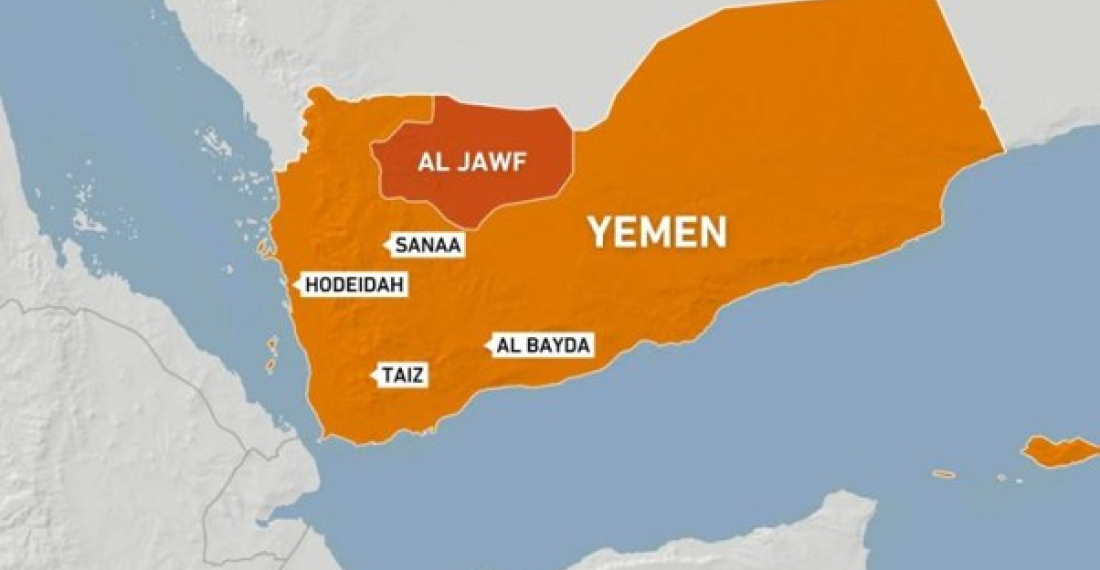
Iran-backed Houthi militants have seized the strategic port city of Mokha on Yemen’s western coast after days of fighting with pro-government forces, further expanding their control along the Red Sea and near the Bab Al Mandeb shipping route.

“Resistance groups have left Mokha and are now deployed south of the city,” a Yemeni official told The National, referring to pro-government forces.

In a statement, Yemen’s Presidential Leadership Council Vice Chairman Tareq Saleh said government forces, including the National Resistance, Giants Brigades and Nation’s Shield forces, as well as units from Taiz, had suffered deaths and injuries during several days of Houthi attacks. “We ordered the formation of an alternative command centre in a safe location to regroup the forces in consultation with the Arab coalition command and the Presidential Leadership Council,” he said.

Yemeni government sources also confirmed the loss of Mokha to Reuters.

Mokha, about 150km south of the Houthi-held port city of Hodeidah, has been a major base for government forces operating along Yemen’s Red Sea coast and seeking to push the rebels out of their positions. The capture marks a significant advantage for the Houthis, giving them control of another strategically important point on Yemen’s western coastline overlooking one of the world’s most important shipping corridors.

It comes amid intensifying clashes between the rebels and government forces across several parts of Yemen, while the Houthis have also escalated attacks on Saudi Arabia and shipping in the Red Sea in support of Iran.

Speaking to Al Jazeera, Wolfgang Pusztai, a defence analyst, says if reports of Houthi fighters capturing the Red Sea coastal city of al-Makha (Mocha) are correct, it would be a major development.

“They are advancing even more than the government forces,” he told Al Jazeera, adding that if the Yemeni rebels are able to cut off the road between Taiz and al-Makha, it would be a “very significant blow against the government”.

“If they take over Mocha, they would control pretty much all of Yemen’s coast on the Red Sea. That means it would be easier to control Bab al-Mandeb.”

He noted that while the Strait of Hormuz is about 50km (30 miles) wide, the Bab al-Mandeb Strait is much narrower at about 20km (12 miles).

“This means they could control it just with artillery; they wouldn’t need to even use missiles or drones to attack ships. This would certainly be a major blow to Saudi Arabian shipping and international shipping,” Pusztai said.

source: commonspace.eu with The National (Abu Dhabi), Al Jazeera (Doha) and agencies
Related articles

Editor's choice
News
Pashinyan says that he wants peace treaty with Azerbaijan by 2031

Pashinyan says that he wants peace treaty with Azerbaijan by 2031

Armenia should sign and ratify a peace treaty with Azerbaijan before 2031, Armenian Prime Minister Nikol Pashinyan said. He described the objective as the top priority for his administration. Earlier, the Armenian prime minister also spoke about a possible land-swap with Azerbaijan Armenia and Azerbaijan should agree to establish a clear, conventional border without enclaves or exclaves, Prime Minister Nikol Pashinyan said. Armenia controls three Azeri enclaves inside its borders while Baku controls one Armenian enclave – those could be subject to a land swap, Pashinyan announced.
Editor's choice
News
Medical Students stand for a Landmine Free South Caucasus

Medical Students stand for a Landmine Free South Caucasus

Medical Students in Tbilisi have participated in the campaign LANDMINE FREE SOUTH CAUCASUS 2026. The regional’ Landmine Free South Caucasus’ (LFSC) campaign was initiated by LINKS Europe Foundation in 2018 to address the critical issue of landmine and unexploded ordnance contamination in Armenia, Azerbaijan and Georgia. With significant landmine contamination in the region posing an ongoing threat to life and eliciting high economic costs, LFSC advocated for a regional, holistic approach to complete clearance.  Future Doctors Join the Conversation on Friday, 16 October in Tbilisi. "As part of the Landmine Free South Caucasus 2026 campaign, an informative and interactive meeting was held in Tbilisi with medical students. The session was conducted by George Simonishvili, South Caucasus Co-ordinator for LINKS Europe.  The meeting focused on the humanitarian consequences of landmines and other explosive remnants of war in Armenia, Azerbaijan, and Georgia, with particular attention to the Red Bridge minefield near the borders of the three countries, and emphasised that these dangers remain a current humanitarian challenge. It also underlined that future medical professionals will encounter the long-term effects of explosion injuries and can play a role in awareness and prevention.  Students actively engaged throughout the discussion, showing strong interest in the humanitarian impact and the need for cooperation. Under the slogan "Future Doctors for a Landmine Free South Caucasus," the event encouraged students to support public awareness, solidarity with survivors, and a safer South Caucasus free from landmine threats.  The event was organised by LINKS Europe as part of LFSC26.  "Medical Students Stand for a Landmine Free South Caucasus," "Future Doctors, Safer Futures: Together Against Landmines." "Future Doctors for a Landmine Free South Caucasus".

Popular

Editor's choice
Interview
Thursday Interview: Murad Muradov

Thursday Interview: Murad Muradov

Today, commonspace.eu starts a new regular weekly series. THURSDAY INTERVIEW, conducted by Lauri Nikulainen, will host  persons who are thinkers, opinion shapers, and implementors in their countries and spheres. We start the series with an interview with Murad Muradov, a leading person in Azerbaijan's think tank community. He is also the first co-chair of the Action Committee for a new Armenian-Azerbaijani Dialogue. Last September he made history by being the first Azerbaijani civil society activist to visit Armenia after the 44 day war, and the start of the peace process. Speaking about this visit Murad Muradov said: "My experience was largely positive. My negative expectations luckily didn’t play out. The discussions were respectful, the panel format bringing together experts from Armenia, Azerbaijan, and Turkey was particularly valuable during the NATO Rose-Roth Seminar in Yerevan, and media coverage, while varied in tone, remained largely constructive. Some media outlets though attempted to represent me as more of a government mouthpiece than an independent expert, which was totally misleading.  Overall, I see these initiatives as important steps in rebuilding trust and normalising professional engagement. The fact that soon a larger Azerbaijani civil society visits to Armenia followed, reinforces the sense that this process is moving in the right direction." (click the image to read the interview in full)