

Zelenskyy Compares Trump’s Friendship with Putin to a Friendship with Hitler as Tensions over Ukraine Military Aid Grow

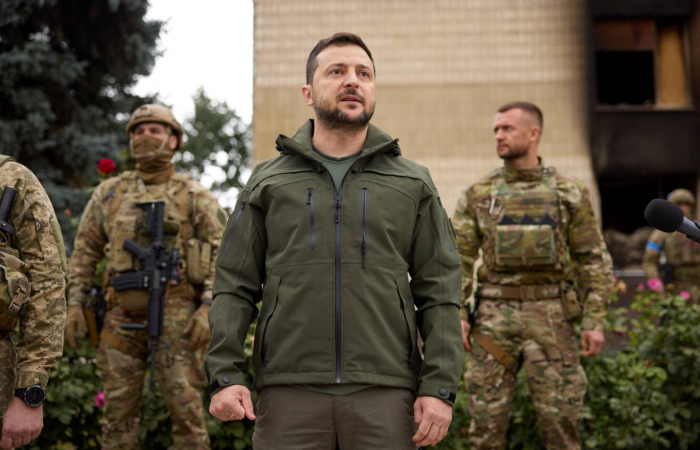
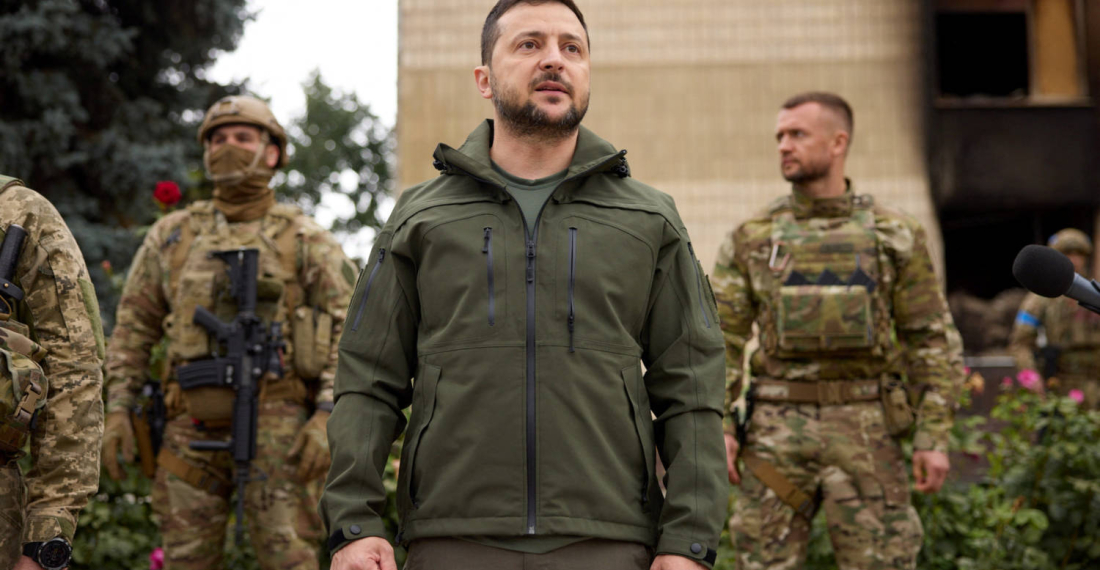
Ukrainian President Volodymyr Zelenskyy has criticized Washington’s approach to Russia’s war against Ukraine, calling for stronger pressure on Vladimir Putin, faster delivery of air defence weapons and greater support from Kyiv’s allies, as negotiations remain stalled while Russian attacks intensify.

In a BBC interview published on November 26, Zelenskyy described US President Donald Trump’s characterization of Putin as a “friend” as “strange”, arguing that the Russian leader, whom he called “an aggressor and a killer”, could not be considered a friend. Comparing the situation to the Second World War, Zelenskyy said such a relationship would be comparable to treating Adolf Hitler as a friend. He also rejected Washington’s efforts to maintain a neutral position between Moscow and Kyiv, arguing that neutrality towards an aggressor effectively enables further violence. Trump, meanwhile, said he was focused on ending the fighting and securing a deal, arguing that hostility between the two leaders was an obstacle to negotiations.

Zelenskyy also expressed frustration with delays in US military assistance, particularly the delivery of 48 Patriot interceptor missiles already financed by Ukraine’s allies through NATO’s Prioritized Ukraine Requirements List (PURL). He warned that shortages of air defence ammunition were costing lives, as Russia continues targeting energy facilities, transport infrastructure and residential areas. Restrictions affecting Starlink and its military-grade Starshield services in Russian-occupied Ukrainian territories have also reportedly complicated Ukraine’s drone operations and interception capabilities.

Zelenskyy’s frustration may be tied to the failure of yet another round of diplomatic efforts to produce a breakthrough. After the recent US-mediated talks in Abu Dhabi, Zelenskyy indicated that Moscow had returned to maximalist demands. Meanwhile, EU leaders failed on Thursday to agree on a proposed $49 billion loan to cover Ukraine’s economic and military needs next year, amid concerns over political opposition and upcoming elections across the bloc. As a bleak hope to end the war before the end of the year, further discussions are expected in December, although European participation remains uncertain.

In the meantime, with ACLED recording nearly 300 attacks during a week against Ukrainian civilian infrastructure through November 20, the war appears to continue with intensifying brutality. Ukraine’s air force reported intercepting 110 of 155 drones launched overnight on Friday (November 27), although strikes hit 27 locations across nine regions, killing at least one person and injuring six. Zelenskyy warned of another large-scale Russian attack in the coming days and vowed to defend Kyiv against efforts to undermine the capital’s resilience.

Ukraine’s recent strikes against Russian naval assets near Libya have also raised concerns about the conflict spreading beyond its immediate theatre. Zelenskyy defended the operation, describing the targeted vessel as a legitimate military target, while Foreign Minister Andrii Sybiha assured Libya that Kyiv had no intention of involving the country in the war. 

Source: commonspace.eu with  CBS News (New York) and Kyiv Post (Kyiv).
 

Latest

Editor's choice
Monday Commentary
Monday Commentary: PEACE IN OUR TIME?

Monday Commentary: PEACE IN OUR TIME?

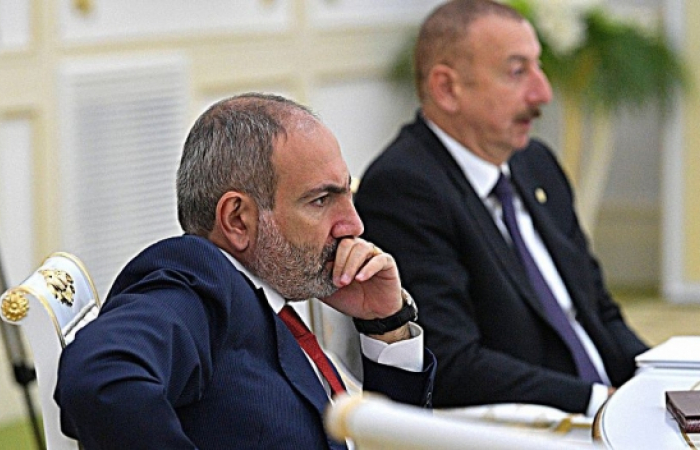
Making peace between Armenia and Azerbaijan was never going to be simple, nor easy, nor quick. It is taking time, writes Dennis Sammut in this Monday Commentary. “There is a sense of realism coming from the leaders of the two countries – President Ilham Aliyev of Azerbaijan and prime minister Nikol Pashinyan of Armenia, that frankly, is necessary and welcome”, he writes. At a time when conflicts are raging all over the world – from Ukraine to the Gulf, from Africa to South Asia, the prospect that Armenia and Azerbaijan had finally, after decades of conflict that left thousands of dead and many more displaced, decided on embarking on a journey of peace was welcomed. Peace between Armenia and Azerbaijan can be top-down up to a point. Both leaders have spent political capital preparing for a peace deal. But both are aware that their people are not ready for peace yet. In fact, in Armenia, most of the elite are negative toward a peace deal with Azerbaijan. Pashinyan needs time to persuade his countryfolk. That is why 2031 is realistic. Ilham Aliyev runs a tighter shop, but he is also not immune to public opinion. Every time someone hits a landmine in Karabakh, which unfortunately happens often, peace comes into question. Which is why Aliyev chooses to sound hardline, more often than not. In pursuing the peace agenda, both Aliyev and Pashinyan need to proceed cautiously. But they are right in making peace the central issue in their agenda. It is the main issue, and the one that will define them in history. So forward, cautiously but resolutely! In pursuing the peace agenda, Aliyev and Pashinyan need to be supported clearly and unambiguously. There are too many people in Baku and Yerevan who are sitting on the sides, waiting. The international community is not doing enough. It is time to be counted. Otherwise, the spoilers will win, and the region will go back to its bad habits. (Click the image to read the full commentary).

Popular

Editor's choice
Monday Commentary
Monday Commentary: European-Azerbaijan relations need an intensive and multifaceted dialogue that is frank and honest

Monday Commentary: European-Azerbaijan relations need an intensive and multifaceted dialogue that is frank and honest

Last week I visited Baku, Azerbaijan. My visit was relatively short, but very intensive, and had many meetings with stakeholders and colleagues. When I arrived in Baku first time in 1996,  Azerbaijan was a different country: weak, poor, and shaken by defeat in war. For thirty year the Karabakh issue dominated the agenda: the political agenda but also the popular mindset. Now, thirty years later, Azerbaijan has returned to Karabakh, and peace with Armenia is on the horizon. It is a new era for Armenia-Azerbaijan relations, for the South Caucasus, but also for Europe.  But we cannot be complacent: the Peace agreement has been initialed but not signed; borders remain closed; TRIPP is ambitious but remains an idea; and there are spoilers who want to turn the clock back. We must not allow them, and in this Europe and Azerbaijan must work together. Europe’ vanguard organization is the European Union – it is a free union of 27 member states; it is a strong global economic force, and increasingly a diplomatic and military force too. But it remains “work in progress” and can often appear dysfunctional. It often lacks collective and institutional memory. In its dealings with Azerbaijan the EU has made many mistakes – not least opening the delegation here late – in 2008. It sometimes appears condescending. Some utterances from the European Parliament and from some quarters in some member states are not understandable even for me. They irritate the Azerbaijanis, but serve no other purpose But Azerbaijan has also not handled relations with the EU well. It has failed to respond when the hand of friendship reached out; and it confused irritating actions, sometimes by well-meaning people; sometimes by outright spoilers, with strategic action. In short, EU-Azerbaijan relations have suffered from a lack of proper dialogue. This dialogue must be frank, honest and multi-faceted involving different segments of society on both sides.   Is Azerbaijan Europe? When Azerbaijan applied to join the Council of Europe in the 1990s, there were some who opposed, saying this was not Europe. I was one of the people who argued that Armenia and Azerbaijan may be on the periphery of the continent geographically, but were European in essence. Certainly their elites. During the discussion on 4 September in Baku, my friend Farhad Mammedov, mentioned that Azerbaijan is not interested in joining the EU, and was now close to the Central Asian countries in the 5 plus 1 format. Neither things mean that Azerbaijan is not Europe. There are several European countries that are not in the EU, and do not want to be, for example Norway and Switzerland. Iceland has recently voted to stay out of the EU. The UK was a member and left. Europe is bigger than the EU, and the holding of the European Political Community summit in Baku in 2027 proves that. Despite all the rhetoric, I never heard the president of Azerbaijan  saying that Azerbaijan is not Europe, nor have I heard any European president say it either. Not wanting to join the EU and forging close relations with neighbouring regions does not make Azerbaijan any less European. It is only logical that when Europeans talk to Azerbaijan they talk like family. The conversation is often frank. It must also be honest, and Europeans need always to remember this too. A frank, honest and multi-faceted dialogue A frank, honest and multifaceted dialogue will contribute to relations between Azerbaijan and the rest of Europe: it will avoid misperception, which unfortunately is very common on both sides; it will provide a forum where problems can be discussed and resolved, and it will increase mutual trust, so that together common problems can be addressed. (click image to read the full Monday Commentary)
Editor's choice
Monday Commentary
Monday Commentary: “The barren rocks of Aden” and “These lands of Yemen are so ruthless”

Monday Commentary: “The barren rocks of Aden” and “These lands of Yemen are so ruthless”

There are two early 20th-century tunes that mark foreign attempts to occupy and “pacify” Yemen. The Scottish tune “The barren rocks of Aden” marks the mobilisation of Highland soldiers, enlisted to be deployed to the Yemeni port of Aden, that in 1837 became the last colony to be incorporated into the British Empire. The tune talks of the harshness of the terrain, but is celebratory, It was even played as a farewell tune to Sir William Luce at the parade in Sharjah celebrating his end as “British Viceroy” in the Middle East in 1966. The second tune is an Anatolian lament. As Ilker Sezer reminded us this weekend, in his weekly feature on “Turkiye Today”, it “mourns the tragic fate of Ottoman soldiers dispatched to the harsh, remote deserts of Yemen during the fall of the empire, young men who marched away from their villages and never returned home. Most of their names, and numbers, were never recorded. Yet, their fate left a mark on the Turkish psyche.” Subsequent invaders have discovered that Yemen is a grave that cannot be overcome by the strength of modern technology, and that whilst Yemeni society is splintered and divided, building a reliable alliance with Yemeni factions is difficult. These are the harsh lessons facing Saudi Arabia, as the Kingdom faces its biggest challenge in its modern history. The leadership of the Kingdom now has to respond decisively. At stake is their very credibility. This is likely to be a long and messy conflict. Saudi military objectives need to be focused: to box in the Houthis rather than destroy them. This is likely to include: (a) regaining territory lost on the Red Sea coast; (b) control over Bab el Mandeb Strait; (c) some kind of cordon sanitaire on the Saudi-Yemeni border; and if things go well (d) the capture of Sanaa. All this would not eliminate the Houthi problem, but it will contain it. In the end the Saudis will have to continue managing Yemen with a mixture of carrot and stick. For the moment, the stick is likely, but the carrot cannot be forgotten either. (click the image to read the Monday Commentary in full)