

Opinion: Azerbaijan's bid to lead the OSCE in 2027

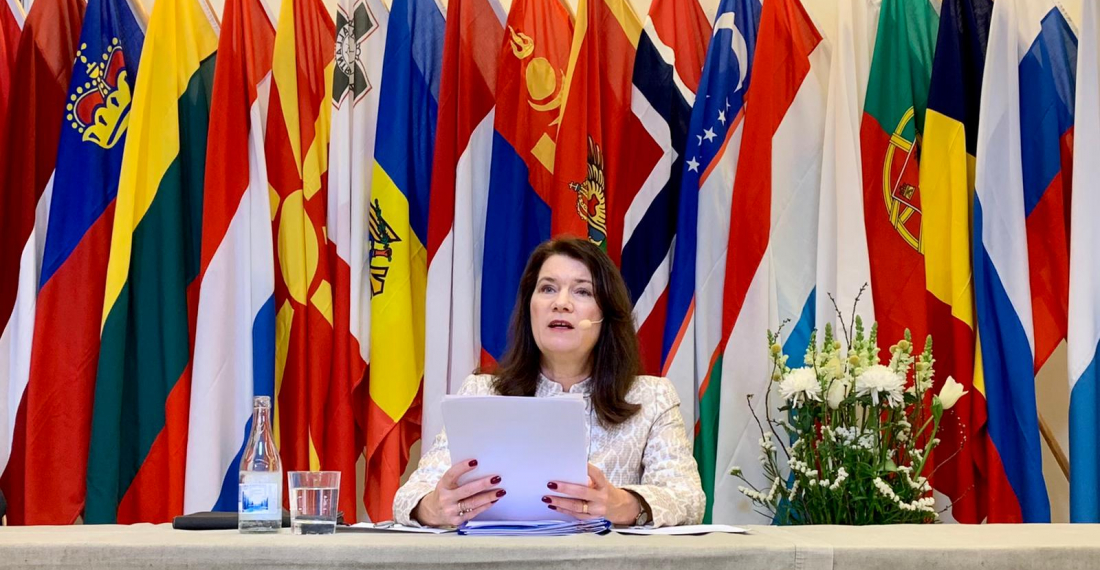
By late November 2026, the OSCE participating States had still not reached agreement on who would lead the organisation in 2027. At a special meeting of the Permanent Council in Vienna on 19 November, the current OSCE Chairperson-in-Office, Swiss Foreign Minister Ignazio Cassis, proposed agreeing on the organisation's chairpersonships for three years at once, covering the period from 2027 to 2029. The proposal received broad support. Azerbaijan, Armenia, Austria and Norway expressed their readiness to assume the chairpersonship in one of the coming years, while Georgia and Cyprus reconfirmed their candidacies. However, no agreement has yet been reached on the chairpersonship for 2027.

The OSCE is experiencing a crisis because deep divisions over European security issues are making it increasingly difficult to adopt even basic decisions. The organisation brings together 57 participating States, including Russia, Ukraine, the United States and EU member states. Consensus is required to approve the budget, extend the mandate of a mission or select a chairperson. If even one participating State objects, decisions on these matters can be blocked.

Russia's full-scale war against Ukraine has further deepened divisions within the OSCE. Key decisions within the organisation require consensus among all 57 participating States. Amid an acute conflict, this rule allows a single participant to block decisions on which the functioning of the entire organisation depends. In 2022, Russia's position prevented the extension of the mandate of the OSCE Special Monitoring Mission in Ukraine, which subsequently ceased operations. The organisation thus lost one of its principal instruments for monitoring the situation on the ground at precisely the moment of escalation. The unified budget for 2026 was approved only in March, for the first time since 2021.

The difficulties in selecting a chairperson have the same institutional cause, although the positions of individual States depend on the specific candidate. In 2023, Russia and Belarus blocked Estonia's candidacy for the 2024 chairpersonship, after which the participating States agreed on Malta's candidacy. In the current round, several EU member states have opposed Georgia's candidacy, while Türkiye's position has prevented agreement on Cyprus's candidacy. Georgian Foreign Minister Maka Bochorishvili has stated that there is no unified EU position against Tbilisi. Following the November meeting, the OSCE reported that neither of the two candidates had yet secured consensus.

The dispute over the 2027 chairpersonship has exposed the deep crisis within the OSCE. The organisation remains a platform for dialogue, but political disagreements are increasingly preventing it from taking decisions on which its day-to-day operations depend. Under these circumstances, the ability of the future chairperson to negotiate with all participating States and reach agreement on specific issues assumes particular importance. Baku has several advantages that are especially relevant in the current circumstances.

The first argument in Baku's favour is its consistent position on the issue at the heart of the European security crisis. During Azerbaijani Foreign Minister Jeyhun Bayramov's meeting with Ukrainian President Volodymyr Zelenskyy on 6 August 2026, the Azerbaijani side reaffirmed its support for Ukraine's sovereignty and territorial integrity within its internationally recognised borders. On the same day, Bayramov discussed political dialogue, energy, humanitarian cooperation and regional security issues with Ukrainian Foreign Minister Andrii Sybiha. For a potential chairpersonship, this means that Baku's position on Ukraine is already known and is based on the principles enshrined in the Helsinki Final Act.

The second argument is the existence of channels of communication with Moscow. According to the press service of the Azerbaijani President, on 7 September, Ilham Aliyev and Vladimir Putin discussed trade, economic and humanitarian cooperation and agreed to intensify contacts at various levels.

At the same time, Baku is developing relations with the EU and the United States. In a joint statement by Ilham Aliyev and European Council President António Costa on 11 March, the sides expressed their commitment to deepening political dialogue and practical cooperation in the fields of security, energy and transport. In February, Azerbaijan and the United States signed the Charter on Strategic Partnership. For the OSCE, the value of these contacts lies in the fact that Baku already has working channels of communication with Kyiv, Moscow, Brussels and Washington.

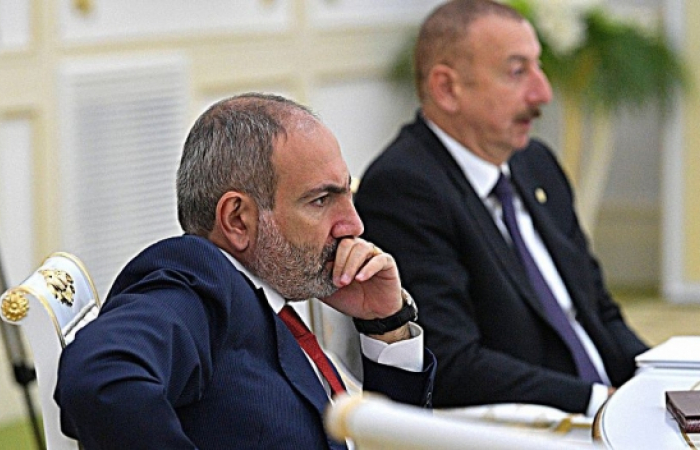
The third argument is Azerbaijan's experience in normalising relations with Armenia. At a meeting with Cassis on 4 August, Jeyhun Bayramov discussed prospects for cooperation between Azerbaijan and the OSCE and progress in the Azerbaijan-Armenia peace process. By 12 November, Azerbaijani President Ilham Aliyev and Armenian Prime Minister Nikol Pashinyan were already discussing concrete confidence-building measures in Dublin, including border delimitation, transit and trade, as well as cooperation on transboundary water resources. Such negotiations demonstrate that Baku has experience in addressing issues that form part of the OSCE's own agenda.

At the upcoming OSCE Ministerial Council meeting in Lugano on 3–4 December, participating States will have an opportunity to move towards an agreement. Within the framework of the three-year package proposed by Switzerland, Azerbaijan deserves consideration specifically for 2027. Its case rests on its ability to consistently uphold the principles of sovereignty and territorial integrity, maintain working contacts with Moscow, Kyiv, Brussels and Washington, and negotiate practical confidence-building measures. These are precisely the qualities required of a chairperson who will have to secure agreement among all 57 participating States on specific decisions.

Source: Nurad Mammadov is an adviser at the Center for Analysis of International Relations and Multiculturalism (AIR Center), specialising in political developments across the post-Soviet region, particularly Russia. He contributed this op-ed for commonspace.eu
 

Latest

Editor's choice
Monday Commentary
Monday Commentary: PEACE IN OUR TIME?

Monday Commentary: PEACE IN OUR TIME?

Making peace between Armenia and Azerbaijan was never going to be simple, nor easy, nor quick. It is taking time, writes Dennis Sammut in this Monday Commentary. “There is a sense of realism coming from the leaders of the two countries – President Ilham Aliyev of Azerbaijan and prime minister Nikol Pashinyan of Armenia, that frankly, is necessary and welcome”, he writes. At a time when conflicts are raging all over the world – from Ukraine to the Gulf, from Africa to South Asia, the prospect that Armenia and Azerbaijan had finally, after decades of conflict that left thousands of dead and many more displaced, decided on embarking on a journey of peace was welcomed. Peace between Armenia and Azerbaijan can be top-down up to a point. Both leaders have spent political capital preparing for a peace deal. But both are aware that their people are not ready for peace yet. In fact, in Armenia, most of the elite are negative toward a peace deal with Azerbaijan. Pashinyan needs time to persuade his countryfolk. That is why 2031 is realistic. Ilham Aliyev runs a tighter shop, but he is also not immune to public opinion. Every time someone hits a landmine in Karabakh, which unfortunately happens often, peace comes into question. Which is why Aliyev chooses to sound hardline, more often than not. In pursuing the peace agenda, both Aliyev and Pashinyan need to proceed cautiously. But they are right in making peace the central issue in their agenda. It is the main issue, and the one that will define them in history. So forward, cautiously but resolutely! In pursuing the peace agenda, Aliyev and Pashinyan need to be supported clearly and unambiguously. There are too many people in Baku and Yerevan who are sitting on the sides, waiting. The international community is not doing enough. It is time to be counted. Otherwise, the spoilers will win, and the region will go back to its bad habits. (Click the image to read the full commentary).

Popular

Editor's choice
Monday Commentary
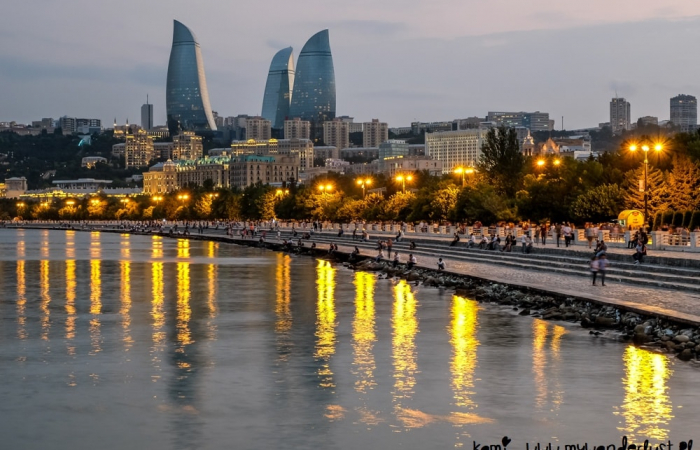
Monday Commentary: European-Azerbaijan relations need an intensive and multifaceted dialogue that is frank and honest

Monday Commentary: European-Azerbaijan relations need an intensive and multifaceted dialogue that is frank and honest

Last week I visited Baku, Azerbaijan. My visit was relatively short, but very intensive, and had many meetings with stakeholders and colleagues. When I arrived in Baku first time in 1996,  Azerbaijan was a different country: weak, poor, and shaken by defeat in war. For thirty year the Karabakh issue dominated the agenda: the political agenda but also the popular mindset. Now, thirty years later, Azerbaijan has returned to Karabakh, and peace with Armenia is on the horizon. It is a new era for Armenia-Azerbaijan relations, for the South Caucasus, but also for Europe.  But we cannot be complacent: the Peace agreement has been initialed but not signed; borders remain closed; TRIPP is ambitious but remains an idea; and there are spoilers who want to turn the clock back. We must not allow them, and in this Europe and Azerbaijan must work together. Europe’ vanguard organization is the European Union – it is a free union of 27 member states; it is a strong global economic force, and increasingly a diplomatic and military force too. But it remains “work in progress” and can often appear dysfunctional. It often lacks collective and institutional memory. In its dealings with Azerbaijan the EU has made many mistakes – not least opening the delegation here late – in 2008. It sometimes appears condescending. Some utterances from the European Parliament and from some quarters in some member states are not understandable even for me. They irritate the Azerbaijanis, but serve no other purpose But Azerbaijan has also not handled relations with the EU well. It has failed to respond when the hand of friendship reached out; and it confused irritating actions, sometimes by well-meaning people; sometimes by outright spoilers, with strategic action. In short, EU-Azerbaijan relations have suffered from a lack of proper dialogue. This dialogue must be frank, honest and multi-faceted involving different segments of society on both sides.   Is Azerbaijan Europe? When Azerbaijan applied to join the Council of Europe in the 1990s, there were some who opposed, saying this was not Europe. I was one of the people who argued that Armenia and Azerbaijan may be on the periphery of the continent geographically, but were European in essence. Certainly their elites. During the discussion on 4 September in Baku, my friend Farhad Mammedov, mentioned that Azerbaijan is not interested in joining the EU, and was now close to the Central Asian countries in the 5 plus 1 format. Neither things mean that Azerbaijan is not Europe. There are several European countries that are not in the EU, and do not want to be, for example Norway and Switzerland. Iceland has recently voted to stay out of the EU. The UK was a member and left. Europe is bigger than the EU, and the holding of the European Political Community summit in Baku in 2027 proves that. Despite all the rhetoric, I never heard the president of Azerbaijan  saying that Azerbaijan is not Europe, nor have I heard any European president say it either. Not wanting to join the EU and forging close relations with neighbouring regions does not make Azerbaijan any less European. It is only logical that when Europeans talk to Azerbaijan they talk like family. The conversation is often frank. It must also be honest, and Europeans need always to remember this too. A frank, honest and multi-faceted dialogue A frank, honest and multifaceted dialogue will contribute to relations between Azerbaijan and the rest of Europe: it will avoid misperception, which unfortunately is very common on both sides; it will provide a forum where problems can be discussed and resolved, and it will increase mutual trust, so that together common problems can be addressed. (click image to read the full Monday Commentary)
Editor's choice
Monday Commentary
Monday Commentary: “The barren rocks of Aden” and “These lands of Yemen are so ruthless”

Monday Commentary: “The barren rocks of Aden” and “These lands of Yemen are so ruthless”

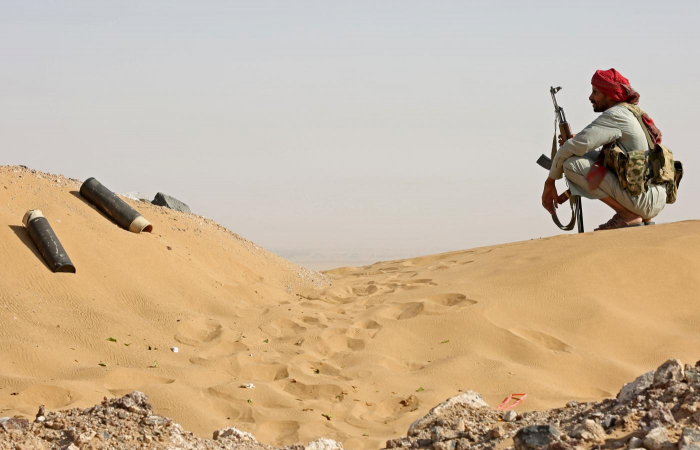
There are two early 20th-century tunes that mark foreign attempts to occupy and “pacify” Yemen. The Scottish tune “The barren rocks of Aden” marks the mobilisation of Highland soldiers, enlisted to be deployed to the Yemeni port of Aden, that in 1837 became the last colony to be incorporated into the British Empire. The tune talks of the harshness of the terrain, but is celebratory, It was even played as a farewell tune to Sir William Luce at the parade in Sharjah celebrating his end as “British Viceroy” in the Middle East in 1966. The second tune is an Anatolian lament. As Ilker Sezer reminded us this weekend, in his weekly feature on “Turkiye Today”, it “mourns the tragic fate of Ottoman soldiers dispatched to the harsh, remote deserts of Yemen during the fall of the empire, young men who marched away from their villages and never returned home. Most of their names, and numbers, were never recorded. Yet, their fate left a mark on the Turkish psyche.” Subsequent invaders have discovered that Yemen is a grave that cannot be overcome by the strength of modern technology, and that whilst Yemeni society is splintered and divided, building a reliable alliance with Yemeni factions is difficult. These are the harsh lessons facing Saudi Arabia, as the Kingdom faces its biggest challenge in its modern history. The leadership of the Kingdom now has to respond decisively. At stake is their very credibility. This is likely to be a long and messy conflict. Saudi military objectives need to be focused: to box in the Houthis rather than destroy them. This is likely to include: (a) regaining territory lost on the Red Sea coast; (b) control over Bab el Mandeb Strait; (c) some kind of cordon sanitaire on the Saudi-Yemeni border; and if things go well (d) the capture of Sanaa. All this would not eliminate the Houthi problem, but it will contain it. In the end the Saudis will have to continue managing Yemen with a mixture of carrot and stick. For the moment, the stick is likely, but the carrot cannot be forgotten either. (click the image to read the Monday Commentary in full)