

Houthis hit ship in Red Sea killing six

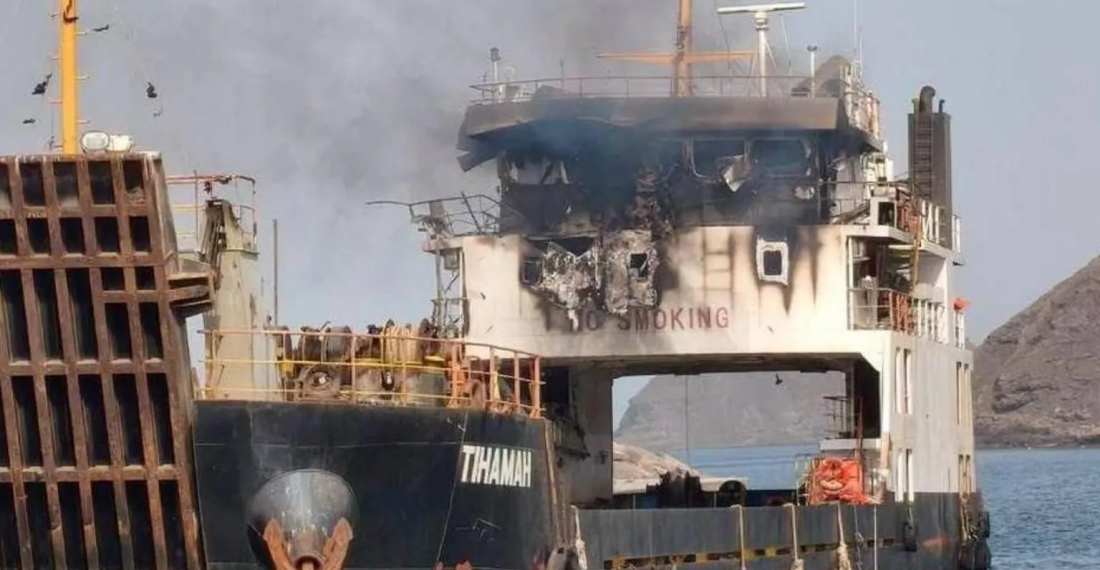
Six people have been killed and 10 injured in strikes by Yemen's Houthis on a cargo ship in the Red Sea, the internationally recognised government of Yemen has said.

The transport ministry said the vessel was hit with three ballistic missiles, south of the port of Mocha, causing a fire on board and resulting in the deaths of four crew - three Pakistanis and one Indonesian.

Yemen's coastguard later said a second deadly missile strike targeted rescuers who tried to evacuate the ship.

The Houthis said they hit a ship carrying Saudi military equipment. It appears to be the first deadly attack by the group on a vessel since the US and Israel began striking Iran on 28 February.

The Houthis launched their attacks on shipping last month - announcing a naval blockade of Saudi ports.

The conflict in the region has been ongoing for more than five months, punctuated by a faltering ceasefire which was meant to lead to a deal to end the war.

It has whipped up regional tensions, with the Houthis also attacking Saudi tankers in the Red Sea and oil facilities, in parallel with Iran's closure of the Strait of Hormuz - the vital waterway where a fifth of the world's oil and liquefied natural gas used to transit.

The latest attack comes after a years-long truce in Yemen's civil war between the Houthis and the internationally recognised government collapsed last month.

The Houthis control much of north-western Yemen, and frequently clash with the government. The government operates out of Aden in the south, due to the capital Sanaa being held by the Houthis.

Social media images examined by BBC Verify appear to show a damaged cargo ship in the Bab al-Mandab Strait, which sits at the inlet of the Red Sea, off the coast of Yemen.

In its statement, the Yemeni government said the ship had been carrying food, and that the attack on a commercial vessel marked an escalation in approach from the Houthis.

In an earlier statement, maritime risk management company Vanguard said the Yemeni Navy deployed to assist the vessel and came under fire. This resulted in three others being injured.

Close-up pictures show the vessel is named Tihamah which, according to ship-tracking platform MarineTraffic, is in the Red Sea off Warner Point.

Vanguard has identified the ship as sailing under the flag of Tanzania, while shipping website MarineTraffic says it is owned by an Egyptian operator.

In its statement, Yemen's ministry of transport referred to Tihama as a "Yemeni commercial ship", while earlier reports in Iranian media referred to it as "Saudi-affiliated".

source: commonspace.eu with BBC (London) and agencies
Related articles

Editor's choice
News
Pashinyan says that he wants peace treaty with Azerbaijan by 2031

Pashinyan says that he wants peace treaty with Azerbaijan by 2031

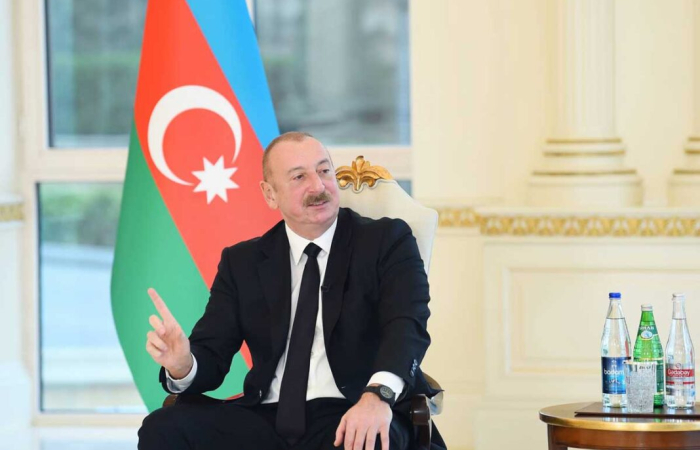
Armenia should sign and ratify a peace treaty with Azerbaijan before 2031, Armenian Prime Minister Nikol Pashinyan said. He described the objective as the top priority for his administration. Earlier, the Armenian prime minister also spoke about a possible land-swap with Azerbaijan Armenia and Azerbaijan should agree to establish a clear, conventional border without enclaves or exclaves, Prime Minister Nikol Pashinyan said. Armenia controls three Azeri enclaves inside its borders while Baku controls one Armenian enclave – those could be subject to a land swap, Pashinyan announced.
Editor's choice
News
Medical Students stand for a Landmine Free South Caucasus

Medical Students stand for a Landmine Free South Caucasus

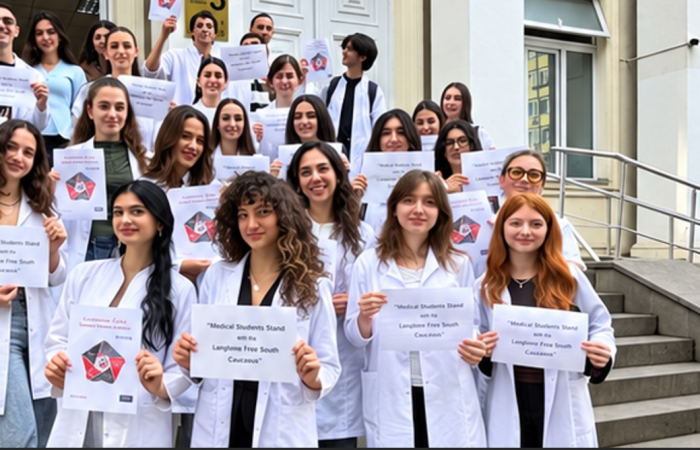
Medical Students in Tbilisi have participated in the campaign LANDMINE FREE SOUTH CAUCASUS 2026. The regional’ Landmine Free South Caucasus’ (LFSC) campaign was initiated by LINKS Europe Foundation in 2018 to address the critical issue of landmine and unexploded ordnance contamination in Armenia, Azerbaijan and Georgia. With significant landmine contamination in the region posing an ongoing threat to life and eliciting high economic costs, LFSC advocated for a regional, holistic approach to complete clearance.  Future Doctors Join the Conversation on Friday, 16 October in Tbilisi. "As part of the Landmine Free South Caucasus 2026 campaign, an informative and interactive meeting was held in Tbilisi with medical students. The session was conducted by George Simonishvili, South Caucasus Co-ordinator for LINKS Europe.  The meeting focused on the humanitarian consequences of landmines and other explosive remnants of war in Armenia, Azerbaijan, and Georgia, with particular attention to the Red Bridge minefield near the borders of the three countries, and emphasised that these dangers remain a current humanitarian challenge. It also underlined that future medical professionals will encounter the long-term effects of explosion injuries and can play a role in awareness and prevention.  Students actively engaged throughout the discussion, showing strong interest in the humanitarian impact and the need for cooperation. Under the slogan "Future Doctors for a Landmine Free South Caucasus," the event encouraged students to support public awareness, solidarity with survivors, and a safer South Caucasus free from landmine threats.  The event was organised by LINKS Europe as part of LFSC26.  "Medical Students Stand for a Landmine Free South Caucasus," "Future Doctors, Safer Futures: Together Against Landmines." "Future Doctors for a Landmine Free South Caucasus".

Popular

Editor's choice
Interview
Thursday Interview: Murad Muradov

Thursday Interview: Murad Muradov

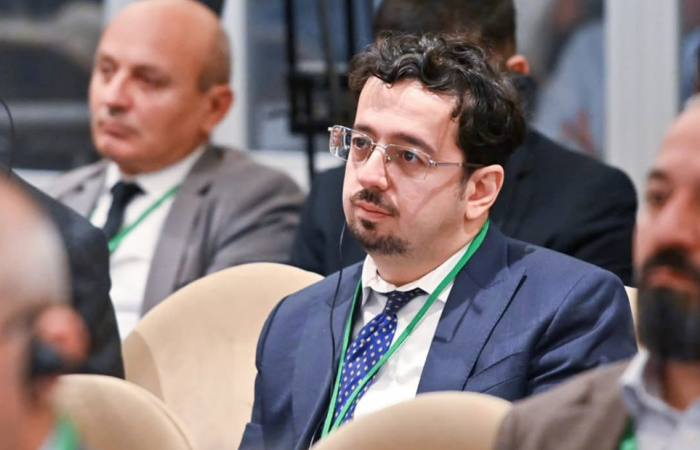
Today, commonspace.eu starts a new regular weekly series. THURSDAY INTERVIEW, conducted by Lauri Nikulainen, will host  persons who are thinkers, opinion shapers, and implementors in their countries and spheres. We start the series with an interview with Murad Muradov, a leading person in Azerbaijan's think tank community. He is also the first co-chair of the Action Committee for a new Armenian-Azerbaijani Dialogue. Last September he made history by being the first Azerbaijani civil society activist to visit Armenia after the 44 day war, and the start of the peace process. Speaking about this visit Murad Muradov said: "My experience was largely positive. My negative expectations luckily didn’t play out. The discussions were respectful, the panel format bringing together experts from Armenia, Azerbaijan, and Turkey was particularly valuable during the NATO Rose-Roth Seminar in Yerevan, and media coverage, while varied in tone, remained largely constructive. Some media outlets though attempted to represent me as more of a government mouthpiece than an independent expert, which was totally misleading.  Overall, I see these initiatives as important steps in rebuilding trust and normalising professional engagement. The fact that soon a larger Azerbaijani civil society visits to Armenia followed, reinforces the sense that this process is moving in the right direction." (click the image to read the interview in full)