Theme

Domestic Politics

Stories related to the internal politics of states and various domestic issues. 

Editor's choice
Monday Commentary
Monday Commentary: 2025 was a momentous year for the South Caucasus

Monday Commentary: 2025 was a momentous year for the South Caucasus

The year 2025 has ended up being a momentous year for the South Caucasus, writes Dennis Sammut in his Monday Commentary. Armenia-Azerbaijan relations have been redefined, with consequences for the whole region and beyond. That huge development overshadowed key moments in the domestic trajectory of the two countries, which however have deep consequences for the two countries, and even beyond. It has also been a tumultuous year for Georgia too. The country has been gripped in a political crisis throughout 2025, with no obvious end in sight. Whatever the domestic arguments, on the international stage Georgia is today a shadow of what it used to be until recently. It not only has lost the chance of joining the European Union any time soon, but it has also lost its position as the leading South Caucasus country. Today, in the new reality of the region, it lags as a tired third. Important as 2025 was, it ended with a lot of unfinished business. So 2026 will also be crucial for the three countries. Since regaining its statehood in 1991 after the dissolution of the Soviet Union, Armenia-Azerbaijan relations have been defined by war. The two fought open wars, wars of attrition, and propaganda wars, incessantly. Tens of thousands of people lost their lives, and hundreds of thousands were displaced. Many had lost hope that the two could try the alternative – i.e. peaceful co-existence. Yet in 2025 they were proven wrong.
Editor's choice
News
Germany accuses Russia of cyberattacks and disinformation campaign

Germany accuses Russia of cyberattacks and disinformation campaign

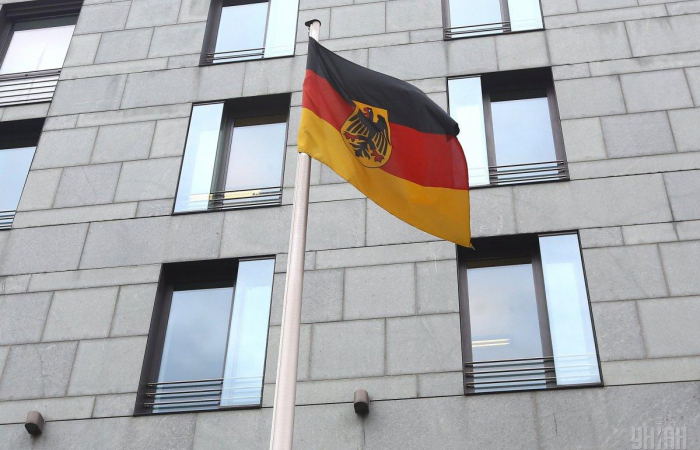
The German government holds Russia responsible for a cyberattack on German air traffic control, and for targeted disinformation campaigns before the last federal election. According to the German Foreign Office in Berlin, the incidents could be clearly attributed to the Russian military intelligence service, the GRU. In response, the Russian ambassador to Berlin was summoned to the Foreign Ministry. "We have been observing a massive increase in threatening hybrid activities by Russia for some time now," a spokesperson for the Foreign Ministry stated. These range from disinformation campaigns and espionage to cyberattacks and sabotage attempts. The aim is to divide society, sow distrust, and undermine confidence in democratic institutions. The spokesperson added that with these actions, Russia is "very concretely threatening our security, not only through its war of aggression against Ukraine, but also here in Germany."  The Foreign Ministry spokesperson explained that the cyberattack on air traffic control in August 2024 was clearly attributed to the hacker collective "APT28," known as "Fancy Bear," and to the responsibility of the Russian military intelligence service, the GRU. Furthermore, it could now be "conclusively stated" that Russia had attempted "to influence and destabilize both the last Federal election and the ongoing internal affairs of the Federal Republic of Germany." There was "absolutely irrefutable evidence" for this". The so-called "Storm 1516" campaign, which has been running since 2024, is allegedly backed by "reliable information" that the Moscow-based think tank "Center for Geopolitical Expertise" is behind it. The Center is also said to be supported by Russian military intelligence. Its primary aim is to influence democratic elections in the West. (Click the image to read more).

Filter archive

Publication date
Editor's choice
News
French Prime Minister Francois Bayrou ousted after just nine months in office

French Prime Minister Francois Bayrou ousted after just nine months in office

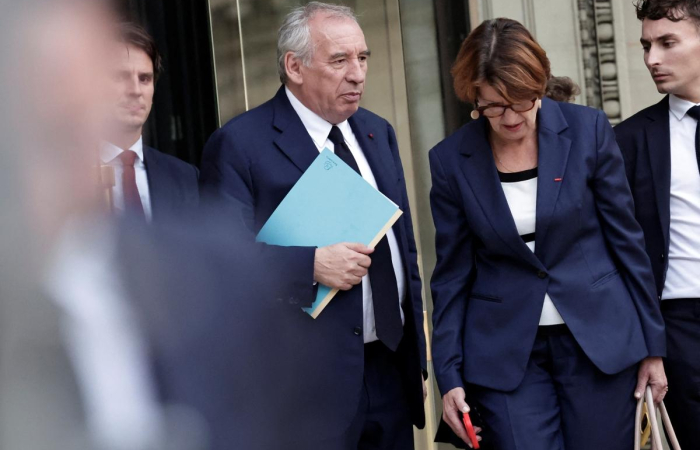
Legislators toppled France’s government in a confidence vote on Monday 8 September, a new crisis for Europe’s second-largest economy that obliges President Emmanuel Macron to search for a fourth prime minister in 12 months. Prime Minister Francois Bayrou was ousted overwhelmingly in a 364-194 vote against him. Bayrou paid the price for what appeared to be a staggering political miscalculation, gambling that lawmakers would back his view that France must slash public spending to rein in its debts. Instead, they seized on the vote that Bayrou called to gang up against the 74-year-old centrist who was appointed by Macron last December.
Editor's choice
Analysis
Despite disillusionment, Pashinyan favourite to win crucial 2026 vote in Armenia

Despite disillusionment, Pashinyan favourite to win crucial 2026 vote in Armenia

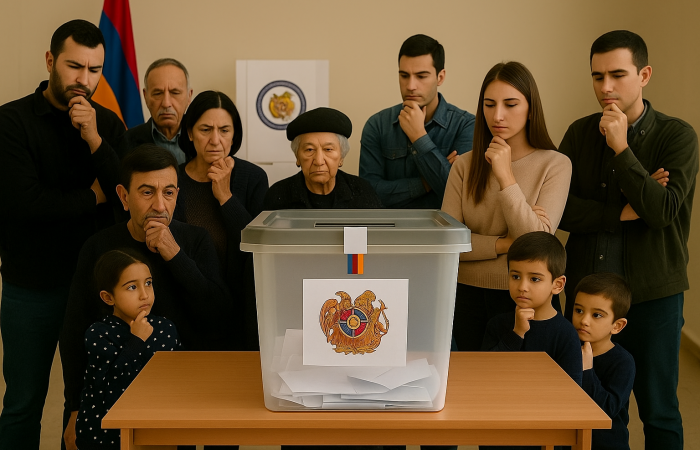
Next year’s parliamentary elections in Armenia will not focus on the economy or other domestic issues, but rather on the country’s place in the surrounding region and relations with its neighbours. Prime Minister Nikol Pashinyan, down but not out following military defeat and political upheaval, has staked his future on reaching what would prove to be a historic peace agreement with Azerbaijan. But with public trust at an all-time low, disillusionment among the electorate could make this the most unpredictable vote since independence was declared in 1991. Armenia will hold parliamentary elections on 7 June 2026, its first regularly scheduled national vote since April 2017. In this analysis for commonspace.eu, Onnik James Krikorian argues that "ten months before the vote, the outcome still remains difficult to predict. Though it still seems most likely that the incumbent will win, a great deal will also be determined during the official campaign period itself, and new developments on the ground. If peace with Azerbaijan is finally within reach, and there are signs that this is the case, it will be difficult for voters to reject stability instead of insecurity and the further risk of war. Ultimately, the 2026 election will determine not just who governs Armenia, but whether the country can finally emerge from decades of conflict and semi-regional isolation, or if it is destined to remain trapped by it." He adds, "that might prove enough to sway even reluctant support for Pashinian at the ballot box. The opposition has still yet to offer any viable alternative – or even one at all."
Editor's choice
News
At least 800 people have died in a powerful earthquake in Afghanistan, with entire villages being destroyed

At least 800 people have died in a powerful earthquake in Afghanistan, with entire villages being destroyed

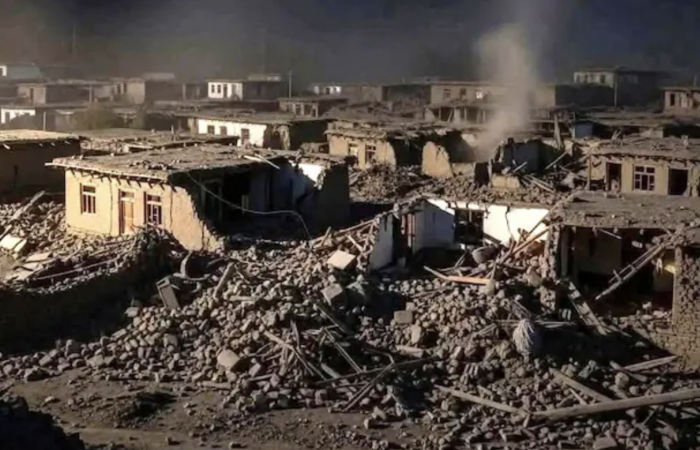
According to the Taliban government, an earthquake measuring 6.0 on the Richter scale in eastern Afghanistan killed around 800 people on Sunday night. More than 2.700 people are also reported to have been injured. The death toll has risen rapidly in recent hours. This is partly due to the inaccessibility of the mountainous region.
Editor's choice
News
Tension between Poland and Ukraine over proposed ban on Ukrainian nationalist flag

Tension between Poland and Ukraine over proposed ban on Ukrainian nationalist flag

Relations between Warsaw and Kyiv are heading towards a rift following to a proposal by the Polish president to amend legislation banning symbols in Poland used by Ukrainian nationalists during WWII prohibiting the display of Nazi and communist flags and signs. President Karol Nawrocki said his proposed amendment to the law would lead to the banning of “Banderite symbols” such as the red-and-black flag used by the Ukrainian Insurgent Army (UPA) and the Stepan Bandera wing of the Organization of Ukrainian Nationalists (OUN). 
Editor's choice
News
Russian deputy governor of border region arrested in corruption case

Russian deputy governor of border region arrested in corruption case

Russia has once again prosecuted a former regional administrator bordering Ukraine. This time, the case concerns Vladimir Bazarov, the former deputy governor of Kursk. He has been arrested. He is suspected of corruption in connection with the embezzlement of around 10 million euros during the construction of defensive structures. This information was reported by the state press agency TASS.
Editor's choice
News
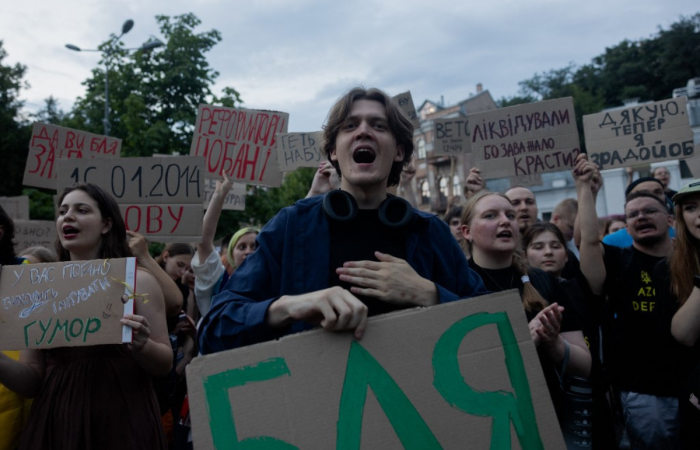
Ukraine protests continue as Zelenskyy offers new anti-corruption bill after European pressure

Ukraine protests continue as Zelenskyy offers new anti-corruption bill after European pressure

Ukrainians are taking to the streets to protest a new law they worry will undermine the work of two key anti-corruption agencies and erode the independence of bodies meant to provide a check on power. Protests are growing and spreading around the country even as President Volodymyr Zelenskyy offered a vague new bill to alleviate demonstrators’ concerns. After a day of pressure from Ukrainian citizens, the European Commission and many European governments, Zelenskyy said he “heard the public opinion” and promised to fix the situation with a new bill that he pledged would preserve the independence of corruption agencies.
Editor's choice
Opinion
U.S. Interest in Armenia-Azerbaijan Transit Sparks Confusion

U.S. Interest in Armenia-Azerbaijan Transit Sparks Confusion

For the first time in 31 years of the Armenia-Azerbaijan conflict, the situation feels more unpredictable than ever. In the past, there was a grim certainty that another war would erupt just as it did in September 2020 while peace, on the other hand, always seemed distant. In recent weeks, comments from U.S. President Donald Trump that it was almost a done deal simply solicited disagreement among analysts and political commentators.  As if that wasn’t confusion enough, and although both Baku and Yerevan have said that the 10 July meeting between the leaders in Abu Dhabi was constructive, another issue has emerged unexpectedly to distract and deflect attention.