Theme

Diplomacy

Editor's choice
News
Germany accuses Russia of cyberattacks and disinformation campaign

Germany accuses Russia of cyberattacks and disinformation campaign

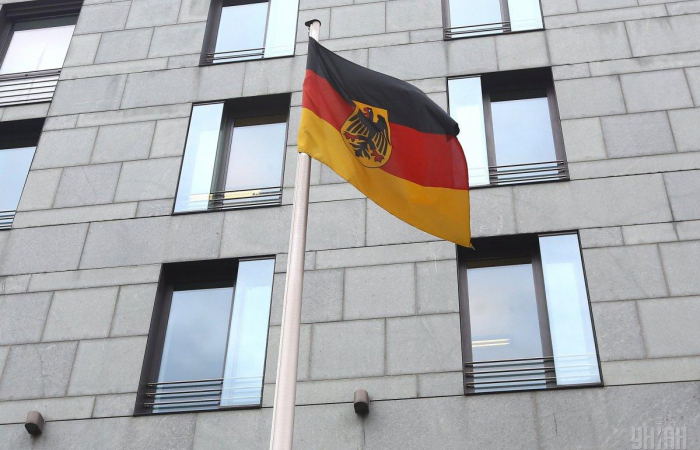
The German government holds Russia responsible for a cyberattack on German air traffic control, and for targeted disinformation campaigns before the last federal election. According to the German Foreign Office in Berlin, the incidents could be clearly attributed to the Russian military intelligence service, the GRU. In response, the Russian ambassador to Berlin was summoned to the Foreign Ministry. "We have been observing a massive increase in threatening hybrid activities by Russia for some time now," a spokesperson for the Foreign Ministry stated. These range from disinformation campaigns and espionage to cyberattacks and sabotage attempts. The aim is to divide society, sow distrust, and undermine confidence in democratic institutions. The spokesperson added that with these actions, Russia is "very concretely threatening our security, not only through its war of aggression against Ukraine, but also here in Germany."  The Foreign Ministry spokesperson explained that the cyberattack on air traffic control in August 2024 was clearly attributed to the hacker collective "APT28," known as "Fancy Bear," and to the responsibility of the Russian military intelligence service, the GRU. Furthermore, it could now be "conclusively stated" that Russia had attempted "to influence and destabilize both the last Federal election and the ongoing internal affairs of the Federal Republic of Germany." There was "absolutely irrefutable evidence" for this". The so-called "Storm 1516" campaign, which has been running since 2024, is allegedly backed by "reliable information" that the Moscow-based think tank "Center for Geopolitical Expertise" is behind it. The Center is also said to be supported by Russian military intelligence. Its primary aim is to influence democratic elections in the West. (Click the image to read more).
Editor's choice
Opinion
Opinion: A sustainable peace requires consistent long-term European involvement

Opinion: A sustainable peace requires consistent long-term European involvement

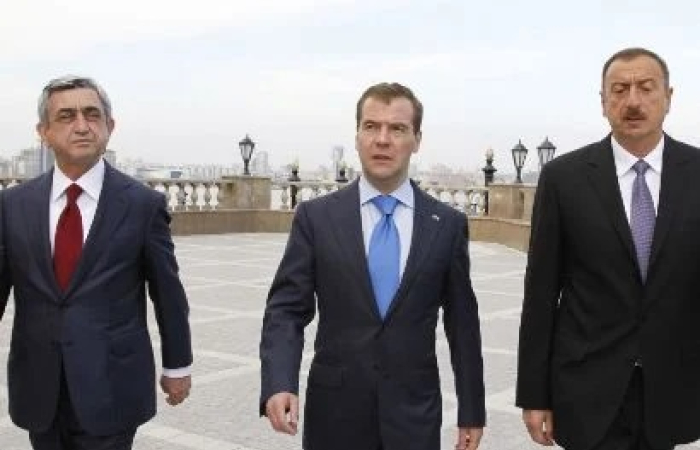
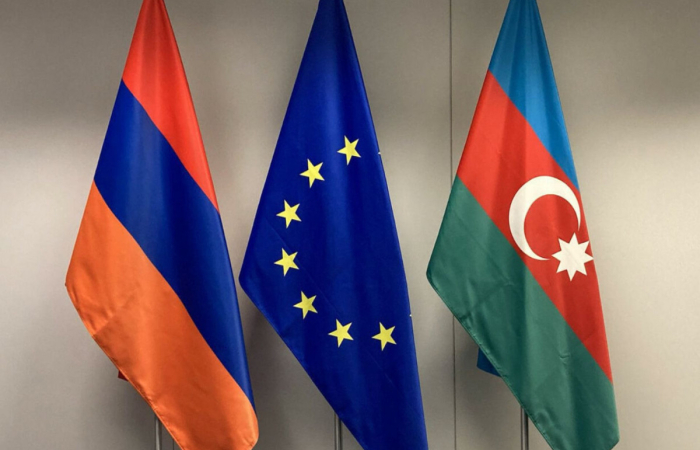
There is no denying that the EU, especially key member states acting in support, helped bring Baku and Yerevan closer to the Washington Declaration of August 8, 2025. But a declaration is not a treaty. Turning principles into a peace deal and eventually to a sustainable peace requires consistent long-term European involvement, writes Yalchin Mammadov in this-op-ed for commonspace.eu Before facilitating trust between Armenia and Azerbaijan, the EU is first expected to address its own credibility gap with Baku. A more balanced approach—such as including Azerbaijan, alongside Armenia, in the European Peace Facility—could be a useful first step. Diplomats can negotiate peace; societies must build peace. In this context, the EU can do what it does the best: long-term societal engagement. By expanding youth and academic exchange programmes, investing in cross-border civil society initiatives, and fostering people-to-people cooperation, Brussels can help shape a new generation equipped to sustain peace beyond political cycles. Such tools are slow and unglamorous, but if ignored, even the strongest treaty risks collapse. And obviously, these aspects require two-way engagement and genuine willingness by both governments to facilitate contact. If Brussels wants to remain influential, it needs to replace outdated one-size-fits-all policies with ambitious, interest-driven and differentiated approaches. Without a clear regional strategy, which appears to be the current situation, the South Caucasus will continue to sit at the margins of Europe’s security architecture—leaving space for other powers to take the lead. (You can read the op-ed in full by clicking the image.)

Filter archive

Publication date
Editor's choice
Opinion
Opinion: Does Russia lose Armenia to France?

Opinion: Does Russia lose Armenia to France?

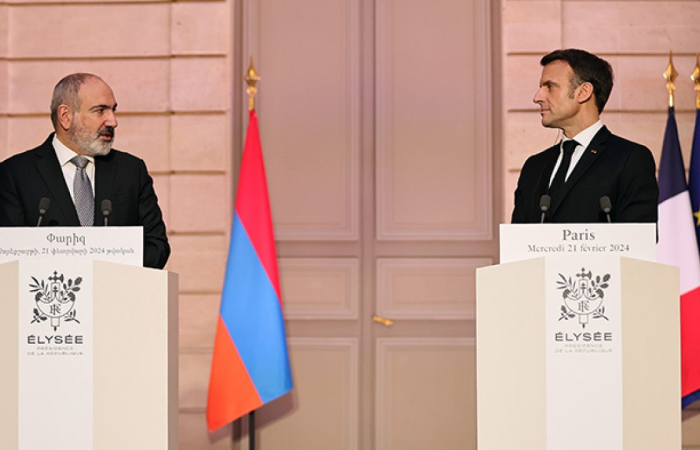
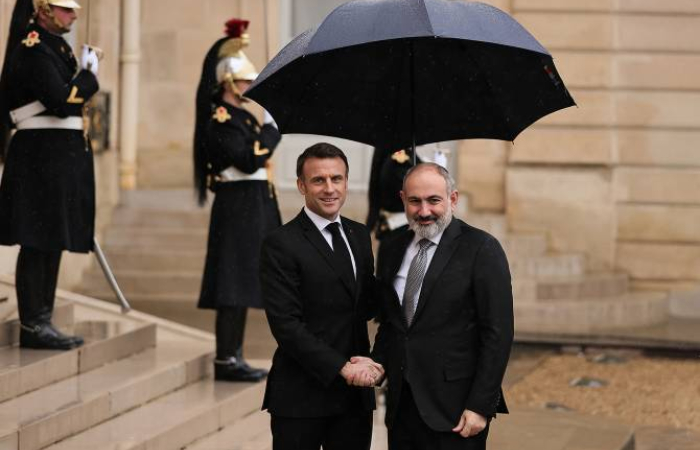
In an interview with France24 during his February 2024 visit to Paris, Nikol Pashinyan highlighted Azerbaijan's perception of Armenia as "Western Azerbaijan" and expressed concerns about Azerbaijan's preparations for a new war, writes Dr. Anzhela Mnatsakanyan in this op-ed for commonspace.eu. "This interview marked a significant departure as Pashinyan openly scrutinized Russia's policies towards Armenia and hinted at the possibility of a new war. The timing of this interview, a few days before Azerbaijan presented a re-edited version of the so-called "Peace treaty," suggested that the "peace" offered by Azerbaijan is more about the capitulation of Armenia. This interview was a kind of “call for help” from Pashinyan to Western countries on the eve of a possible new war."
Editor's choice
Opinion
Opinion: German diplomacy on the move in the South Caucasus

Opinion: German diplomacy on the move in the South Caucasus

"The EU cannot afford to overlook the strategic importance of the South Caucasus", writes Simona Scotti in this op-ed for commonspace.eu. "If on the one hand over the past two years significant steps have been undertaken, including the deployment of the EUMA in Armenia and the Brussels track of negotiations led by Charles Michel, on the other hand some more concrete actions, with a well-defined and consistent strategy, would be appreciated. The lack of a clear and coherent vision has destabilized Armenia and Azerbaijan, which have often questioned to which extent they can really trust a Western involvement in the region."
Editor's choice
News
Swedish flag flies at NATO headquarters

Swedish flag flies at NATO headquarters

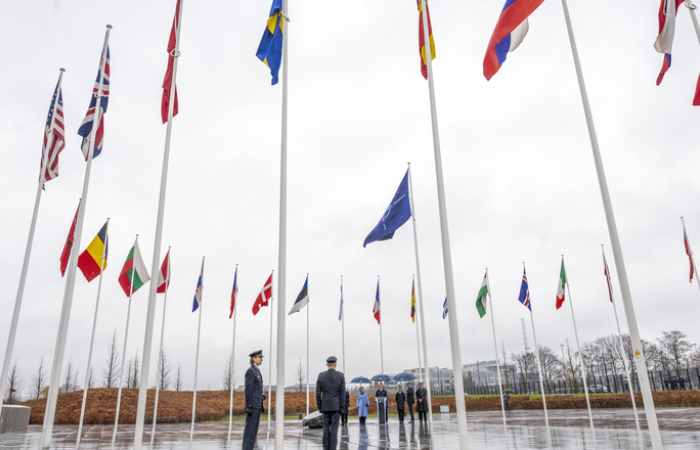
The Swedish flag was raised at NATO Headquarters for the first time on Monday (11 March) in a ceremony to mark the country’s membership of the Alliance. Sweden became NATO’s 32nd Ally on 7 March upon depositing its instrument of accession to the North Atlantic Treaty with the United States government in Washington D.C. NATO's Secretary General, Jens Stoltenberg, welcomed Prime Minister Ulf Kristersson to NATO Headquarters for a flag-raising ceremony to mark Sweden’s accession. Speaking ahead of the ceremony, the Secretary General thanked Prime Minister Kristersson for his strong personal leadership and commitment to leading Sweden into NATO. He said: “Sweden has taken its rightful place at NATO’s table under the shield of Article 5 protection – the ultimate guarantee of our freedom and security. All for one and one for all.” Sweden’s flag was hoisted to join the flags of the other 31 Allies, as the Swedish national anthem and the NATO hymn were played. Flag-raising ceremonies took place simultaneously at Allied Command Operations (SHAPE) in Mons (Belgium) and Allied Command Transformation in Norfolk, Virginia (United States). Standing alongside Prime Minister Kristersson, the Secretary General said: “Sweden’s accession shows again that NATO’s door remains open. No one can close it. Every nation has the right to choose its own path, and we all choose the path of freedom and democracy.” Noting that NATO will mark its 75th anniversary this year, Mr Stoltenberg underlined that the transatlantic bond between Europe and North America has ensured our freedom and security. Sweden will help to build an even stronger NATO at a critical time for Euro-Atlantic security, he said, adding that “joining NATO is good for Sweden, good for stability in the North, and good for the security of our whole Alliance.”
Editor's choice
Opinion
Opinion: Clarity, Consistent Rhetoric, and Multitrack Diplomacy Still Lacking in Armenia-Azerbaijan Normalisation Talks

Opinion: Clarity, Consistent Rhetoric, and Multitrack Diplomacy Still Lacking in Armenia-Azerbaijan Normalisation Talks

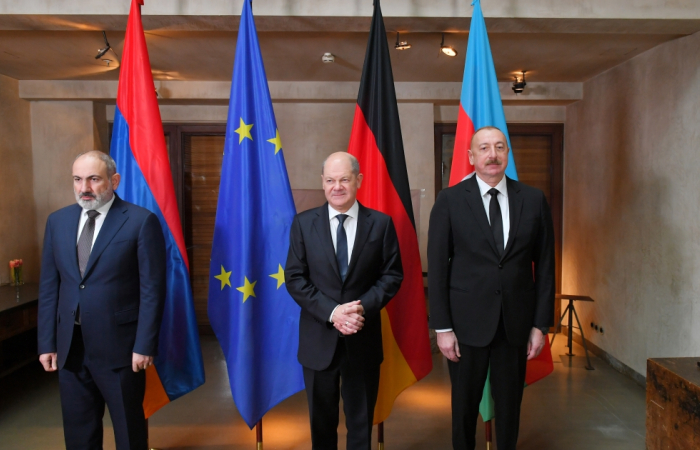
It was touch and go for a while. Even a day before this year’s prestigious Munich Security Conference it was unclear whether both Armenian Prime Minister Nikol Pashinyan and Azerbaijani President Ilham Aliyev would attend. In the past, Armenian leaders have more often shunned the event and even despite December’s much-lauded bilateral COP-29 joint statement made bilaterally by Baku and Yerevan, the war of words between the sides unfortunately continues.
Editor's choice
News
Armenian and Azerbaijani foreign ministers meet in Berlin as German diplomacy emerges out of the shadows to save the day for Europe

Armenian and Azerbaijani foreign ministers meet in Berlin as German diplomacy emerges out of the shadows to save the day for Europe

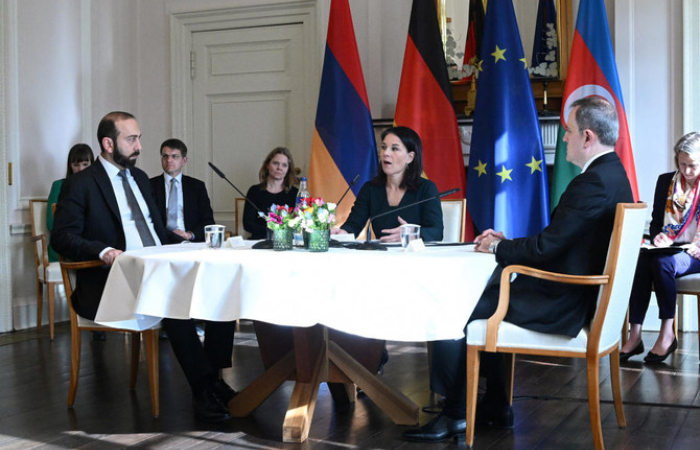
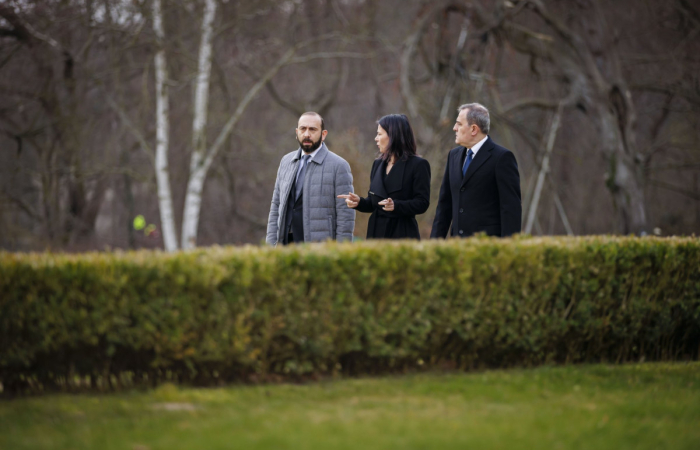
German diplomacy has been in the South Caucasus from the day after the three countries declared their independence in 1991. Germany was the first country to set up embassies in the region, but generally German diplomacy has been low-key – preferring to let others, namely France, and later the EU, to do the heavy lifting when it came to issues like supporting the Armenia-Azerbaijan peace process. This has changed recently. After the untimely intervention of French president Emanuel Macron in the process that was led by EU Council president Charles Michel in 2022, and given Azerbaijan’s refusal to negotiate in this framework because of what it claims is French bias towards Armenia, German Chancellor Olaf Scholz was in 2022 reluctantly persuaded to engage with the process directly, and join the Macron-Michel tandem. Nothing at first seemed to have come out of that, and German diplomacy got overshadowed by some missteps in Paris and Brussels, not to mention some awkward phrases of its own foreign minister when she visited the region last year. But it seems that behind the scenes, German diplomacy persisted. Earlier in February Armenian Prime Minister Nikol Pashinyan and Azerbaijani President Ilham Aliyev, travelled to Munich to attend the annual security conference, and on the margins had a long-awaited meeting, bilaterally and later with Chancellor Scholz. At the meeting concrete decisions were taken on follow-up, and thanks to the usual German efficiency the foreign ministers of the two countries were in Berlin on Wednesday (28 February) for detailed talks about the peace treaty. Most of the discussions were in the bilateral format, but there was also a meeting of the Ministers with their German counterpart. The talks continue today. It is the latest episode in a long saga, but not an insignificant one. Germany is a political and economic heavyweight, and its direct involvement may just be what is needed to get the ongoing negotiations between Armenia and Azerbaijan across the line. At a time when other elements of European diplomacy appear not to be so effective the German intervention is also seen as saving the day for Europe, that needs to remain present and visible in the region.
Editor's choice
News
Anger across the Muslim world and the Global South as US vetoes Gaza cease fire resolution for the 4th time

Anger across the Muslim world and the Global South as US vetoes Gaza cease fire resolution for the 4th time

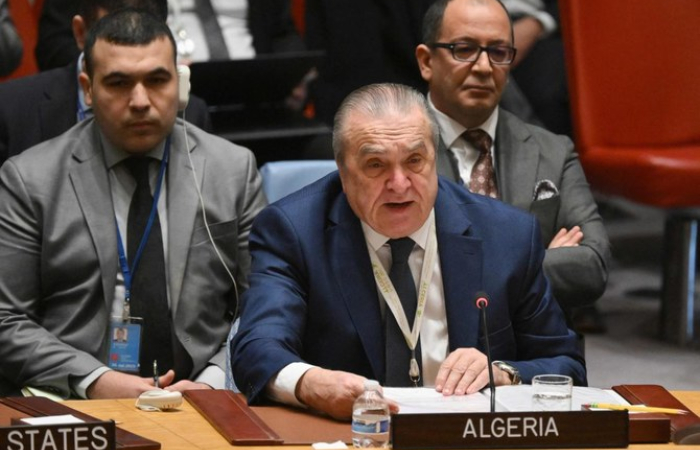
Commentators and opinion shapers across the Muslim world and the global south on Wednesday (21 February) were unanimous in their condemnation of the American veto of an Algerian resolution in the UN Security Council which called for an immediate cease fire in Gaza. Many commentators in Western countries were similarly appalled after for the fourth time since the start of the war in Gaza, the US on Tuesday vetoed a draft UN Security Council resolution demanding an immediate ceasefire in the embattled territory. It said such a resolution would interfere with ongoing, “sensitive” negotiations, led by Washington, that are attempting to broker an end to the hostilities. Thirteen of the 15 council members voted in favor of the resolution, which was drafted by Algeria. The UK abstained. In addition to the call for an immediate ceasefire, the Arab-backed draft resolution did also demand the immediate release of all hostages. It also rejected the forced displacement of Palestinian civilians, called for the unrestricted flow of humanitarian aid to the people of Gaza, and reiterated council demands that both Israel and Hamas “scrupulously comply” with the rules of international law, especially in relation to the protection of civilians. It also condemned “all acts of terrorism,” without explicitly naming either side.