Theme

Diplomacy

Editor's choice
Monday Commentary
Monday Commentary: Europe still needs the OSCE

Monday Commentary: Europe still needs the OSCE

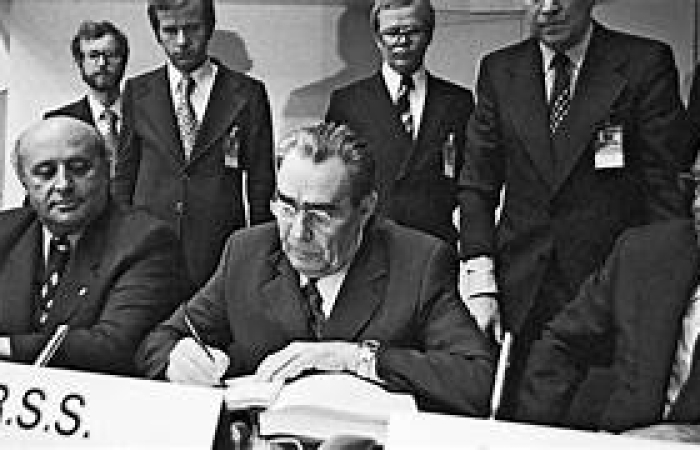
The Ministerial Council of the Organisation for Security and Co-operation in Europe (OSCE) will have its annual meeting in Vienna on 4-5 December. Foreign Ministers from the 57 member states, which also include the United States and Canada, and the Central Asian republics, and 11 partner countries, will congregate to discuss the future of European Security at a time when many believe that war in Europe over the next decade is likely. Ukraine is just a rehearsal for Russia’s ultimate ambitions. British diplomacy used to describe the OSCE as “the organization to manage Russia”. It has not done a good job of that, but this task remains paramount. The Ministerial Council will be the last major business of this year’s chairmanship, Finland, and will launch the new Chairmanship for 2026, Switzerland. The OSCE has been moribund for some time, and Russia’s invasion of Ukraine in February 2022, nearly ended it. But Europe still needs the OSCE, and there is hope that it will take a new lease of life in 2026. Switzerland has held the Chairmanship of the OSCE twice before, successfully. It has the experience, a wide network of embassies, and an able team in Bern, to successfully start what is likely to be a long and laborious journey. The new Chairman-in-office is Swiss Federal Foreign Minister Councillor, Ignazio Cassis. Cassis is also the current Vice President of the Swiss Confederation, and is fluent in Italian, English, German and French. Quite unusual also is the fact that currently the General Secretary of the OSCE is a Turk. Feridun Sinirlioğlu is an experienced Turkish diplomat, who has held the position for a year. Between them, Cassis and Sinirlioğlu will have to craft out the new OSCE, but in the end, it will largely depend on the will of the member states, including Russia. A new, reborn, OSCE, must understand that its core task remains European peace and security. It should resist the temptation of “looking busy” with a lot of secondary things. After peace and security return to Europe, it can consider other tasks. But we are far away from that yet. (Click the image to read the full commentary)
Editor's choice
News
Pope's visit to Türkiye and Lebanon has a strong ecumenical character, and places interreligious dialogue at its centre

Pope's visit to Türkiye and Lebanon has a strong ecumenical character, and places interreligious dialogue at its centre

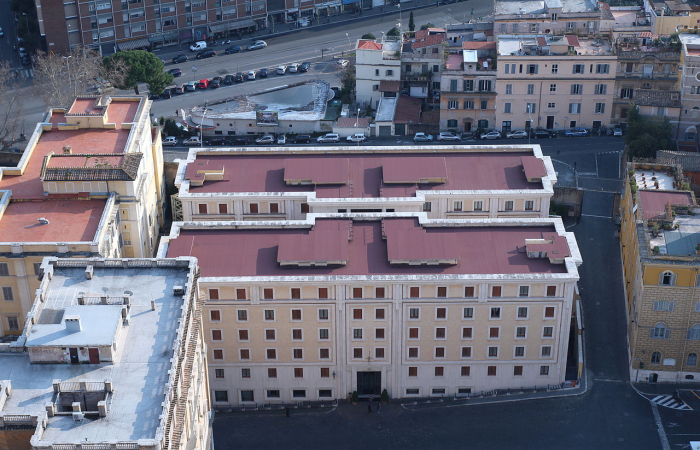
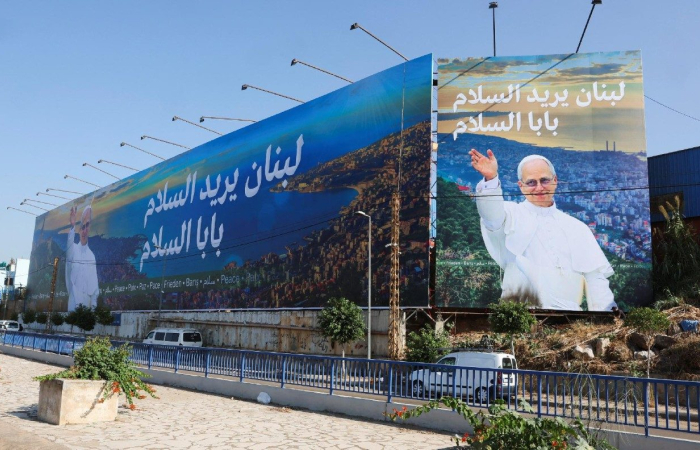
Pope Leo XIV has begun the first overseas trip of his pontificate, a six-day visit to Türkiye and Lebanon, which started yesterday (27 November) and ends on Tuesday (2 December). According to Vatican Radio, the visit "carries a strong ecumenical character and places interreligious dialogue at its centre. It will also be a moment of closeness to Christian communities and local populations across the region".   During nearly a week in the region, Pope Leo XIV will meet civil and religious authorities, visit mosques and ancient churches, pray at Beirut’s port in memory of the victims of the 2020 explosion, and hold private meetings with Presidents Recep Tayyip Erdoğan and Joseph Aoun.   A highlight of the visit will be a visit to Nicaea, where the Pope will mark the anniversary of the Council of Nicaea. Christians of many traditions recognise the Council of Nicaea as a foundation of shared faith. One of the most anticipated moments will be the Pope’s encounter with Lebanese youth in Bkerké, at the Maronite Patriarchate, a meeting expected to carry strong messages of hope in the Jubilee Year. A central event will be the ecumenical celebration in İznik, where the Pope and Ecumenical Patriarch Bartholomew will walk together toward the ruins of the Basilica of St Neophytos. The prayer, held before icons of Christ and the Council, will conclude with the lighting of a candle—a symbolic gesture of unity. The journey will also highlight interreligious engagement.   Memorable moments are expected throughout the trip: a wreath at Atatürk’s mausoleum, prayer inside the Blue Mosque, Mass at Istanbul’s Volkswagen Arena, the planting of a cedar at the presidential palace in Beirut, and prayer at the tomb of St Charbel in Lebanon. The Vatican said that "Pope Leo XIV’s pilgrimage to Türkiye and Lebanon aims to offer a voice of peace, unity, and hope at the heart of the Middle East."

Filter archive

Publication date
Editor's choice
News
Unstable oil prices after Saudi Arabia and UAE fail to agree on supply rates

Unstable oil prices after Saudi Arabia and UAE fail to agree on supply rates

Oil prices jumped to a new high after a disagreement between Saudi Arabia and the UAE about oil production quotas. West Texas Intermediate crude advanced to $76.98 a barrel, the highest since November 2014, as the OPEC+ talks are postponed indefinitely. Meanwhile, Brent crude, the global benchmark, maintained its three-year high of about $77 a barrel. 
Editor's choice
Opinion
Opinion: Josep Borrell argues for more engagement with the South Caucasus

Opinion: Josep Borrell argues for more engagement with the South Caucasus

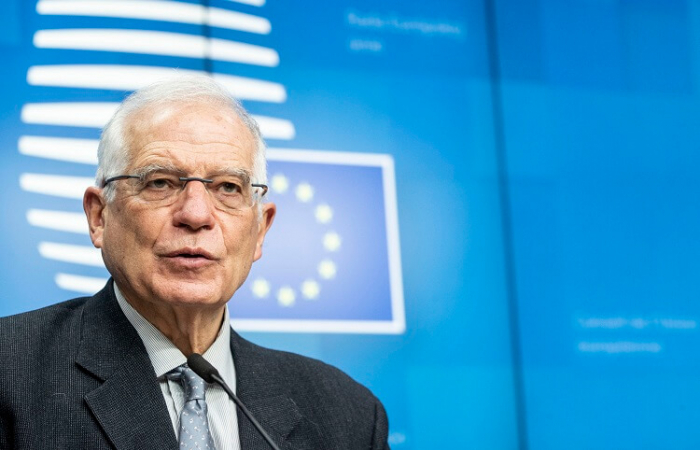
The EU High Representative for Foreign and Security Policy, Josep Borrell, has called for more EU engagement with the South Caucasus. Writing on his blog on the website of the European External Action Service, Borrell said that there is a growing expectation on the side of EU member states and partners for the EU to take a more active role in addressing the conflicts in the Eastern neighbourhood. "We are ready to help rebuild not only physical roads and bridges, but also paths to reconciliation and peaceful co-existence," the High Representative said.
Editor's choice
News
EU and Central Asian states hold annual High-Level Political and Security Dialogue

EU and Central Asian states hold annual High-Level Political and Security Dialogue

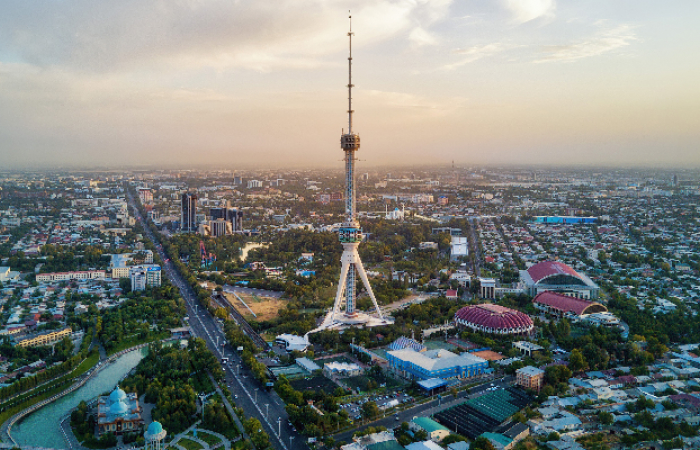
The eighth High-Level Political and Security Dialogue between the European Union and the countries of Central Asia - Kazakhstan, the Kyrgyz Republic, Tajikistan, Turkmenistan and Uzbekistan - took place on Thursday (1 July) in the capital of Uzbekistan, Tashkent, with the participation of Afghanistan as special guest. The meeting provided an opportunity to discuss regional dynamics and advance region-to-region cooperation on a broad spectrum of issues, including border management, security and the promotion of sustainable connectivity.
Editor's choice
News
Slovenia takes over the EU presidency for the next six months

Slovenia takes over the EU presidency for the next six months

Slovenia took over today (1 July) the six-month rotating presidency of the European Union. The country takes over the EU Presidency from Portugal. This is the second time Slovenia holds the EU presidency since it joined the European Union in 2004. It held the presidency the first time in 2008. The Presidency of the European Union changes every six months.
Editor's choice
News
Israel signs co-operation agreement with UAE, inaugurates embassy in Abu Dhabi

Israel signs co-operation agreement with UAE, inaugurates embassy in Abu Dhabi

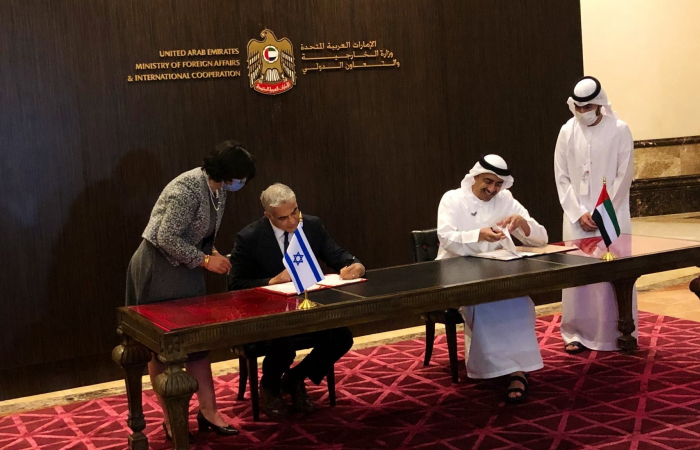
The UAE foreign minister, Abdullah bin Zayed al-Nahyan, and his Israeli counterpart, Yair Lapid, on Tuesday (29 June) signed the 12th agreement between the two countries, covering economic and trade co-operation. Lapid is on his first official visit to Abu Dhabi to discuss ways to strengthen bilateral relations in light of the agreement between the two sides, as well as the situation in the Middle East region.