Theme

Defence

Stories related to defence, strategy and cooperation. 

Editor's choice
Analysis
Mehman Aliyev on what "peace" can look like for Ukraine

Mehman Aliyev on what "peace" can look like for Ukraine

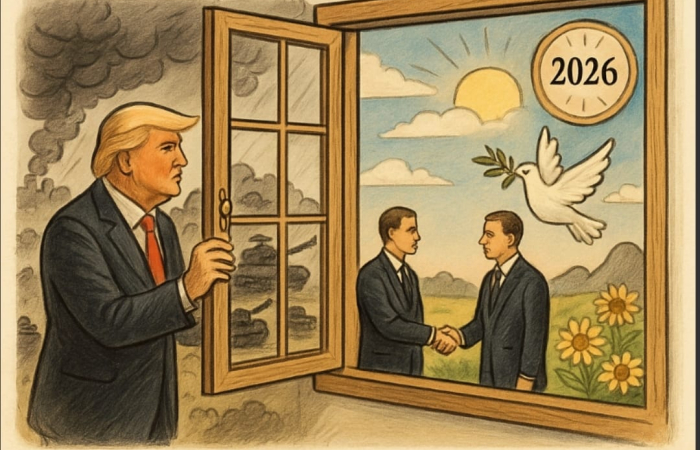
In this analysis,  veteran Azerbaijani journalist and political commentator, Mehman Aliyev, draws lessons from the 1994 Armenia-Azerbaijan ceasefire, to assess what can be possible impact of ceasefire in Ukraine. According to diplomats, a negotiating format or a partial ceasefire based on a modified version of the twenty-eight points is entirely plausible in 2026. A frozen line of contact, monitored by international mechanisms while talks drag on, is more likely than a fully implemented peace treaty by early that same year. “This document opens a window,” said political commentator Farid Gakhramanov. “Whether it means the end of the war or the beginning of a new frozen conflict will depend on the decisions of Moscow, Kyiv, Washington, and Brussels — not on the document itself.” (You can read the full analysis by clicking the image)
Editor's choice
News
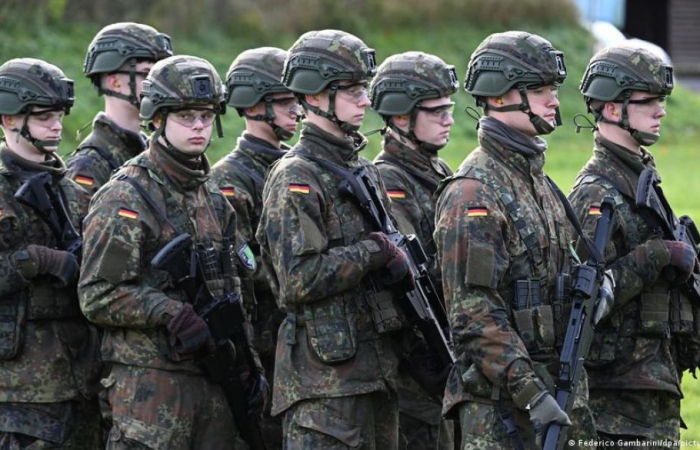
Germany will soon have the largest conventional army in Europe, but there will be no conscription

Germany will soon have the largest conventional army in Europe, but there will be no conscription

The Bundeswehr currently has around 182,000 troops. The new military service model aims to increase that number by 20,000 over the next year, rising to between 255,000 and 260,000 over the next 10 years, supplemented by approximately 200,000 reservists. From next year, all 18-year-old men and women will be sent a questionnaire to assess their interest and willingness to join the armed forces. It will be mandatory for men and voluntary for women. From July 2027 all men aged 18 will also have to take a medical exam to assess their fitness for duty. If the government's targets are not met, a form of compulsory enlistment could be considered by parliament. If war were to break out, the military would be able to draw on the questionnaires and medical exams for potential recruits. Defence Minister Boris Pistorius said despite the new military service plan there was "no cause for concern... no reason for fear". "The more capable of deterrence and defence our armed forces are, through armament through training and through personnel, the less likely it is that we will become a party to a conflict at all," Pistorius said. Defence spending in Germany tumbled after the end of the Cold War, while conscription was suspended in 2011. Given its past, Germany has long been shy of showing military might, but earlier this year Friedrich Merz announced that the rule for German defence "now has to be whatever it takes", following Russia's full-scale invasion of Ukraine. Around 300,000 young men per year will be affected. The defense minister argues that this is the only way for the Bundeswehr to get an idea of who could be called up in the event of a conflict.

Filter archive

Publication date
Editor's choice
News
Swedish negotiators head to Ankara for renewed talks on NATO membership

Swedish negotiators head to Ankara for renewed talks on NATO membership

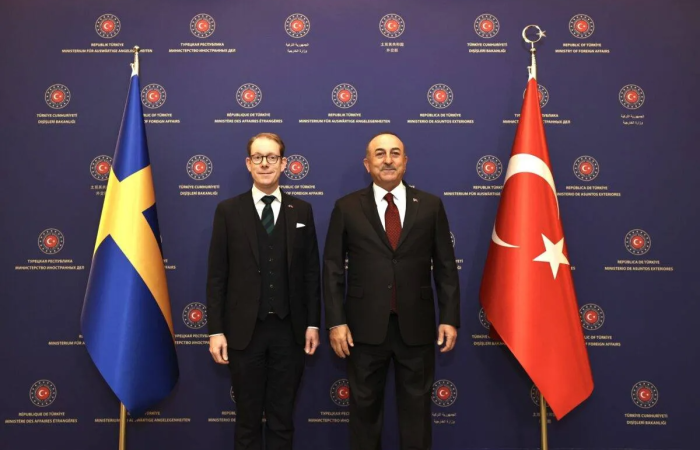
Swedish negotiators are in the Turkish capital city of Ankara today, on Wednesday (14 June), for the first set of talks with Turkey on its NATO membership bid since President Erdogan's election victory on 28 May. Sweden applied for NATO membership alongside Finland on 18 May 2022, almost three months after Russia launched its full-scale invasion of Ukraine on 24 February. While Finland joined the military alliance on 4 April, Sweden's bid continues to be held up by objections from Turkey and Hungary. Sweden's chief NATO negotiator Oscar Stenström and top civil servant in the Swedish foreign ministry, Jan Knutsson, are expected to meet Akif Cagatay Kilic, the new security advisor appointed by President Erdogan following his 28 May victory. The two sides will discuss Sweden's membership of NATO, and the extent to which the country has fulfilled its promises in the so-called "trilateral memorandum" between Turkey, Sweden and Finland signed at NATO's summit in Madrid on 28 June last year. Last Sunday (4 June), NATO Secretary-General Jens Stoltenberg urged Turkey to approve Sweden's membership ahead of the bloc's summit in Vilnius, Lithuania, on 11-12 July.
Editor's choice
News
The time is now to finalise Sweden's accession to NATO, says Blinken

The time is now to finalise Sweden's accession to NATO, says Blinken

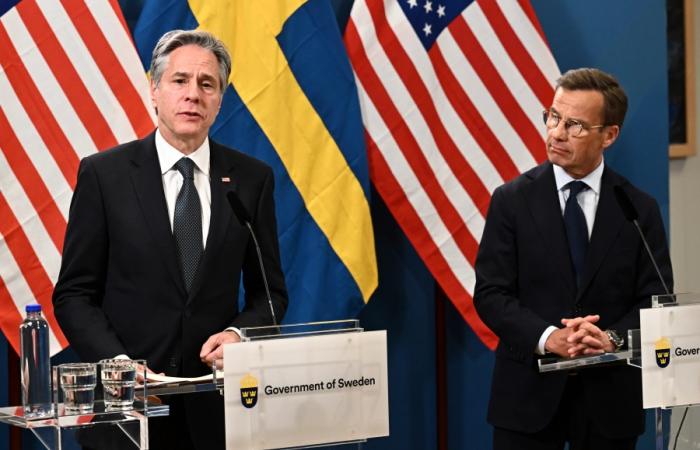
The US Secretary of State Antony Blinken has said that the "time is now" to finalise Sweden's accession to NATO. While both Finland and Sweden applied to join NATO together on 18 May 2022, some two and a half months after the full-scale Russian invasion of Ukraine, Sweden's bid has been held up by objections from Hungary and Turkey. Finland on the other hand became the 31st member of the military alliance on 4 April 2023. Speaking at a press conference in the northern Swedish city of Luleå alongside Sweden's Prime Minister Ulf Kristersson on Tuesday (30 May), Blinken added that Sweden has "taken very significant steps to address very legitimate concerns, and I think in terms of its own qualifications for membership, from day one it was qualified precisely because it’s been such a long-time partner for NATO; of course, the European Union; and with values that are fundamentally the same." Turkey has accused Sweden of being soft on groups that they perceive as terror organisations or consider existential threats, including Kurdish groups such as the PKK, and the Syrian Kurdish militia group, the YPG and its political branch, the PYD. In an attempt to address Turkey's concerns and to persuade Ankara to approve Sweden's bid to join NATO, at the start of May Sweden tightened anti-terrorism laws to include a prison term of up to four years for individuals convicted of participating in an extremist organisation in a way that is intended to promote, strengthen or support the group. 
Editor's choice
News
US announces $375m military aid for Ukraine at G7 in Japan

US announces $375m military aid for Ukraine at G7 in Japan

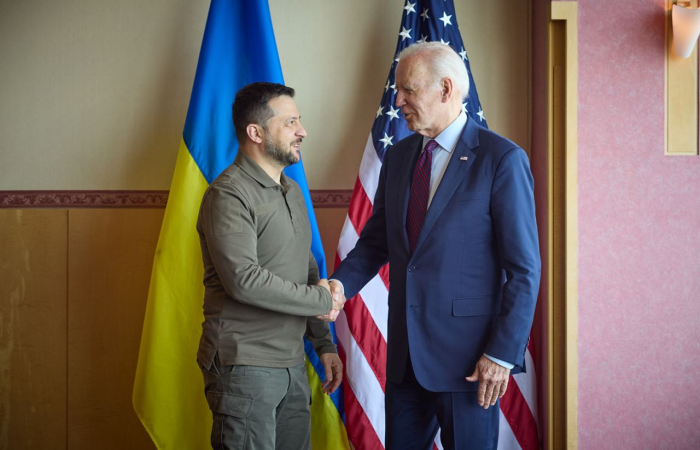
The US Department of Defense has announced another package of military aid to Ukraine, this time totalling $375m. It is the 38th round of equipment sent to Ukraine by the US since August 2021. The statement released by the US Department of Defense on Sunday (21 May) following President Joe Biden's meeting with Ukrainian President Volodymyr Zelensky at the G7 meeting in Japan details the capabilities included in the latest package. It will include further ammunition with HIMARS rocket systems that have wrought havoc on Russian troop and equipment concentrations since they were first supplied to Ukraine in June 2022. It will also supply Javelin anti-tank missiles and AT-4 anti-armour systems, as well as armoured bridging systems, logistics support, and thermal imagery systems. This latest package comes after Joe Biden signaled that he would authorise the third-party transfer of F-16 fighter jets to Ukraine, something that Ukraine has pressured allies over for months. He would also support an international intiative to train Ukrainian pilots on the jets, he added while at the G7 summit in Japan.
Editor's choice
News
UK and The Netherlands join forces to assist Ukraine in acquiring F-16 jets

UK and The Netherlands join forces to assist Ukraine in acquiring F-16 jets

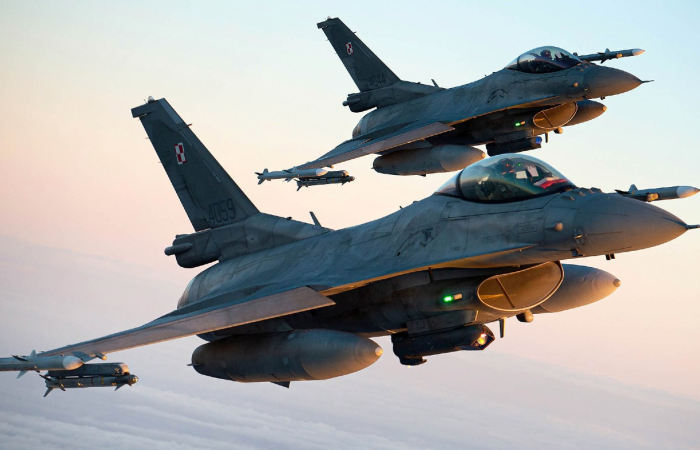
The UK and The Netherlands have agreed to form an "international coalition" to assist Ukraine in acquiring F-16 fighter jets, the UK Government announced in a statement released on Tuesday (16 May). Meeting on the sidelines of the Council of Europe summit in Reykjavik, prime ministers Rishi Sunak and Mark Rutte "agreed they would work to build international coalition to provide Ukraine with combat air capabilities, supporting with everything from training to procuring F16 jets", the statement said. "The [British] Prime Minister reiterated his belief that Ukraine’s rightful place is in NATO and the leaders agreed on the importance of allies providing long-term security assistance to Ukraine to guarantee they can deter against future attacks," the statement added. This development followed Ukrainian President Volodymyr Zelensky's suggestion that Kyiv could expect to receive F-16 fighter jets soon, expressing optimism about crucial decisions being made with the support of the UK. On 15 May in London, Zelensky and Sunak engaged in a two-hour discussion during the former's second visit to the UK since the beginning of Russia's full-scale invasion.