Theme

Connectivity

Stories related to telecommunications and transport links. 

Editor's choice
Opinion
Opinion: The European Union must recognise that the C5 have now become the C6

Opinion: The European Union must recognise that the C5 have now become the C6

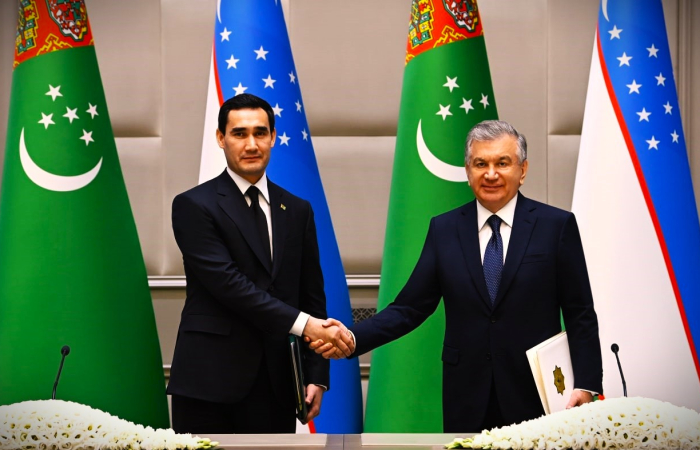
In recent years, Eurasia has undergone a structural transformation in how regions connect, trade, and cooperate. The combination of geopolitical shocks, disrupted supply chains, and the search for secure east–west routes has elevated the importance of the Trans-Caspian space. The states of Central Asia, once constrained by geography, have taken unprecedented steps to strengthen regional coordination, modernize infrastructure, and integrate more closely with Europe. Meanwhile, Azerbaijan has rapidly emerged as an indispensable connector linking Central Asia with the South Caucasus, Türkiye, and European markets. This new reality was formally acknowledged in November 2025 when Azerbaijan was unanimously welcomed as a full participant in the Consultative Meeting of Central Asian Heads of State in Tashkent. What had long been a C5 grouping transformed into a C6, marking a historic moment: the Caspian was no longer a frontier separating two regions but the center of a unified geopolitical and geo-economic space. President Ilham Aliyev described this alignment as the emergence of “a single geopolitical and geo-economic region,” while President Shavkat Mirziyoyev called Azerbaijan’s inclusion “historic” and proposed transforming the consultative platform into a structured regional institution capable of shaping security, economic, environmental, and digital policy. The Caspian is no longer a boundary; it is the heart of an integrated region. The transformation of the EU and U.S. C5+1 formats into C6+1 is the logical next step to ensure that both sides of the Caspian advance together – coherently, strategically, and with shared purpose. (click the image to read the full op-ed).
Editor's choice
Commentary
Central Asia on the march, but challenges ahead

Central Asia on the march, but challenges ahead

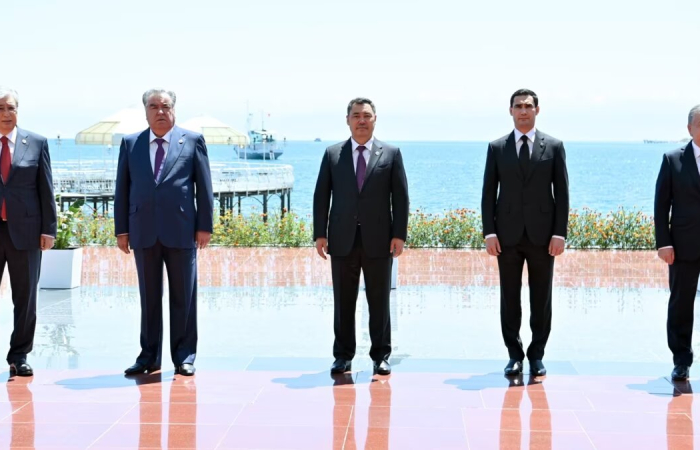
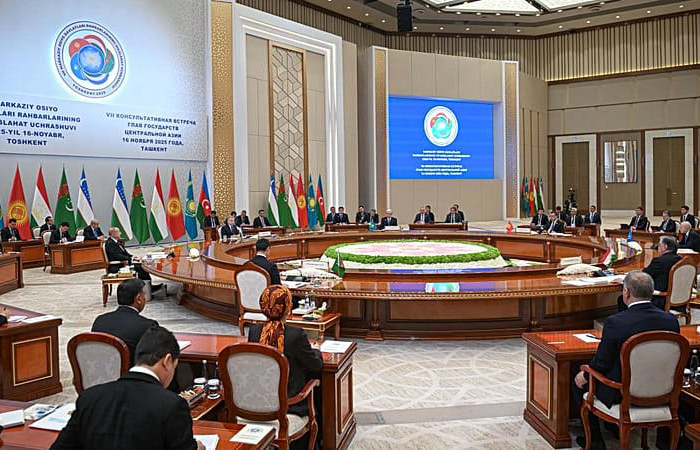
Central Asian leaders have been busy the last month, forging new ties in a changing geopolitical landscape. The presidents of Kazakhstan, Kyrgyzstan, Tajikistan, Turkmenistan, and Uzbekistan travelled to the White House to meet with U.S. President Donald Trump in the C5+1 format. The format, established in 2015, aims to deepen U.S. collaboration with Central Asia, emphasising security and economic cooperation. The U.S. is not the only power looking to maintain its influence in the region. The European Union, Russia, China, and increasingly, India, have all shown their interest in securing economic cooperation and inking energy and trade deals, recognising Central Asia’s strategic position as a key energy and transfer hub situated between East and West. Central Asian states are keenly aware of their leverage and have not only engaged in multi-lateral diplomacy with all of the aforementioned external actors but also adopted a pragmatic regional approach to increase cooperation amongst themselves and taken concrete steps to foster a more unified ‘Central Asian Community’. This was evident by last weekend’s Seventh Consultative Meeting of Heads of State, also known as the C5, where Central Asian leaders officially admitted Azerbaijan as a full member, effectively transforming it into the C6. However, although Central Asia has the unique opportunity to multilaterally engage with all of the world’s biggest economic and security powers, while continuing to shape regional politics and cooperation on its own terms, new security and economic issues are arising that may well reshape Central Asian states’ connections to external actors and potentially strain intra-regional relations. (Read the full commentary by clicking on the picture).

Filter archive

Publication date
Editor's choice
News
Blinken heads to Central Asia on charm offensive amid increasing international interest in the region

Blinken heads to Central Asia on charm offensive amid increasing international interest in the region

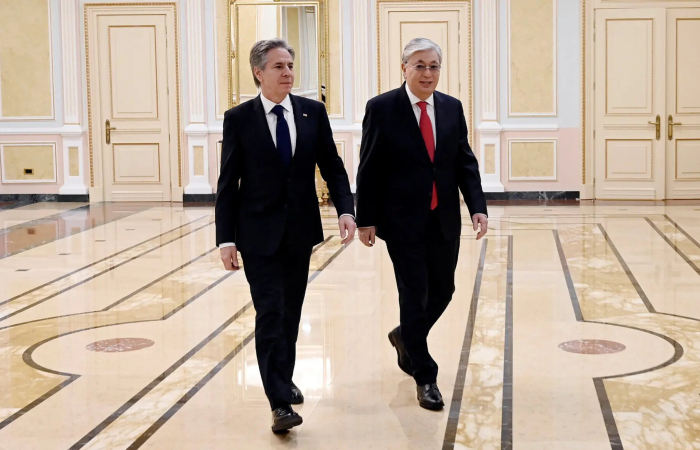
The US Secretary of State Antony Blinken has headed to Kazakhstan and Uzbekistan on his first official visit to the region as President Biden’s top diplomat. Announcing his departure from US soil overnight on 26-27 February, Secretary of State Blinken said that he was looking forward to “advancing our Central Asian partnerships”. After visiting the Kazakh and Uzbek capitals, he would then head to India for the coming G20 summit. The timing of the visit is notable, coming only days after the first anniversary of Russia’s disastrous full-scale invasion of Ukraine, which as one of its consequences has seen Central Asia reassert itself regionally and rapidly explore ties with other neighbouring power blocs including the EU, the Middle East, and China. On 28 February, Blinken had a joint meeting in Astana with the foreign ministers of all five Central Asian nations: Mukhtar Tileuberdi of Kazakhstan; Jeenbek Kulubaev of Kyrgyzstan; Rasit Meredov of Turkmenistan; Sirojiddin Muhriddin of Tajikistan; and Bakhtiyor Saidov of Uzbekistan. He also met with each FM in person in Astana, with the exception of the latter, whom he met later in Tashkent.
Editor's choice
News
Turkistan Declaration adopted at the first ever Central Asian Interparliamentary Forum

Turkistan Declaration adopted at the first ever Central Asian Interparliamentary Forum

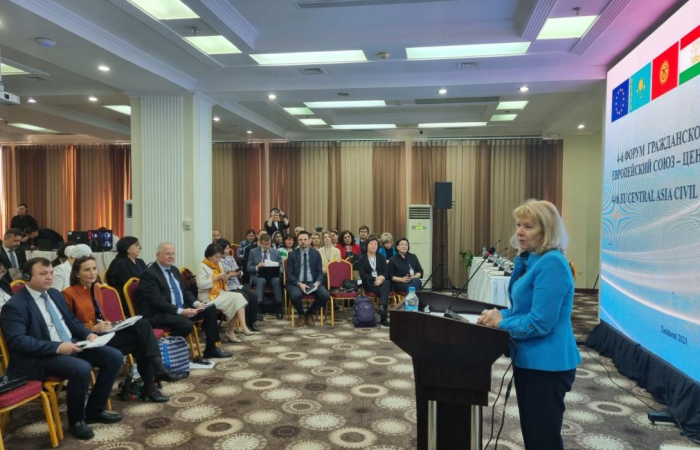
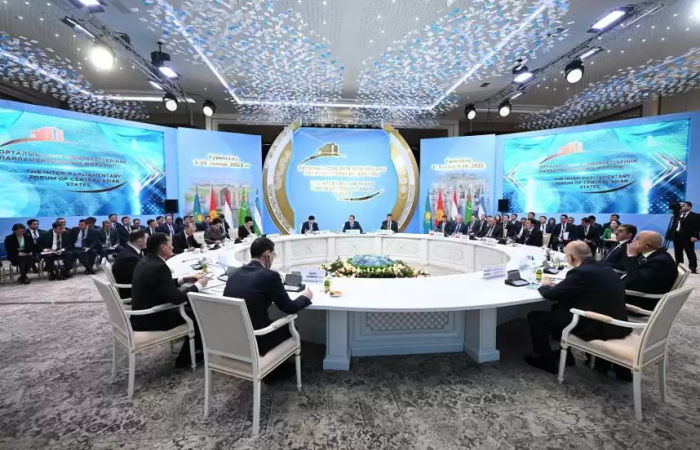
The first ever meeting of the Central Asian Interparliamentary Forum is taking place in the Kazakh city of Turkistan on Friday (10 February), which has resulted in the adoption of the landmark Turkistan Declaration. The forum, which brings together parliamentarians from Kazakhstan, Uzbekistan, Kyrgyzstan, Tajikistan and Turkmenistan, is discussing the strengthening of comprehensive strategic cooperation among Central Asian states and the role of parliaments in this process.  More specifically, the forum is discussing topics including regional security, the development of joint infrastructure and logistics projects, transit and transport potential of the region, and alternative supply routes from Central Asia. Alongside discussing strategic cooperation, parliamentarians are also discussing expanding cultural and humanitarian cooperation based on a common historical and cultural heritage.
Editor's choice
Commentary
A new sense of purpose in Central Asia as leaders seek better relations between their countries and with the rest of the world

A new sense of purpose in Central Asia as leaders seek better relations between their countries and with the rest of the world

For more than three decades after the collapse of the USSR the five Central Asia Republics continued to live largely in the shadow of Moscow.  Neighbouring China made headway, particularly in the economic sphere, largely with Moscow’s acquiescence, and there were a few moments when the west appeared to be making a mark on the region too, especially after the 9/11 attacks, when the US was allowed facilities to help with its invasion of Afghanistan. But this moment did not last long. On everything else that mattered, and for most of the time, Moscow continued to call the shots. The last five years have seen a seismic change in the region. A new generation of leaders are seeking better relations with the rest of the world: connectivity has become a buzzword, and there is a genuine effort to engage with the EU and the US, in most if not all the capitals. Ukraine, and the implications of the Russian invasion on future relations with all the post Soviet states, has focused minds, particularly in Tashkent and Astana.