"In the new realities of Central Asia, Turkmenistan is and will be a pivotal player in regional energy and connectivity politics," writes Mahammad Mammadov for commonspace.eu. "It gives Ashgabat many opportunities to build linkages to different power centers and increase its clout in regional affairs. So far, Berdimuhamedov’s government has pursued an “engaged neutrality” policy to reap the benefits of regional openings while maintaining regime security at home."
One year into Russia’s full-scale invasion of Ukraine, it is often argued that Moscow’s strategic blunder in Ukraine has weakened its influence on Central Asian countries and reduced its ability to shape geopolitical developments in the region. This loss of influence, however, has not affected the Kremlin’s ties to each of the Central Asian republics in the same way.
In Turkmenistan especially, Russia found a reliable partner to help break out of its post-24 February international isolation and diversify its economic linkages to South and Southeast Asian markets. Turkmenistan’s rich natural resources and its geostrategic location on the crossroads of east-west and north-south transport corridors put it at the center of geopolitical competition in Central Asia, pushing Russia to launch a diplomatic offensive to lure Ashgabat further into its sphere of influence.
A neutral country recognized as such by the United Nations in 1995, Turkmenistan has not yet declared its official position on Russia’s war of aggression against Ukraine. On the one hand, Ashgabat did not condemn Russia for breaching Ukraine’s sovereignty and it elected not to attend the UN votes on resolutions supporting Kyiv’s territorial integrity. Neither, however, did it recognize the Russian claim to sovereignty over newly occupied territories in Ukraine.
In April 2022, Turkmenistan’s foreign ministry announced that Ashgabat will send medical aid to Ukraine “based on the traditions of humanism of the Turkmen people”. In an interview with the “Neutral Turkmenistan'' newspaper on 10 October 2022, Ukraine’s Ambassador to Turkmenistan Viktor Maiko said Ashgabat is a key partner of Ukraine among the Central Asian countries.
Growing uncertainty at home and abroad means Turkmenistan has found closer economic ties with like-minded countries
Much to Kyiv’s chagrin, however, Turkmenistan’s tightly-controlled media landscape and officials gradually came to parrot Russia’s talking points about the war in Ukraine. Accordingly, what is happening in Ukraine now is all the fault of Western countries who carelessly dragged it into their geopolitical games, and if Turkmenistan does not draw appropriate lessons it could face the same fate.
Ashgabat’s pro-Russia tilt became evident also when its representative to the Organization for Security and Cooperation in Europe (OSCE), Hemra Amannazarov, left the meeting hall during a speech by Ukrainian Foreign Minister Dmytro Kuleba during an OSCE Ministerial Council on 1 December 2022. Amannazarov returned to the hall after the Ukrainian minister finished his speech.
Turkmenistan’s warming up to Russia despite the war in Ukraine, and thus creating different options to diversify its foreign policy, is mostly driven by regime security concerns. The growing uncertainty in the external arena and deteriorating economic conditions at home amid the power transition from father Gurbanguly Berdimuhamedov to his son Serdar Berdimuhamedov seem to have precluded bold moves in foreign policy. As such, Turkmenistan leadership finds closer economic ties with like-minded neighbors such as Russia and Iran more attractive than with the partners in the West.
Given Türkiye, Azerbaijan, and the EU’s recent overtures to Ashgabat to bring it in from the cold and engage it in region-wide economic partnerships, Moscow is extremely determined to prevent Turkmenistan from joining this group that would deal a severe blow to Russia’s energy leverage against the West. Possessing the fourth largest natural gas reserves in the world, Turkmenistan is the world’s largest non-Russian gas supplier with the potential to be a game-changer in the EU-Russia gas war.
The Kremlin has gone to extra mile to secure Ashgabat's cooperation
It should come as no surprise that in the last few months, the Kremlin has gone the extra mile to secure Ashgabat’s cooperation on a mutually-beneficial energy partnership. On 10 June 2022, on his first visit to Russia as president, Serdar Berdimuhamedov signed with Vladimir Putin the Declaration on Expanding Strategic Partnership between the two countries, including cooperation agreements on energy and connectivity.
In the first two months of 2023, three high-level delegations headed by Prime Minister Mikhail Mishustin, speaker of the Russian State Duma Vyacheslav Volodin, and Gazprom chief Aleksei Miller, visited the ruling duumvirate in Turkmenistan to discuss the prospects of cooperation in different spheres of economy, including energy. According to a Telegram channel close to the Kremlin, in his meeting with Turkmenistan officials, Miller made it clear that Moscow would block the construction of a Trans-Caspian Pipeline linking Turkmenistan’s vast natural gas reserves to European markets through Azerbaijan’s pipeline system.
Miller's visit to Ashgabat came on the heels of the meeting of Azerbaijani, Turkish, and Turkmenistan leaders in Avaza, Turkmenistan in December 2022. Despite hopes for the conclusion of a final agreement on getting Turkmen gas to Türkiye and Europe, the sides settled on launching a working group to study the feasibility of the project. Thus, even in the absence of Russian pressure, Turkmenistan has many reasons to be less enthusiastic about the future prospects of the TCP project.
Like its neighbor to the west, Azerbaijan, Turkmenistan wants its European partners to come forward with a clear roadmap about who will pay for the construction of new pipelines. The widening share of LNG and renewable energy in Europe’s energy mix raises concerns in Ashgabat about the viability of a long-term energy partnership with the EU.
Ashgabat has options, but not without their complications
Cutting Turkmenistan’s pivot to the West, Russia aims to use Turkmenistan’s energy infrastructure to reach the Iranian market which gained significance after the EU’s diversification away from Russian gas. According to Iran’s Ministry of Petroleum, the two countries reached an agreement on an oil-for-gas swap that will see the export of 20 billion cubic meters of Russian gas to Iran through Kazakhstan and Turkmenistan. Moreover, Moscow is eyeing access to Pakistani and Indian markets. But with the existing infrastructural limits, including in Turkmenistan, it will be difficult to realize this goal. Ashgabat also sees Pakistan and India as alternative markets to reduce its export dependence on Russia and China.
The Turkmenistan-Afghanistan-Pakistan-India pipeline (TAPI) project is still on paper as the countries struggle to attract external funding. In 2022, the Asian Development Bank suspended its participation in the project until the Taliban government is recognized by the UN and major power centers. Although the Taliban government announced the country’s full readiness to start works on the pipeline, uncertainty lingers around the security deficit in Afghanistan. Moscow has shown an interest in the project but its approach revolves more around shaping the TAPI’s future according to its best interests than committing itself to its successful implementation.
When it comes to connectivity, Russia has made efforts to entice Turkmenistan to join the International North-South Transport Corridor (INSTC) that links Russia to India through Kazakhstan, Turkmenistan, and Iran’s railway systems. Turkmenistan’s involvement in the project adds a new line to the Russia-India connectivity beside the existing routes running through Azerbaijan and the Caspian Sea ports of Russia and Iran. In August, Turkmenistan announced it will join the project in the nearest possible future. What makes Turkmenistan’s participation in the INSTC more important is Russia’s growing concerns about the expansion of the Middle Corridor that bypasses Russian territory to link China to Europe through Central Asia and South Caucasus.
Russia tries to entice Turkmenistan and tie it to its transport initiatives
After Russia’s invasion of Ukraine, Azerbaijan, and Turkmenistan deepened cooperation on Caspian Sea transport to facilitate smooth transfer of cargo along the Middle Corridor. The port of Turkmenbashi has become a part of new trade routes connecting Uzbekistan and East Asian economies to Europe. In December, the first container block train delivered Uzbekistani copper to Bulgaria’s Burgas port using Turkmen and Azerbaijani ports in the Caspian Sea.
In February, the Azerbaijan Caspian Shipping Company (ASCO) announced the reduction of transport tariffs between the ports of Turkmenbashi and Alat. Turkmenistan’s active participation in the Middle Corridor not only provides the external powers to gain access to Central Asia’s resources but also bolsters regional countries’ economic resilience vis-a-vis Russia by creating new supply and value chains.
To tie Ashgabat tightly to its transport initiatives, Moscow incentivizes both rail and sea transport through and from Turkmenistan. The two sides have been discussing the creation of new shipping lines between Russian ports in Astrakhan and Turkmenbashi port which would give Ashgabat access to the Volga river, and bypass Kazakhstan. In January, Turkmen and Russian companies signed a memorandum of understanding according to which Turkmenistan will establish a logistics center in the Lotos special economic zone in Astrakhan.
Moscow also offers its help to improve veterinary and phytosanitary control systems in Turkmenistan to boost its transit capacity. Recently, Russian Railways announced a 20% discount for container shipments through border crossings in Kazakhstan and Turkmenistan, which will increase the comparative advantage of INSTC’s eastern leg compared to the others.
It remains to be seen how this new phase in the Moscow-Ashgabat partnership will affect Turkmenistan's future place in Eurasian connectivity
In the new realities of Central Asia, Turkmenistan is and will be a pivotal player in regional energy and connectivity politics. It gives Ashgabat many opportunities to build linkages to different power centers and increase its clout in regional affairs. So far, Berdimuhamedov’s government has pursued an “engaged neutrality” policy to reap the benefits of regional openings while maintaining regime security at home.
In this context, while the Turkmen leadership came out of its shell to engage different partners, relations with Russia took the biggest boost, especially on energy and connectivity issues. How this new phase in the Moscow-Ashgabat partnership will affect Turkmenistan’s future place in wider Eurasian economic and security architecture remains to be seen.
source: Mahammad Mammadov is a Research Fellow at the Topchubashov Center, a Baku-based think tank. He is also an adjunct lecturer at Khazar University. Mr. Mammadov obtained his master's degree from the University of Glasgow and the University of Tartu His research interests include energy, connectivity, geopolitical and transitional developments in the post-Soviet space with a specific focus on Azerbaijani foreign policy. His articles frequently appear in national as well as international publications such as the Georgian Institute of Politics, the National Interest, and the New Eastern Europe.
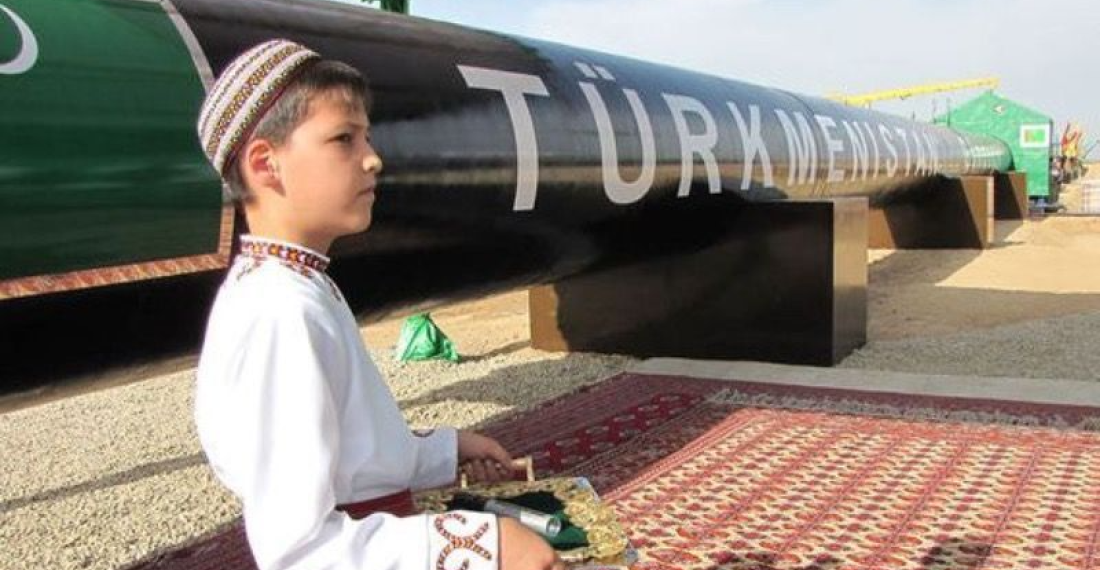
photo: AsiaNews